


There is a touch of destiny with this one. We have real…
Power: A Primer for Perplexed Economists
Let's Assume an Unfettered Marketplace of Ideas! Or Actually, Let's Not.
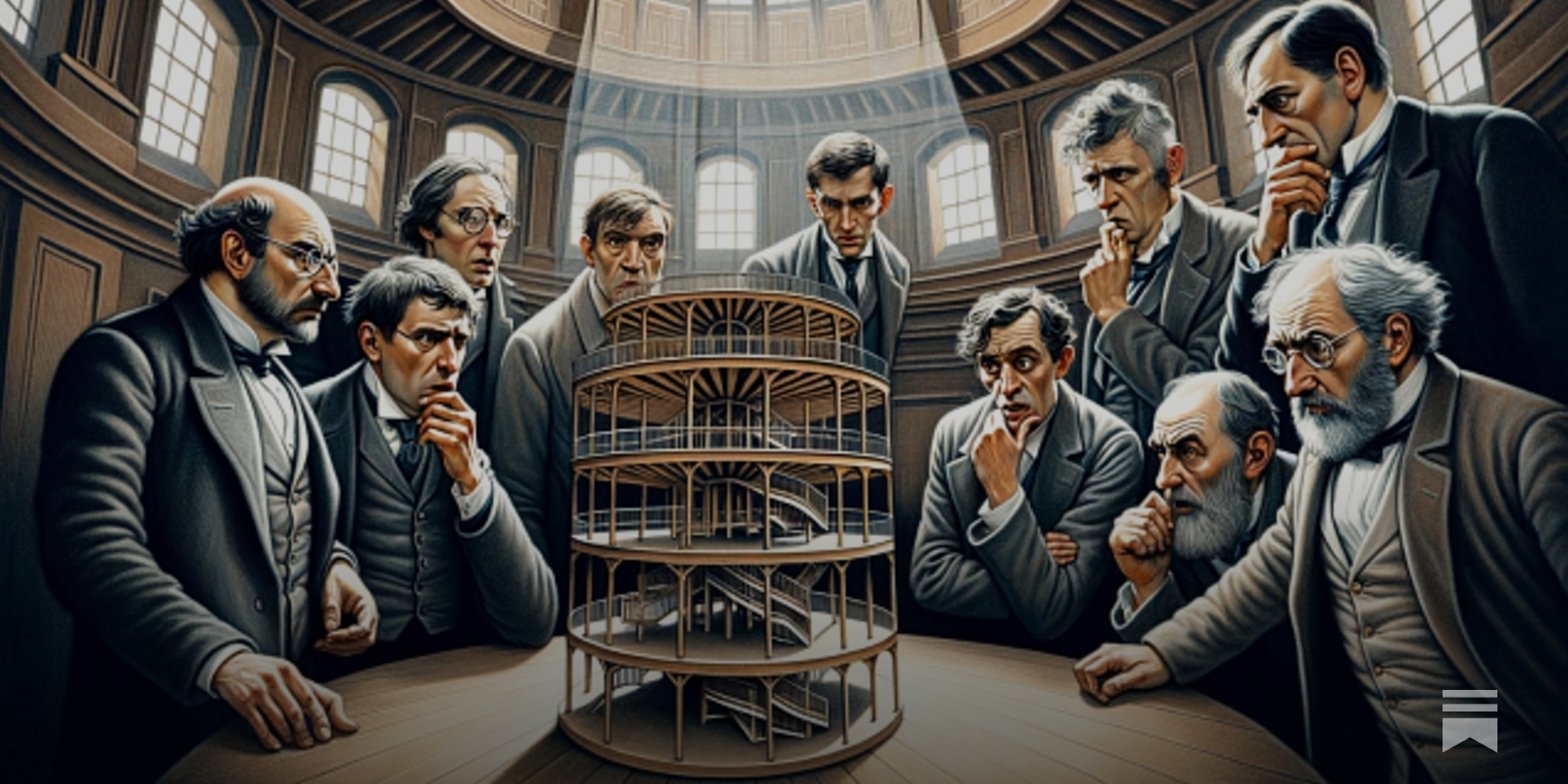

The Joy of Becoming Worthless…except to each other — Douglas Rushkoff
My last piece, The Intentional Collapse, seems to have agitated a few people. I know it came off a bit dark. I talked about how the Uber wealthy believe the world as we know it is ending and that there won’t be enough essential resources to go around, so they need to take control of as much money and stuff and land as possible in order to position themselves for the end of days.
Beyond GDP: Measuring and Valuing What Really Matters
Rethinking the UN’s “beyond GDP” agenda and the case for putting wealth at the centre
Denizen
What are some of the fundamental flaws of capitalism? How might we instantiate a market-based economy that is growth agnostic?
Le capitalisme de la finitude : pessimisme et bellicisme
Traduction française de « Capitalism of finitude: pessimism and bellicosity. Review of Arnaud Orain’s "Le Monde Confisqué" » de Branko Milanovic

Opinion | Be Afraid of Economic ‘Bigness.’ Be Very Afraid. (Published 2018)
In the 1930s it contributed to the rise of fascism. Alarmingly, we are experimenting again with a monopolized economy.

1% for the People
Capitalism is the undisputed powerplant of global prosperity. Since Adam Smith first described the “invisible hand” that allows economies to be efficiently self-organizing and self-renewing, every attempt to supplant it with a competing system has failed spectacularly.

Three views on economic power
We investigate the concept of economic power in the three main paradigms of economic thinking in the 20th century: neoclassical, marxist and institutionalist. We propose a reconstruction, based on a new taxonomy, of the various forms of power conceptualized by each of them. In particular, we claim that the neoclassical paradigm contains a consistent although often implicit theory of power. We then show that many controversies between these paradigms were debates on power and that some shifts in mainstream economics in the 1970s and 1980s are a reaction to the criticisms leveled against the neoclassical conceptualization of power.
The Limits to Growth: A report for the Club of Rome's project on the predicament of mankind
"I do not wish to seem overdramatic, but I can only conclude from the information that is available to me as Secretary–General, that the Members of the United Nations have perhaps ten years left in which to subordinate their ancient quarrels and launch a global partnership to curb the arms race, to improve the human environment, to defuse the population explosion, and to supply the required momentum to development efforts. If such a global partnership is not forged within the next decade, then I very much fear that the problems I have mentioned will have reached such staggering proportions that they will be beyond our capacity to control."
Economics for the future – Beyond the superorganism
Our environment and economy are at a crossroads. This paper attempts a cohesive narrative on how human evolved behavior, money, energy, economy and th…
annotations: La globalisation, la fragmentation et le système monétaire international
Traduction française de "Globalisation, fragmentation, and the international monetary system" de Barry Eichengreen
Capitalism in Crisis Amid Slow Growth and Growing Inequality
Six years after the Lehman disaster, the industrialized world is suffering from Japan Syndrome. Growth is minimal, another crash may be brewing and the gulf between rich and poor continues to widen. Can the global economy reinvent itself?

The Fallacy of Endless Economic Growth
What economists around the world get wrong about the future.

Long cycles
I have long been sympathetic to the concept of long cycles in capitalist production and accumulation. This is the idea that capitalist production moves in cycles, not just in booms and slumps every…

Welcome to the new age of geoeconomics
Tech, trade, finance and military policies are mingling in a manner not seen during the neoliberal era
