

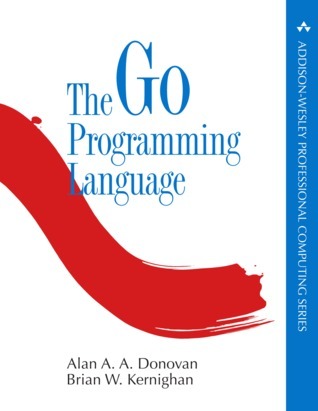
The Go Programming Language is the authoritative resource for any programmer who wants to learn Go. It shows how to write clear and idiomatic Go to solve real-world problems. The book does not assume prior knowledge of Go nor experience with any specific language, so you'll find it accessible whether you're most comfortable with JavaScript, Ruby, Python, Java, or C++. The first chapter is a tutorial on the basic concepts of Go, introduced through programs for file I/O and text processing, simple graphics, and web clients and servers. Early chapters cover the structural elements of Go programs: syntax, control flow, data types, and the organization of a program into packages, files, and functions. The examples illustrate many packages from the standard library and show how to create new ones of your own. Later chapters explain the package mechanism in more detail, and how to build, test, and maintain projects using the go tool. The chapters on methods and interfaces introduce Go's unconventional approach to object-oriented programming, in which methods can be declared on any type and interfaces are implicitly satisfied. They explain the key principles of encapsulation, composition, and substitutability using realistic examples. Two chapters on concurrency present in-depth approaches to this increasingly important topic. The first, which covers the basic mechanisms of goroutines and channels, illustrates the style known as communicating sequential processes for which Go is renowned. The second covers more traditional aspects of concurrency with shared variables. These chapters provide a solid foundation for programmers encountering concurrency for the first time. The final two chapters explore lower-level features of Go. One covers the art of metaprogramming using reflection. The other shows how to use the unsafe package to step outside the type system for special situations, and how to use the cgo tool to create Go bindings for C libraries. The book features hundreds of interesting and practical examples of well-written Go code that cover the whole language, its most important packages, and a wide range of applications. Each chapter has exercises to test your understanding and explore extensions and alternatives. Source code is freely available for download from http://gopl.io/ and may be conveniently fetched, built, and installed using the go get command
The Go Programming Language
Go is an open source programming language that makes it simple to build secure, scalable systems.
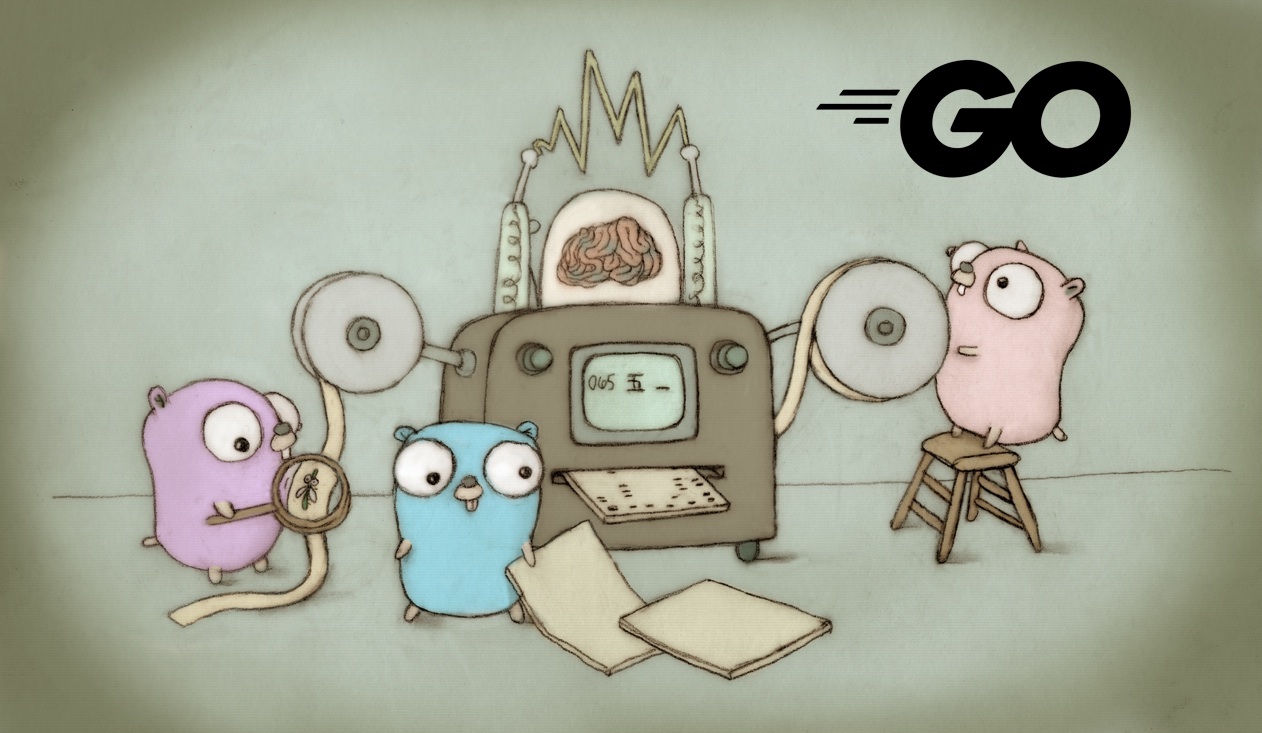
Go in Action
This book provides an intensive, comprehensive, and idiomatic view of Go. It introduces the Go language, guiding you from inquisitive developer to Go guru.

Go 1.7 is released - The Go Programming Language
Go 1.7 adds faster x86 compiled code, context in the standard library, and more.
Learn Go by Building a Command Line Todo App | Barbarian Meets Coding
Learn the Go programming language by building a test-driven command line todo application

Go Web Programming
Build scalable, high-performance web apps in Go with modern design principles.

GopherCon 2017: A Go Programmer's Guide to Syscalls - Liz Rice
Go 1.27 interactive tour
An interactive tour of what’s new in Go 1.27: every notable language, runtime, and standard library change, with short runnable examples you can edit and run in the browser.
Let’s explore the universe of programming resources together
by Quincy Larson Let’s explore the universe of programming resources together There are a lot of free programming resources out there. Here’s a list of more than a thousand free programming books. Here’s a list of hundreds of free online university c...

New iterators in Go 1.23
The Go language now supports standardized iterators. An iterator is an object that progressively provides access to each item of a…

Rust for Java developers
Introduction to the Rust programming language for java developers, (complete with code sampes) with a focus on shared concepts.
Don't couple your Go code to GitHub | Iain Cambridge
The technical musings of Iain Cambridge.
Modular: The Claude C Compiler: What It Reveals About the Future of Software
Compilers occupy a special place in computer science. They're a canonical course in computer science education. Building one is a rite of passage. It forces you to confront how software actually works, by examining languages, abstractions, hardware, and the boundary between human intent and machine execution.

GATlab: Modeling and Programming with Generalized Algebraic Theories
Categories and categorical structures are increasingly recognized as useful abstractions for modeling in science and engineering. To uniformly implement category-theoretic mathematical models in software, we introduce GATlab, a domain-specific language for algebraic specification embedded in a technical programming language. GATlab is based on generalized algebraic theories (GATs), a logical system extending algebraic theories with dependent types so as to encompass category theory. Using GATlab, the programmer can specify generalized algebraic theories and their models, including both free models, based on symbolic expressions, and computational models, defined by arbitrary code in the host language. Moreover, the programmer can define maps between theories and use them to declaratively migrate models of one theory to models of another. In short, GATlab aims to provide a unified environment for both computer algebra and software interface design with generalized algebraic theories. In this paper, we describe the design, implementation, and applications of GATlab.

Go and wasm: generating and executing wasm with Go
Today we will see how we can interact with WebAssembly, from Go: how to execute WebAssembly bytecode from Go and how to generate WebAssembly bytecode with Go.