


Dissecting the new theoretical buzzword of the "Anthrop…

How May the ‘Anthropocene’ Enable and Constrain Cybersystemic Governance? The ‘Anthropocene Problematique’
A growing awareness of the need for cybernetics and systems thinking (cybersystemic) in praxes of governance to improve human-biosphere relationships in the Anthropocene has become apparent. Nonetheless, mainstream governance informed by linear-causality seems to perpetuate an increasingly inadequate paradigm of dominant first-order/systematic thinking in governing complex interactions between humans and their natural environments. This conundrum is explored through the second-order lens of a systemic inquiry, using an integrative literature review. We discuss limitations of the Anthropocene metaphor and make the case for a reframing of our situation (humans’ co-evolutionary dynamic with the biosphere) as the ‘Anthropocene problematique’. This reframing as a systemic-duality offers more conducive affordances for trajectory-shifting cybersystemic governance to emerge. Aligning with a body of literature evidencing the influence of language on human cognition, we argue that by joining up the strengths of both ideas, ‘Anthropocene problematique’ may form a conceptual device amenable to changing worldviews and guiding practical action in governing human-biosphere relationships. We suggest a conceptual framework for practitioners to design and enact purposeful systems of cybersystemic governance with potential to improve situated Anthropocene problematiques. This framing and theoretical proposal are motivated by a need for shifts towards a social purpose of healing human-biosphere relationships in current governance systems in the Anthropocene-world.

Anthropocene Epistemology: Political, Ecological, and Economic Entanglements
This essay critically explores the connection between epistemology, political ecology, economy, and technological developments in the Anthropocene, understood a

The “Anthropocene”
Human activities are exerting increasing impacts on the environment on all scales, in many ways outcompeting natural processes. This includes the manufacturing of hazardous chemical compounds which are not produced by nature, such as for instance the...

Safeguarding human health in the Anthropocene epoch: report of The Rockefeller Foundation–Lancet Commission on planetary health
Far-reaching changes to the structure and function of the Earth's natural systems represent a growing threat to human health. And yet, global health has mainly improved as these changes have gathered pace. What is the explanation? As a Commission, we are deeply concerned that the explanation is straightforward and sobering: we have been mortgaging the health of future generations to realise economic and development gains in the present. By unsustainably exploiting nature's resources, human civilisation has flourished but now risks substantial health effects from the degradation of nature's life support systems in the future.

The problem of knowledge in the Anthropocene
In the twentieth century, debates about economic planning were largely shaped by arguments concerning knowledge and the acquisition of information. As the century drew to a close, the dispute was a...

Anthropocène? Capitalocène? Quels enjeux? - les économistes atterrés
Si l’anthropocène est aujourd’hui d’usage courant pour désigner la période présente marquée par les transformations qui affectent de plus en plus notre planète, une autre tendance se fait jour chez […]
L’anthropocène, un objet frontière qui signifie plus qu’une tranche de temps géologique
Même si le groupe de travail officiel a refusé la proposition de créer une nouvelle époque géologique nommée anthropocène, le débat n’est pas clos pour autant.

A Billion Black Anthropocenes or None
Check out A Billion Black Anthropocenes or None - <p><b>Rewriting the “origin stories” of the Anthropocene</b><br /><br /> No geology is neutral, writes Kathryn Yusoff. Tracing the color line of the Anthropocene, <i>A Billion Black Anthropocenes or None</i> examines how the grammar of geology is foundational to establishing the extractive economies of subjective life and the earth under colonialism and slavery. Yusoff initiates a transdisciplinary conversation between feminist black theory, geography, and the earth sciences, addressing the politics of the Anthropocene within the context of race, materiality, deep time, and the afterlives of geology.<br /><br /> Forerunners is a thought-in-process series of breakthrough digital works. Written between fresh ideas and finished books, Forerunners draws on scholarly work initiated in notable blogs, social media, conference plenaries, journal articles, and the synergy of academic exchange. This is gray literature publishing: where intense thinking, change, and speculation take place in scholarship.</p> by Kathryn Yusoff on Bookshop.org UK!

The ultrasocial origin of the Anthropocene
The current geological epoch has been dubbed the Anthropocene—the age of humans. We argue that the roots of the Anthropocene lie in the agricultural revolution that began some 8000years ago. Unique human psychological and cultural characteristics were present in our distant hunter–gatherer past, but in terms of the biophysical impact of our species, agricultural represented an unequivocal and decisive evolutionary break. With the transition to agriculture human society began to function as a superorganism functioning as a single unit designed by social natural selection to produce economic surplus. Where environmental conditions were permitted, early human agricultural societies followed the same pattern as a few social insects and exhibited explosive population growth, complex and detailed division of labor, intensive resource exploitation, territorial expansion, and a social organization favoring the survival and growth of the supergroup over the well-being of individuals within the group. Similar economic forces lie behind ultrasociality in social insects and humans—increased productivity from the division of labor, increasing returns to scale, and the exploitation of stocks of productive resources. Exploring the evolutionary mechanisms behind ultrasociality offers insights into the growth imperative that threatens the stability of the earth's life support systems.
Beyond technofix: Thinking with Epimetheus in the anthropocene
The Prometheus myth has long now provided inspiration for those who envision solutions to environmental issues. Prometheus is the figure par excellence of human forethought and progress in the anthropocene. In this article, we introduce the concept of ambient Prometheanism to describe the way of thinking that foregrounds foresight and anticipation and advances technological solutions developed by capital and energy-intensive projects. We question this stance, arguing that ambient Prometheanism, with its emphasis on technofix, leads to the economisation and depoliticisation of planetary environmental issues. Following Bernard Stiegler, we recover from the myth the figure of Epimetheus, Prometheus’ brother, as well as his associated faculty, epimetheia to theorise what we call an ‘Epimethean politics’. Thinking the anthropocene from the perspective of ambient Prometheanism and Epimetheanism means to consider the role of technology in climate politics, and in particular to make the case for the importance of afterthought in face of unintended consequences and accumulated errors. To substantiate our argument, we outline the challenge posed by emerging solutions focussed on technological intensification (geoengineering) and socio-economic acceleration (green growth and accelerationism). An Epimethean politics of the climate requires to use reflexivity as a capacity to anticipate, but also to mobilise epimetheia to account for accidents and past mistakes. Such a politics builds from an alternative conception of technology, one that radically differs from ambient Prometheanism. Finally we read as actualisations of Epimethean politics contemporary eco-political struggles and their imperatives for multispecies living and convivial livelihoods.

Anthropeum
A daily game that challenges our understanding of human cultures. Ten objects. 5,000 years of human history. Guess where and when each artifact was made. See how you rank.


La Nature au cœur du raisonnement économique : l’émergence d’une nouvelle macroéconomie. - Chroniques de l'Anthropocène
Quand le FMI révolutionne la macroéconomie en présentant un cadre conceptuel original dans lequel la Nature se trouve au cœur du système économique.
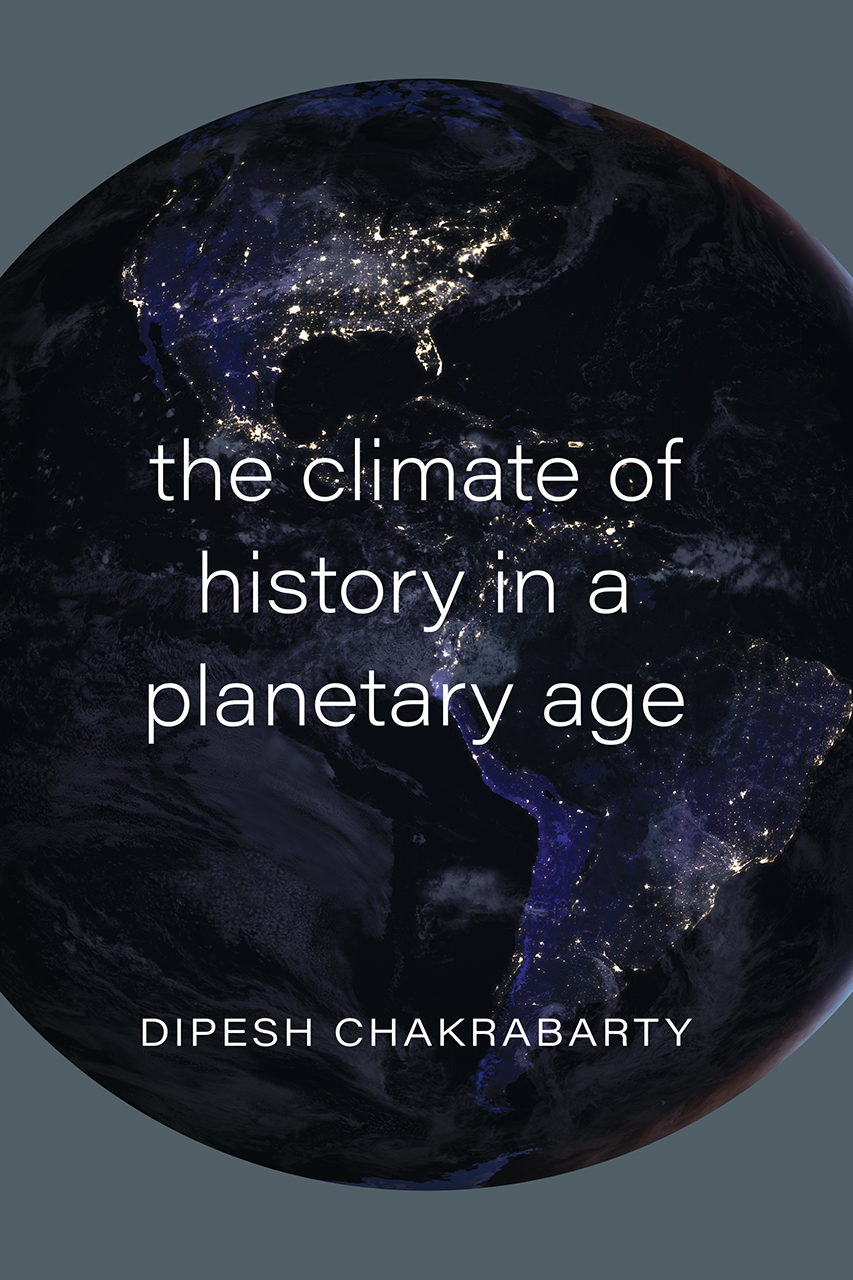
The Climate of History in a Planetary Age
For the past decade, historian Dipesh Chakrabarty has been one of the most influential scholars addressing the meaning of climate change. Climate change, he argues, upends long-standing ideas of history, modernity, and globalization. The burden of The Climate of History in a Planetary Age is to grapple with what this means and to confront humanities scholars with ideas they have been reluctant to reconsider—from the changed nature of human agency to a new acceptance of universals. Chakrabarty argues that we must see ourselves from two perspectives at once: the planetary and the global. This distinction is central to Chakrabarty’s work—the globe is a human-centric construction, while a planetary perspective intentionally decenters the human. Featuring wide-ranging excursions into historical and philosophical literatures, The Climate of History in a Planetary Age boldly considers how to frame the human condition in troubled times. As we open ourselves to the implications of the Anthropocene, few writers are as likely as Chakrabarty to shape our understanding of the best way forward.
"This paper prompted Jack Clark, one of the co-founders of Anthropic to post this to their news letter: 'the singularity could be delayed'".

Mark Riedl
Fascinating experiment: current AI systems lack creativity to reliably pursue research arxiv.org/abs/2607.27191 - poor judgment about the bar for publishable research - uncreative responses in research design - ineffective backtracking from dead ends - poor resource awareness - instruction drift
