Focusing on the Anglophone Caribbean, The Making of a Caribbean Avant-Garde describes the rise and gradual consolidation of the visual arts avant-garde, which came to local and international attention in the 1990s. The book is centered on the critical and aesthetic strategies employed by this avant-garde to repudiate the previous generation’s commitment to modernism and anti-colonialism. In three sections, it highlights the many converging factors, which have pushed this avant-garde to the forefront of the region’s contemporary scene, and places it all in the context of growing dissatisfaction with the post-colonial state and its cultural policies. This generational transition has manifested itself not only in a departure from “traditional” in favor of “new” media (i.e., installation, performance, and video rather than painting and sculpture), but also in the advancement of a “postnationalist postmodernism,” which reaches for diasporic and cosmopolitan frames of reference. Section one outlines the features of a preceding “Creole modernism” and explains the different guises of postnationalism in the region’s contemporary art. In section two, its momentum is connected to the proliferation of independent art spaces and transnational networks, which connect artists across and beyond the region and open up possibilities unavailable to earlier generations. Section three demonstrates the impact of this conceptual and organizational evolution on the selection and exhibition of Caribbean art in the metropole
Présentation. De la piraterie au piratage
1Depuis plusieurs décennies maintenant, la culture est en guerre : Culture contre cultures, art officiel contre underground, institutions contre squats… Sur les ruines de ces champs de bataille, un personnage émerge au milieu des décombres, les poches pleines : le pirate. Chez les artistes, mais aussi dans les médias, sur la scène politique et chez les intellectuels, pirates et piratage occupent aujourd’hui une place à la fois centrale et ambiguë. C’est pourquoi il paraît essentiel d’interroger cette figure culturelle, ses origines, ses implications, son futur. Quelle place pirates et piratages occupent-ils sur le web, dans les nouveaux mouvements sociaux mondialisés, dans les musiques actuelles ou encore dans les débats sur la post-humanité ? Quel est leur rôle dans la (contre-)culture savante et populaire ? Comment ces figures sont-elles mobilisées, récupérées, voire elles-mêmes piratées par la « flotte impériale » qu’elles combattent ?
Introduction
A multigrade textbook of Spanish through Caribbean music: cumbia, reggaeton, salsa.

Interface Realisms: The Interface as Aesthetic Form
Until now, digital arts have largely been understood to belong in traditional genres or forms of art: we are said to have electronic literature, net.art, or electronic, techno music. Sometimes interesting discussions have arisen concerning the very ontology of digital art, and questions such as whether net.art should be seen within the tradition of the visual arts or as a form of literature connecting it to the different traditions and questions regulating these arts.[1] While it is not my intent to disconnect digital art from traditional art, or to argue for the irrelevance of the traditional forms of art, I will in the following establish the interface as an aesthetic and critical framework for digital art.
Why Robert Frank’s “The Americans” Matters Today
The photographer’s seminal monograph had a seismic impact on photography conventions and American culture.

Culture & truth : the remaking of social analysis
xii, 253 pages ; 22 cm; Argues for a new approach to thinking and writing about culture. Exposing old conceptions, the book argues that new ethnographic writing must come to terms with the dynamic nature of social reality - with history, spontaneity, and human emotions; Originally published: Boston: Beacon, 1989; Includes index; Self-Renewing 2017; Includes index

Southland Institute
Through engaging questions of how approaches of progressive, critical, queer, and antiracist pedagogical traditions might be applied to interdisciplinary programming in typography, graphic design, and critical art-making, we are working to assemble a growing toolkit of pedagogies -- all of which are intended to be used, shared, recombined, interpreted, and questioned -- as part of the perpetual project of exploring approaches to sharing and transmitting knowledge.
Why Do Movies Feel So Different Now?
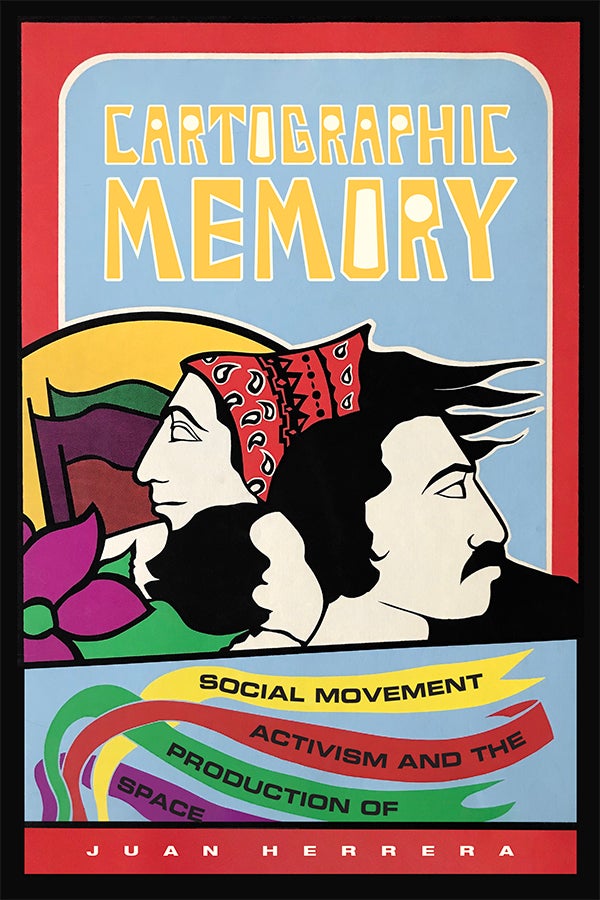
Cartographic Memory: Social Movement Activism and the Production of Space
“Cartographic Memory is a creative, important, and well-written book that offers a vital analysis of Latinx activism in Oakland. Juan Herrera’s concept of social movement continuities helps us analyze the range of ways that actors make social change, rather than only focusing on the most radical politics or certain epic moments. Herrera’s book is an outstanding contribution toward building a nuanced and complex understanding of Latinx social movements.” - Victoria Lawson, author of Making Development Geography
YOU NAME IT
Check out YOU NAME IT - This comprehensive publication focuses on the artwork and activism of Sasha Huber. A Helsinki-based visual artist and researcher of Swiss and Haitian heritage, Huber’s creative practice encompasses performance, photography, film, mixed media, reparative interventions, and collaborations to investigate colonial residues left in the environment. Her projects conceive of natural spaces—mountains, lakes, glaciers, forests, and craters—as contested territories, highlighting the ways in which history is imprinted onto the landscape through acts of remembrance, including memorialization through naming and the erection of monuments. For over a decade, Huber has produced work in relation to the cultural and political Demounting Louis Agassiz campaign, which seeks to redress the racist legacy of the Swiss-born naturalist and glaciologist. With her artworks, Huber challenges the terms by which we remember, asking not only who and what we memorialize, but also, and more importantly, how we do so. by Huber, Sasha on Bookshop.org UK!

Post-Modernism | The Paper Pilot
The Paper Pilot's digital garden of thoughts on philosophy, politics, and sociology
How The US Took Over The World
Coloniality of Skill Codification: A Decolonial Feminist Analysis of “Ideal Workers” in the “Future of Work” Policy Discourses
ABSTRACT Over the last decade, policy actors have produced a surge of “future of work” reports that reimagine workers through the dual logics of digitalization and human capital. Drawing on 25 policy documents (WEF, World Bank, OECD, EU, and major consultancies) and combining Bacchi and Goodwin's WPR approach with decolonial feminist theory, this paper demonstrates how these imaginaries construct an “ideal future worker” that reinscribes colonial hierarchies through a process we term the coloniality of skill codification . This concept describes the translation of embodied, historical, and relational differences (race, gender, caste, disability, age, and geopolitics) into ostensibly neutral, measurable skill categories that naturalize Global North standards and colonial hierarchy. Our analysis uncovers three interlocking mechanisms: (1) construction of workers as techno‐neoliberal skill bundles (relational human–machine codependency), (2) commodification of social difference (inclusion framed as extractable competitive advantage), and (3) technical‐statistical indexation (national human capital metrics that rank countries and workforce potential). This paper intervenes in the emerging field of Feminist AI by arguing that the policy discourses surrounding AI and automation in the workplace are actively constructing a new, insidious form of the “ideal worker” that rearticulates colonial‐gendered power structures.
Introduction to K-Punk, Vol. 3: English Language Version
Prior to the release of K-Punk, Vol. 3 — the third and final volume of Caja Negra’s Spanish translation of k-punk: The Collected and Unpublished Writings of Mark Fisher (2004-2016) R…


Artificial Intelligence in the Colonial Matrix of Power
Drawing on the analytic of the “colonial matrix of power” developed by Aníbal Quijano within the Latin American modernity/coloniality research program, this article theorises how a system of coloniality underpins the structuring logic of artificial intelligence (AI) systems. We develop a framework for critiquing the regimes of global labour exploitation and knowledge extraction that are rendered invisible through discourses of the purported universality and objectivity of AI. Through bringing the political economy literature on AI production into conversation with scholarly work on decolonial AI and the modernity/coloniality research program, we advance three main arguments. First, the global economic and political power imbalances in AI production are inextricably linked to the continuities of historical colonialism, constituting the colonial supply chain of AI. Second, this is produced through an international division of digital labour that extracts value from majority world labour for the benefit of Western technology companies. Third, this perpetuates hegemonic knowledge production through Western values and knowledge that marginalises non-Western alternatives within AI’s production and limits the possibilities for decolonising AI. By locating the production of AI systems within the colonial matrix of power, we contribute to critical and decolonial literature on the legacies of colonialism in AI and the hierarchies of power and extraction that shape the development of AI today.