


Golan Trevize, former Councilman of the First Foundatio…
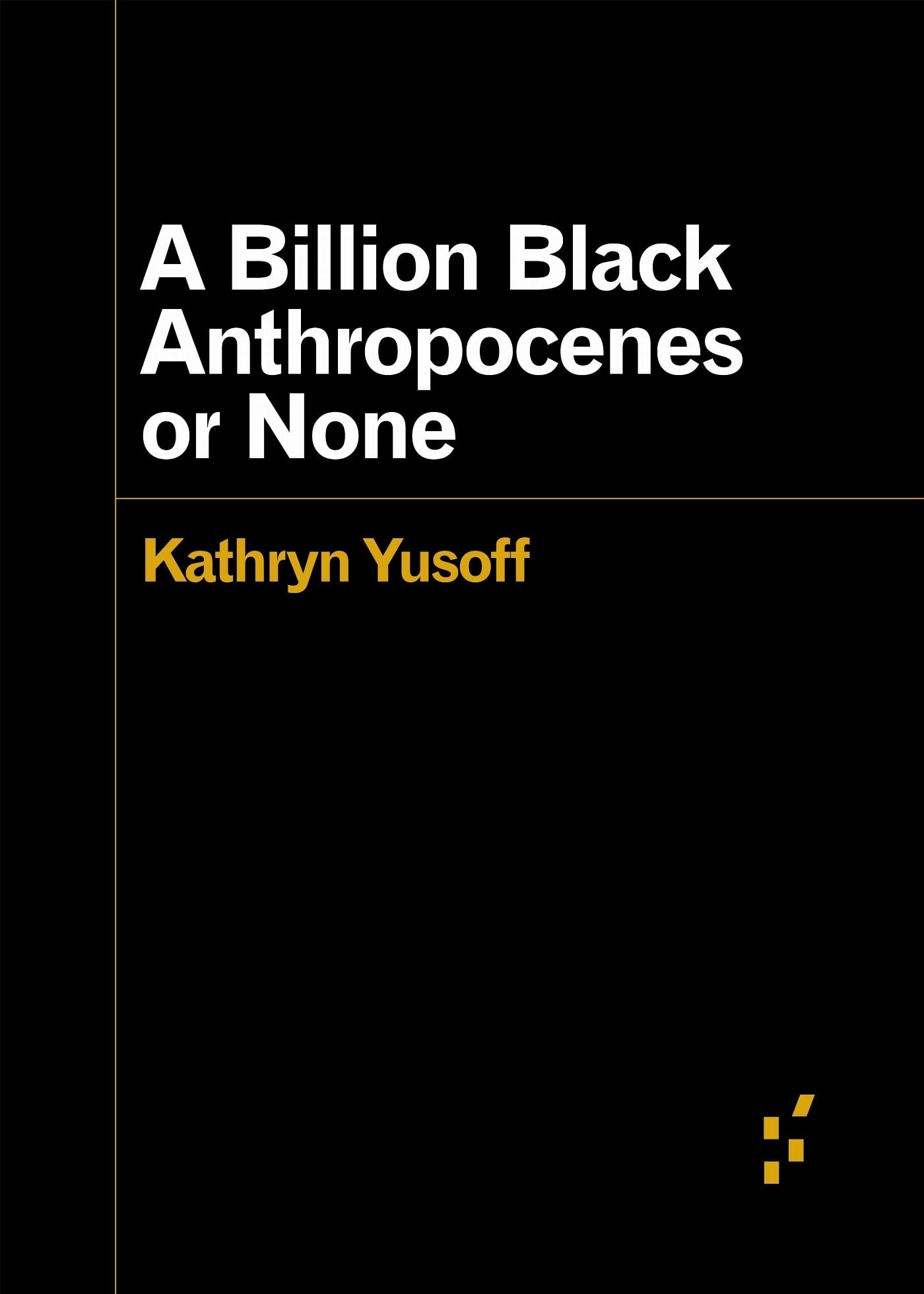
A Billion Black Anthropocenes or None
Check out A Billion Black Anthropocenes or None - <p><b>Rewriting the “origin stories” of the Anthropocene</b><br /><br /> No geology is neutral, writes Kathryn Yusoff. Tracing the color line of the Anthropocene, <i>A Billion Black Anthropocenes or None</i> examines how the grammar of geology is foundational to establishing the extractive economies of subjective life and the earth under colonialism and slavery. Yusoff initiates a transdisciplinary conversation between feminist black theory, geography, and the earth sciences, addressing the politics of the Anthropocene within the context of race, materiality, deep time, and the afterlives of geology.<br /><br /> Forerunners is a thought-in-process series of breakthrough digital works. Written between fresh ideas and finished books, Forerunners draws on scholarly work initiated in notable blogs, social media, conference plenaries, journal articles, and the synergy of academic exchange. This is gray literature publishing: where intense thinking, change, and speculation take place in scholarship.</p> by Kathryn Yusoff on Bookshop.org UK!
Erasmusprijswinnaars - Praemium Erasmianum Foundation
It takes only a glance at a newspaper nowadays to see that much of what we once took for granted is either being cast aside or turned on its head. Indeed, with floods sweeping away entire cities, and the prospect of a nuclear war closer than it has ever been, I couldn’t bring myself to […]

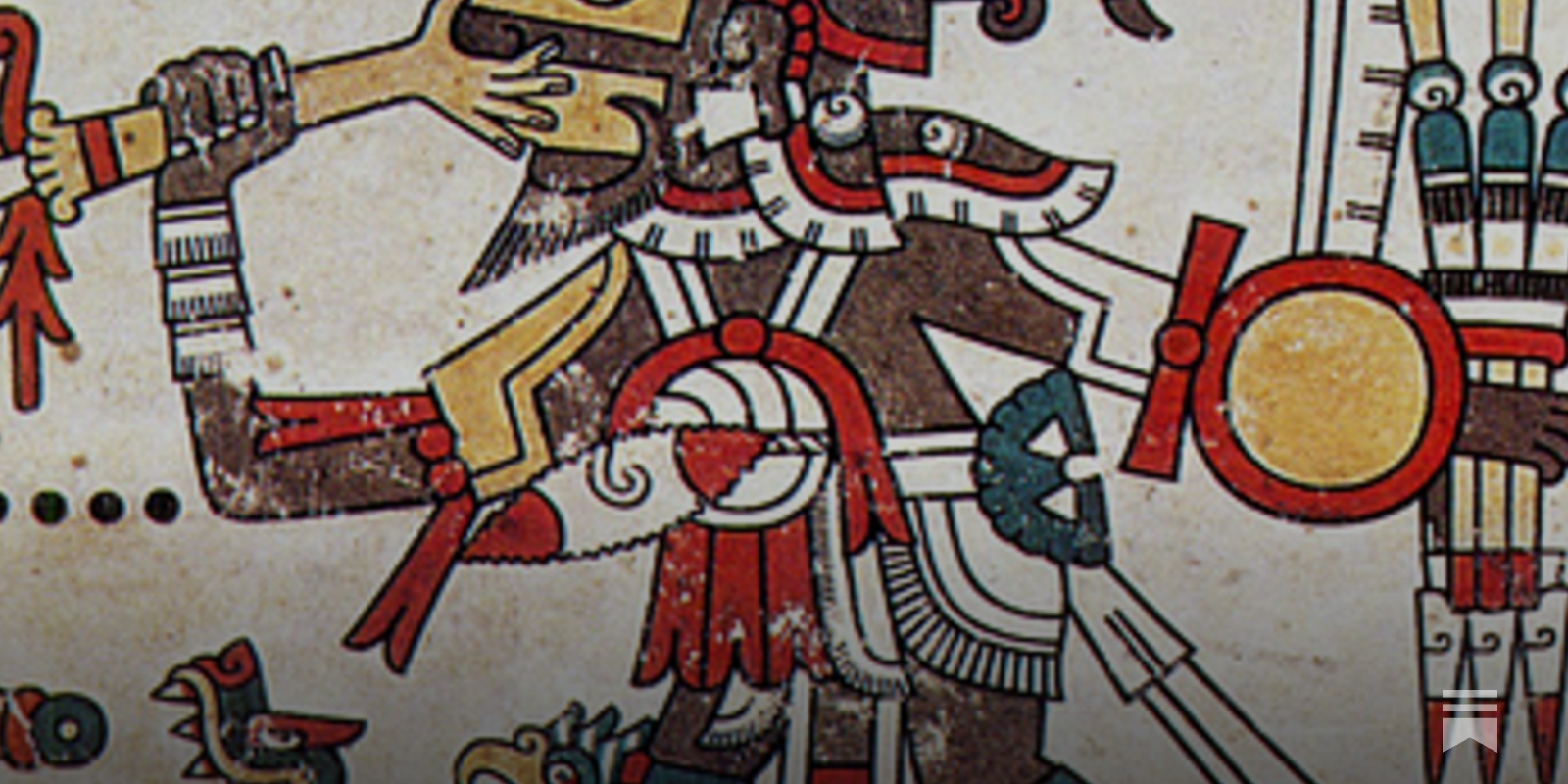
REVIEW: Aztecs, by Inga Clendinnen
Aztecs: An Interpretation, Inga Clendinnen (Cambridge University Press, 1991).
From triloco's profile on Reddit: Tu energía es limitada: inviértela donde importa.
Explore this post and more from triloco's profile
Day 5: Earth | Dewey Dunnington
It’s day 5…earth! I was particular excited about this day in the 30 day map challenege because earth is my thing…I did a M.Sc. in Geology and taught Geomorphology at Acadia University for several years.

National Geographic
Explore National Geographic. A world leader in geography, cartography and exploration.

Governance Archaeology: Research as Ancestry
Abstract. This essay presents the idea of governance archaeology, an approach to learning from the past to inform the politics of the future. By reporting on a prototype historical database, we outline a strategy for co-producing a global commons of collective governance practices that can inspire institutional learning and experimentation, particularly in the face of rapid technological change and vexing global crises. Embedded in our approach is an orientation of ancestry whereby practitioners cultivate relationships of accountability and responsibility to the legacies they learn from, recognizing the harm from past patterns of exploitation. By taking seriously a wide range of historical governance practices, particularly those outside the Western canon, governance archaeology seeks to expand the options available for the design of more moral political economies.
Chronology and ecology of early islanders in the Philippines: The Mindoro Archaeology Project
The investigation and excavation of caves and rockshelters located at the southern end of Occidental Mindoro produced significant artefacts, data, and information related to the initial arrival and colonization of the Philippine archipelago by anatomically modern humans. The sites provided several indications for the increasing adaptation to maritime environments and delivered evidence for their behavioural and technological complexity. Mindoro lies along a direct route to reach the main islands of the Philippines coming from the Asian mainland via Borneo and Palawan. Since 2010, surveys conducted in the karstic regions of Ilin Island and Sta. Teresa, Magsaysay have mapped and explored over 40 caves and rockshelters. Particularly the sites of Bubog 1, Bubog 2, Cansubong 2 Cave, and Bilat Cave, have delivered cultural and biological materials that chronicle human habitation and adaptation to maritime and coastal environments over a period of 35–40,000 years. Early islanders in the region intensively foraged for molluscs and other marine invertebrates along the coast, employed different techniques to catch a variety of reef and pelagic fish as well as terrestrial animals, and were embedded in maritime networks with access to transfer routes, through which technology, information, and ideologies were disseminated over long distances and across Island Southeast Asia (ISEA) and possibly also reaching the Southeast Asian mainland. The results of the archaeological research in Mindoro contribute to our understanding of the processes of human island adaptation, complement ongoing research on the peopling of Southeast Asia, and enhance current knowledge of prehistoric subsistence strategies across the region.
2022.02 What can be Learned from Hernando Columbus and His Library?
What Can Be Learned from Hernando Columbus and His Library? tiny.cc/hernandocolumbus What Can Be Learned from Hernando Columbus and His Library? Brewster Kahle / February 12, 2022 / the club A discoverer in the age of discovery, a renaissance man in the renaissance, He...

Book Review of Making All the World America
Steven T. Newcomb reviews Timothy Bowers Vasko’s Making All the World America: Native Information and the Doctrine of Discovery (University of Pennsylvania Press, 2026).
Ma Earth | Collective funding for community-led regeneration
Ma Earth is a collective funding platform for community-led regeneration.

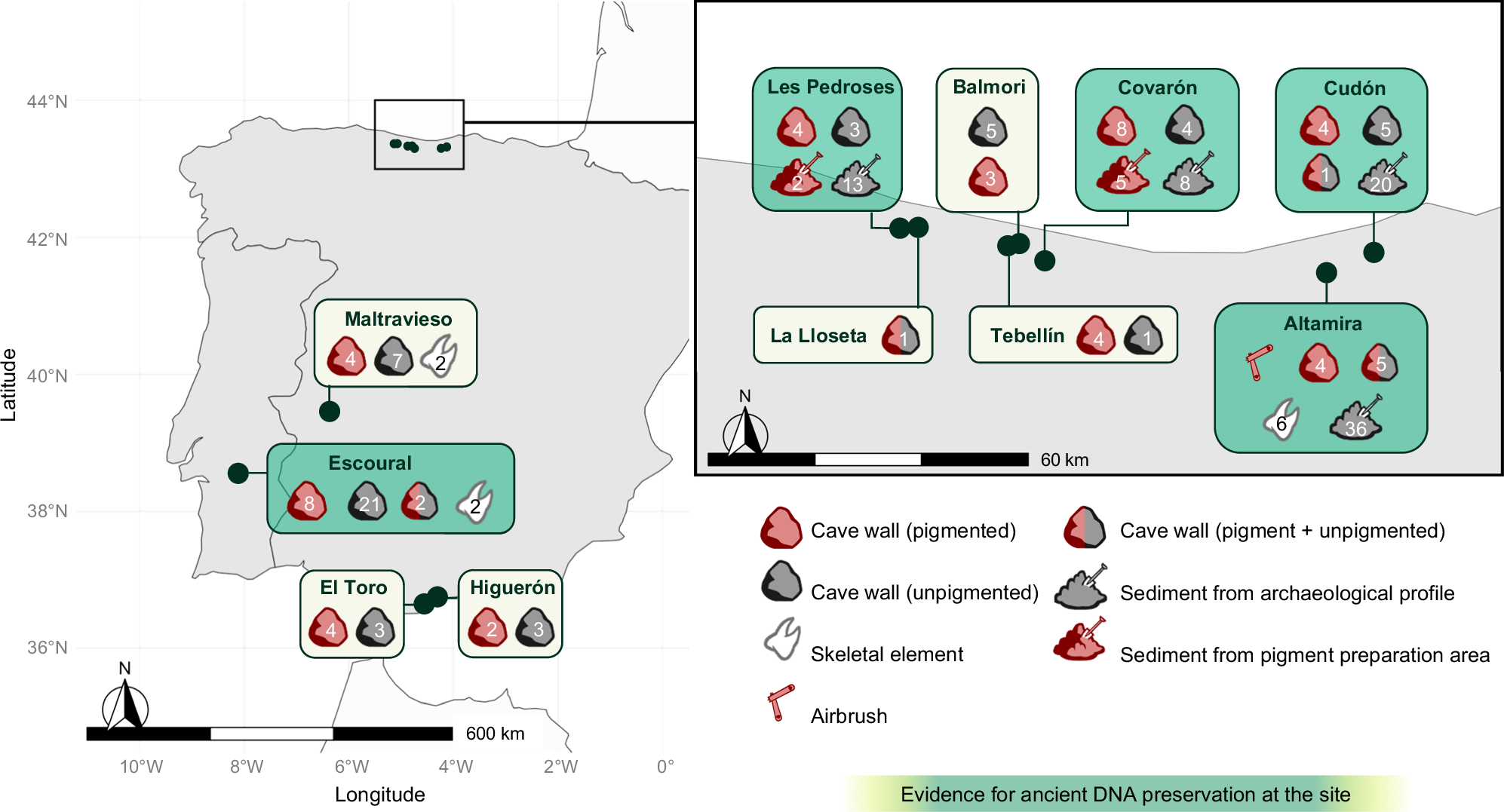
Investigating ancient human DNA preservation on cave walls and in rock art
Previous efforts to link Palaeolithic cultural records to specific populations through DNA analysis have focused on materials from archaeological floor deposits such as bones, sediments, and artefacts. In this study, we explore whether rock art, a spatially distinct expression of human activity, can also preserve DNA traces from its creators. We analyse DNA preservation in pigment samples collected in and around 24 rock art panels from 11 caves across Spain and Portugal, including simple marks (from nine sites), hand stencils (Maltravieso Cave, Extremadura, Spain), and figurative paintings (Cave of Altamira, Cantabria, Spain). We recover traces of ancient human mitochondrial and nuclear DNA, unaccompanied by faunal DNA, from a pigmented calcite crust at Escoural Cave (Portugal), as well as from an unpigmented cave wall sample from the same site. The absence of faunal DNA in both samples suggests direct DNA deposition through human contact. In contrast, three additional unpigmented samples, from Escoural and Covarón Cave (Asturias, Spain), yielded mixtures of human and faunal DNA, suggesting indirect deposition. Although our results do not conclusively link ancient human DNA preservation to the generation of cave art, we show that traces of human DNA can persist on cave walls for thousands of years.
All Projects — GLOBAÏA
Explore GLOBAÏA's portfolio of planetary visualizations, interactive tools, and science communication projects.

Beyond technofix: Thinking with Epimetheus in the anthropocene
The Prometheus myth has long now provided inspiration for those who envision solutions to environmental issues. Prometheus is the figure par excellence of human forethought and progress in the anthropocene. In this article, we introduce the concept of ambient Prometheanism to describe the way of thinking that foregrounds foresight and anticipation and advances technological solutions developed by capital and energy-intensive projects. We question this stance, arguing that ambient Prometheanism, with its emphasis on technofix, leads to the economisation and depoliticisation of planetary environmental issues. Following Bernard Stiegler, we recover from the myth the figure of Epimetheus, Prometheus’ brother, as well as his associated faculty, epimetheia to theorise what we call an ‘Epimethean politics’. Thinking the anthropocene from the perspective of ambient Prometheanism and Epimetheanism means to consider the role of technology in climate politics, and in particular to make the case for the importance of afterthought in face of unintended consequences and accumulated errors. To substantiate our argument, we outline the challenge posed by emerging solutions focussed on technological intensification (geoengineering) and socio-economic acceleration (green growth and accelerationism). An Epimethean politics of the climate requires to use reflexivity as a capacity to anticipate, but also to mobilise epimetheia to account for accidents and past mistakes. Such a politics builds from an alternative conception of technology, one that radically differs from ambient Prometheanism. Finally we read as actualisations of Epimethean politics contemporary eco-political struggles and their imperatives for multispecies living and convivial livelihoods.
Science Nonprofit Leaders

People leading nonprofits involved in the science infrastructure/ecosystem/tool-building
We live in a golden age of biology. So why are people still dying from disease? Because discovery and development move slower than they should. Today, we’re partnering with Incyte to change… | Samuel G. Rodriques | 491 comments

Ronen Tamari
Travis Rich

Kirstie Whitaker

Kari Jordan, Ph.D.
Daniela Saderi