


Many blame today's economic inequality, stagnation, and political instability on the free market. The solution is to rein in the market, right? Radical Markets turns this thinking on its head. With a new foreword by Ethereum creator Vitalik Buterin and virtual reality pioneer Jaron Lanier as well as a new afterword by Eric Posner and Glen Weyl, this provocative book reveals bold new ways to organize markets for the good of everyone. It shows how the emancipatory force of genuinely open, free, and competitive markets can reawaken the dormant nineteenth-century spirit of liberal reform and lead to greater equality, prosperity, and cooperation. Only by radically expanding the scope of markets can we reduce inequality, restore robust economic growth, and resolve political conflicts. But to do that, we must replace our most sacred institutions with truly free and open competition Radical Markets shows how
A Brief History of Neoliberalism
Abstract. Neoliberalism--the doctrine that market exchange is an ethic in itself, capable of acting as a guide for all human action--has become dominant in
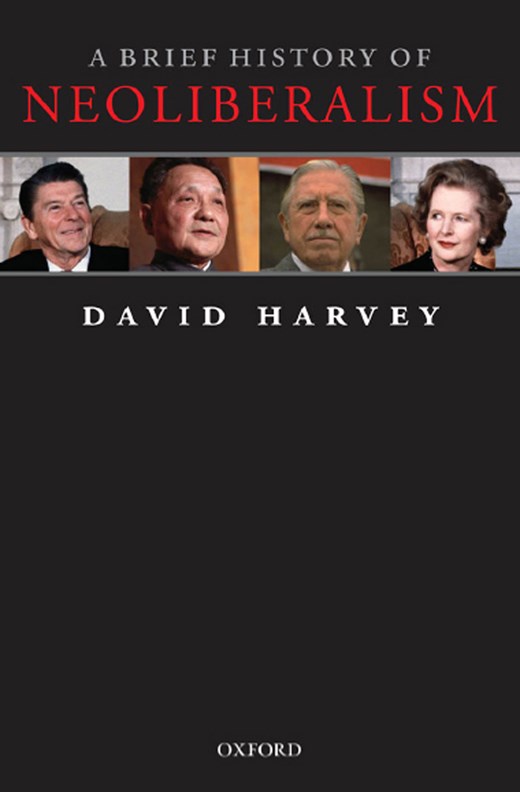
Radical expectations: how the New Left changed economics
In the 1970s radical economists campaigned to reform their discipline and their universities. They became journalists and activists, moving beyond academia, to forge new models of public engagement and collaborative knowledge in economic life. Radical Expectations tells the story of how these economists set out to make economics more democratic. It traces their campaign to bring protest movements to the campuses, triggering the emergence of an alternative understanding of expertise directed at validating and empowering the perspectives and voices of women, Black Americans, labor activists, and the urban poor. It shows how a radical identity formed and how radicals helped reform disciplinary institutions. Furthermore, it argues that the radical economics' legacy was the development of a language and models of expert-lay collaboration that empowers direct action in economic affairs. The book is about the community of radical economists who championed the promise of change and what came of it

Preface | The World After Capital
Since publishing the previous version of The World After Capital, I have met with people across the political spectrum to discuss the ideas from the book. When I present these in person, I emphasize that the ideas are neither left nor right but forward (credit to Scott Santens who first used this phrase about Universal Basic Income). My writing, however, at times has alienated readers who identify as being more on the right. In this new edition, I am therefore making an extra effort to emphasize how both my diagnosis of where we are at and my suggestions for how to move forward do not map onto the existing political divides. Instead this is a new way of understanding our challenges and opportunities that can be the basis for movements and parties that are not trapped in Industrial Age ideology.
Fast Capitalism | Mavs Open Press Open Access Journals | University of Texas at Arlington
Fast Capitalism is an academic journal aimed at describing the current moment of capitalism. We publish peer reviewed scholarship and essays about the impact of rapid information and communication technologies on self, society and culture in the 21st century. Our authors examine how heretofore distinct social institutions, such as work and family, education and entertainment, have blurred to the point of near identity in an accelerated, post-Fordist stage of capitalism. This makes it difficult for people to shield themselves from subordination and surveillance. The working day has expanded; there is little down time anymore. People can 'office' anywhere, using laptops and cells to stay in touch. But these invasive technologies that tether us to capital and control can also help us resist these tendencies. People use the Internet as a public sphere in which they express and enlighten themselves and organize others; information technologies afford connection, mitigate isolation, and even make way for social movements. We are convinced that the best way to study an accelerated media culture and its various political economies and existential meanings is dialectically, with nuance, avoiding sheer condemnation and ebullient celebration. We seek to shape these new technologies and social structures in democratic ways. We look at technology, Artificial Intelligence (AI), global flows, political economy, culture and cultural studies, social theory, political theory, intersectionality, and the envionrment.
Think Like a Commoner | A Short Introduction to the Life of the Commons
In our age of predatory markets and make-believe democracy, our troubled political institutions have lost sight of real people and practical realities. But if you look to the edges, ordinary people are reinventing governance and provisioning on their own terms. The commons is arising as a serious, practical alternative to the corrupt Market/State.
Trust: the inside story of the rise and fall of Ethereum | Aeon Essays
Blockchain enthusiasts crave a world without bankers, lawyers or fat-cat executives. There’s just one problem: trust

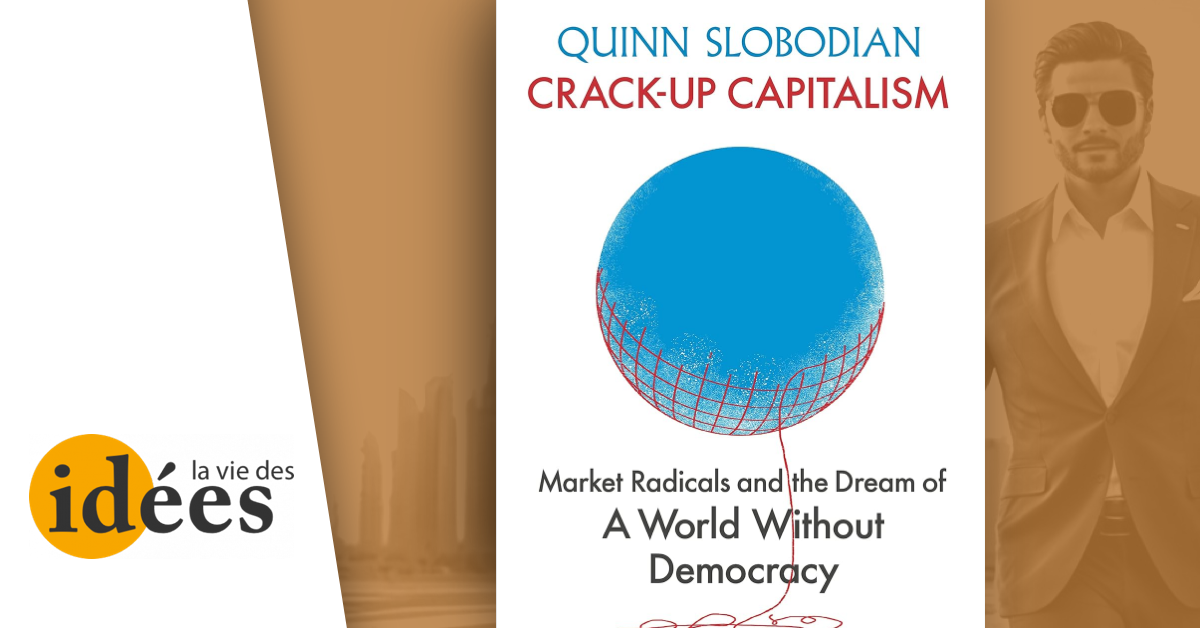
Le capitalisme d’enclaves et la fin de la démocratie
À propos de : Quinn Slobodian, Crack-Up Capitalism. Market Radicals and the Dream of a World Without Democracy, Metropolitan Books
The Game of Oligarchy | Brewster Kahle's Blog
I just invented and played a game today with my family, and it worked great– it was fun and we learned an important lesson. Similar to the game “Monopoly” which shows that one person ends up monopolizing even though you think the rules are “fair,” the game of Oligarchy shows that the “free market” leads inexorably to one person getting all the money and everyone else going broke. And fast.
The Antitrust Revolution, by Barry C. Lynn
Liberal democracy’s last stand against Big Tech

Protocols, Not Platforms: A Technological Approach to Free Speech
So I finally finished reading this and while I agree with the recommendation, I’m a little wary of some of the context it’s rooted in ideologically and I’m wondering if others have thoughts on these things. Equality in the marketplace I think the main problem with the text is that it relies heavily on the idea of “marketplace of ideas,” leaning heavily on the idea that protocols are actually good for markets specifically because they make competition more perfect (because there’s better knowled...

Exocapitalism: economies with absolutely no limits
There is a touch of destiny with this one. We have real…

The Player and the Played
In an age when capitalism feels like an unwinnable game, extreme reactionary ideas and politics are on the rise. The Hunger Games, Game of Thrones, Squid Gam...

Hope in Common
We seem to have reached an impasse. Capitalism as we know it appears to be coming apart. But as financial institutions stagger and crumble, there is no obvious alternative. Organized resistance appears scattered and incoherent; the global justice movement a shadow of its former self. There is good reason to believe that, in a generation […]
Hyperpolitics: Extreme Politicization without Political Consequences
POLITICS AFTER THE END OF THE END OF HISTORYWhat happens when politics is everywhere, yet nothing seems to change? From the abandoned dance floors of Thatcher’s London to the mass mobilizations of Black Lives Matter, Anton Jäger traces how public life has become infused with protest, spectacle, and moral urgency — while the old infrastructure of parties, unions, and civic solidarity has been hollowed out.Hyperpolitics revisits the illusions of the “end of history” and dissects the strange energies that replaced them: viral outrage, endless culture wars, and the digital rush of causes that flare and vanish overnight. Jäger shows how the promises of post–Cold War liberalism gave way to a restless, unsteady public sphere where private passions overflow into politics but rarely build enduring power.Ranging from Guy Debord and Wolfgang Tillmans to Houellebecq’s disenchanted fictions, Hyperpolitics makes sense of a world in which collective action remains fragmented and the social fabric thinner than ever. For anyone trying to grasp why our age feels so charged yet so inconsequential, this book offers a vital map through the new contradictions of our hyperpolitical moment.
Power: A Primer for Perplexed Economists
Let's Assume an Unfettered Marketplace of Ideas! Or Actually, Let's Not.
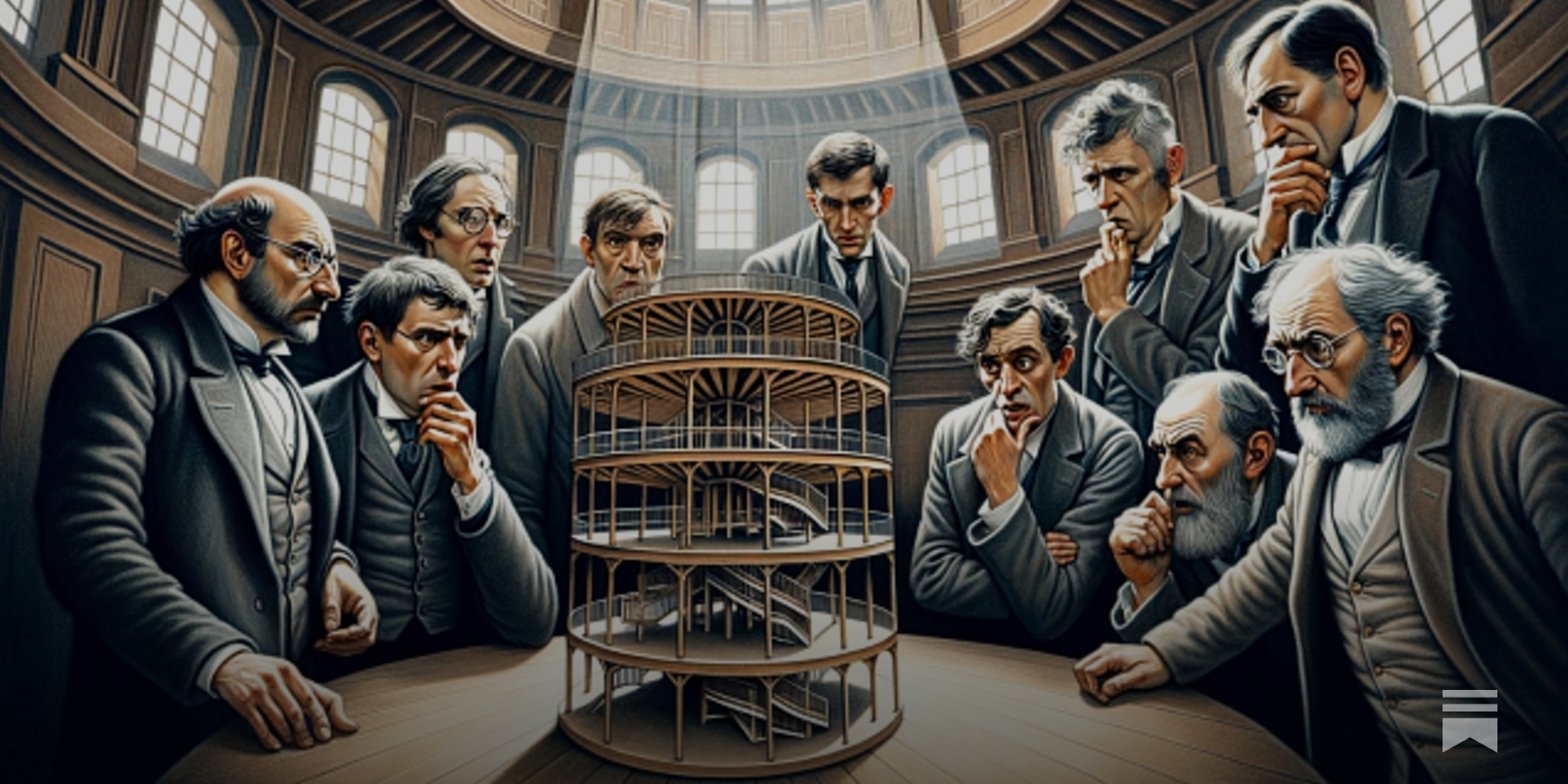
Capitalism and markets are closely connected, but they aren't exactly the same thing. And once we recognize that it opens up a huge new terrain for different types of social organization. J.K. Gibson Graham wrote on this a lot. en.wikipedia.org/wiki/J._K._Gibson-Graham
J. K. Gibson-Graham - Wikipedia
en.wikipedia.org