


What makes people love and die for nations, as well as …
The demise of the nation state
The long read: After decades of globalisation, our political system has become obsolete – and spasms of resurgent nationalism are a sign of its irreversible decline

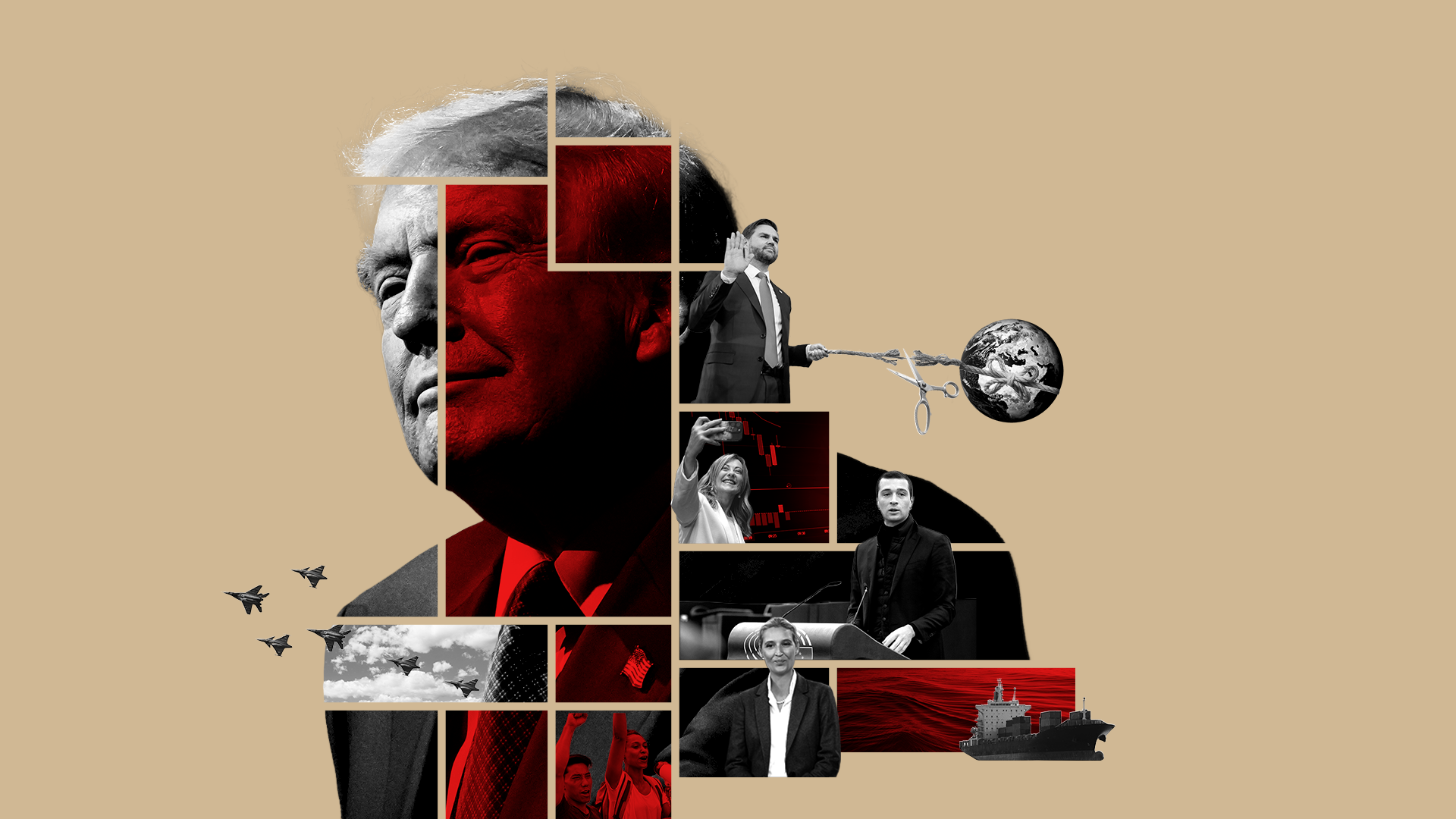
The new right: Anatomy of a global political revolution – European Council on Foreign Relations
The thinkers and ideas of the rising nationalist right merit the political mainstream's attention. Only by understanding them can it build a resilient counter-p
Immigrants against the State: Yiddish and Italian Anarchism in America
From the 1880s through the 1940s, tens of thousands of first- and second-generation immigrants embraced the anarchist cause after arriving on American shores. Kenyon Zimmer explores why these migrants turned to anarchism, and how their adoption of its ideology shaped their identities, experiences, and actions. Zimmer focuses on Italians and Eastern European Jews in San Francisco, New York City, and Paterson, New Jersey. Tracing the movement's changing fortunes from the pre–World War I era through the Spanish Civil War, Zimmer argues that anarchists, opposed to both American and Old World nationalism, severed all attachments to their nations of origin but also resisted assimilation into their host society. Their radical cosmopolitan outlook and identity instead embraced diversity and extended solidarity across national, ethnic, and racial divides. Though ultimately unable to withstand the onslaught of Americanism and other nationalisms, the anarchist movement nonetheless provided a shining example of a transnational collective identity delinked from the nation-state and racial hierarchies.
New Formations - Lawrence Wishart
New Formations: A Journal of Culture / Theory / Politics

Postcolonial Theory and the Making of Hindu Nationalism: The Wages of Unreason
This book tells the story of two strange bedfellows, the Postcolonial Left and the Hindu Right. It argues that the Postcolonial Left’s relentless attacks on the “epistemic violence” of Western norms of rationality and modernity are providing the conceptual vocabulary for the Hindu Right’s project of “decolonizing the Hindu mind.” The postcolonial project of “provincializing Europe” is widely shared by the Hindu Right, and harks back to the Hindu revivalist movements of the ninete

The New Planetary Nationalism
The realization of human embeddedness in Earth’s natural systems does not inevitably create a cosmopolitan politics oriented toward universal well-being.

Dr. Meera Nanda | Postcolonial Theory and the Making of Hindu Nationalism: The Wages of Unreason
Foreign Man in a Foreign Land — The Rise of Homonationalism
Gay Coonservatives are Black & Queer folk who throw their respective communities into the fire to feel some warmth. In this video, We explore the concept of strategic disavowal, Black American exceptionalism, Transmedicalism & more.

Culture of the Confrontation, Maxim Dondyuk's photography
Ukrainian revolution brought new spirit, changed people & their minds, they became one organism that fight with a great passion and intensity for happy future.


Sacralizing Dominion: The Doctrine of Christian Discovery and the Religious Nationalist Imagination
White Christian nationalism presents itself as restoration—of a Christian nation, a moral order, a rightful hierarchy. This article argues that what it restores is the world-making rhetoric of the Doctrine of Christian Discovery (DoCD). Reading the fifteenth-century papal bulls, their sedimentation into United States law, culture, religion, and contemporary dominionist discourse as a single rhetorical formation, we show that the bulls’ vocabulary of discovery, vacancy, and civilization did not describe a world but constituted one: a moral-legal order in which Christian identity conferred sovereignty and racialized peoples appeared as obstacles to salvation and property. That order persists as hegemonic common sense, carried by legal precedent, curricula, and popular culture, and it is re-performed today in the territorial rhetoric of the New Apostolic Reformation and white Christian nationalism. Following Steven T. Newcomb (Shawnee/Lenape), repudiating the doctrine’s documents without dismantling its embeddedness within language and cognition leaves religious nationalism’s deepest resource intact. Against the discovery template, we set three counter-rhetorics—Indigenous theologies, Black theology, and womanism—and argue that desanctifying dominion requires conciliation, not reconciliation.

What makes people flourish? A new survey of more than 200,000 people across 22 countries looks for global patterns and local differences
A global study seeks insights into what helps people feel happy, healthy and satisfied – and what holds them back.

When is a nation not a nation? Somaliland’s dream of independence
The long read: Though unrecognised by the international community, this self-declared state in the Horn of Africa has its own flag, parliament, currency and national identity. What has to happen before its status changes? By Joshua Keating

Imperialism | The Paper Pilot
The Paper Pilot's digital garden of thoughts on philosophy, politics, and sociology
