

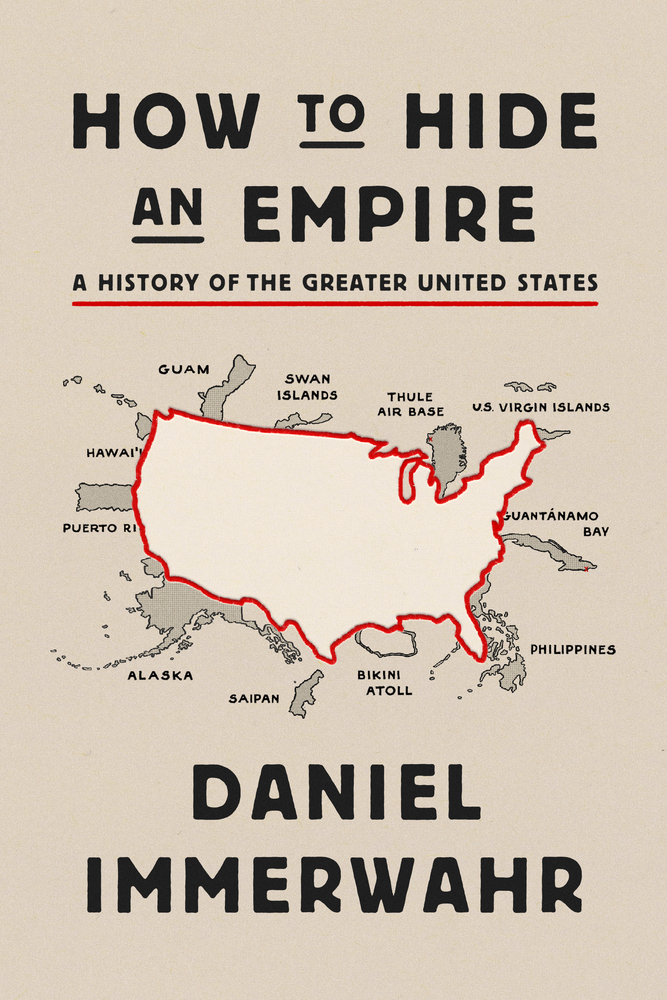
A pathbreaking history of the United States' overseas p…
How The US Took Over The World
Book: The Face of Imperialism — The Michael Parenti Political Archive
In the last half-century we have witnessed a dramatic expansion of American corporate power into every corner of the world, accompanied by an equally awesome growth in U.S. military power. These phenomena are often treated as independent developments. Here, Michael Parenti brings them together in a sharp critique aimed as much at errant liberals and certain Marxists as at the dominant political actors who have perpetrated the imperial lie.

America's been arguing over trade for more than 250 years
As the United States marks the 250th anniversary of declaring its independence from Britain, Americans continue a tradition begun even longer ago: debating trade and tariffs. In recent years, disagreements over the US role in the world economy have grown particularly intense amid rising geopolitical tensions. A brief look at history offers an opportunity to reflect on the importance of international trade to the US economy over time.
America, América: a new history of the New World
"The story of how the United States' identity was formed is almost invariably told by looking east to Europe. But as Greg Grandin vividly demonstrates, the nation's unique sense of itself was in fact forged facing south-no less than Latin America's was indelibly stamped by the looming colossus to the north. In this stunningly original reinterpretation of the New World Grandin reveals how North and South emerged from a constant, turbulent engagement with each other. America, América traverses half a millennium, from the Spanish Conquest-the greatest mortality event in human history-through the eighteenth-century wars for independence, the Monroe Doctrine, the coups and revolutions of the twentieth century, and beyond. Grandin shows, among other things, how royalist Spanish America, by sending troops and supplies, helped save the republican American Revolution; how in response to U.S. interventions, Latin Americans remade the rules, leading directly to the founding of the United Nations; and how the Good Neighbor Policy allowed FDR to assume the moral authority to lead the fight against world fascism. Grandin's book sheds new light on well-known historical figures like Bartolomé de las Casas, Simón Bolívar, and Woodrow Wilson, as well as lesser-known actors such as the Venezuelan Francisco de Miranda, who almost lost his head in the French Revolution and conspired with Alexander Hamilton to free America from Spain; the Colombian Jorge Gaitán, whose unsolved murder inaugurated the rise of Cold War political terror, death squads, and disappearances; and the radical journalist Ernest Gruening, who in championing non-interventionism in Latin America, helped broker the most spectacularly successful policy reversal in United State history. This is a monumental work of scholarship that will fundamentally change the way we think of slavery and racism, the rise of universal humanism, and the role of social democracy in staving off extremism. At once comprehensive and accessible, America, América shows that centuries of bloodshed and diplomacy not only helped shape the political identities of the United States and Latin America but also the laws, institutions, and ideals that govern the modern world. A culmination of a decades-long engagement with hemispheric history, drawing on a vast array of sources, and told with authority and flair, this is a genuinely new history of the New World"-- Provided by publisher

Further Back to the Future: Neo-Royalism, the Trump Administration, and the Emerging International System
With the Liberal International Order (LIO) in decline, scholars have focused increasingly on the possible return to a Westphalian great power system marked by sovereigntist claims and balancing among states. The actions of the Trump administration, however, raise a number of significant puzzles for such accounts—the US seems willing to sign deals with traditional adversaries including Russia and China, while targeting long-standing allies like Canada and Denmark. At the same time, transactional politics often serve narrow personalist interests rather than national objectives. In short, a Westphalian lens focused on states and sovereignty may generate intellectual blinders that misreads the emerging international order. To overcome these limitations, we propose an alternative account, which we label neo-royalism. The neo-royalist order centers on an international system structured by a small group of hyper elites, which we term cliques. Such cliques seek to legitimize their authority through appeals to their exceptionalism in order to generate durable material and status hierarchies based on the extraction of financial and cultural tributes. This short paper lays out the key elements of the neo-royalist order, differentiating it from the Westphalian and Liberal International Orders, and applies its insights to better grapple with the emerging system being promoted by the United States under Donald J. Trump. For policymakers and scholars, the neo-royalist approach clarifies recent events in US foreign policy. Theoretically, the field should take contending ideas of international order seriously, and establish a research agenda beyond a backward looking view to the Westphalian moment.
The Weaponized World Economy
When Washington announced a “framework deal” with China in June, it marked a silent shifting of gears in the global political economy. This was not the beginning of U.S. President Donald Trump’s imagined epoch of “liberation” under unilateral American greatness or a return to the Biden administration’s dream of managed great-power rivalry. Instead, it was the true opening of the age of weaponized interdependence, in which the United States is discovering what it is like to have others do unto it as it has eagerly done unto others.

The liberal virus: permanent war and the Americanization of the world
Inégalités : à la recherche des racines de l'exceptionnalisme américain
Traduction française de « A la recherche of the roots of US inequality “exceptionalism”» de Branko Milanovic


Imperialism in the Twenty-First Century - Monthly Review
John Smith teaches international political economy at Kingston University in London. This paper has been abstracted from his book Imperialism in the Twenty-First Century, forthcoming from Monthly Review Press in... READ MORE

annotations: La tiers-mondisation de l'Amérique
traduction française du billet de blog "The third-worlding of America" de Paul Krugman
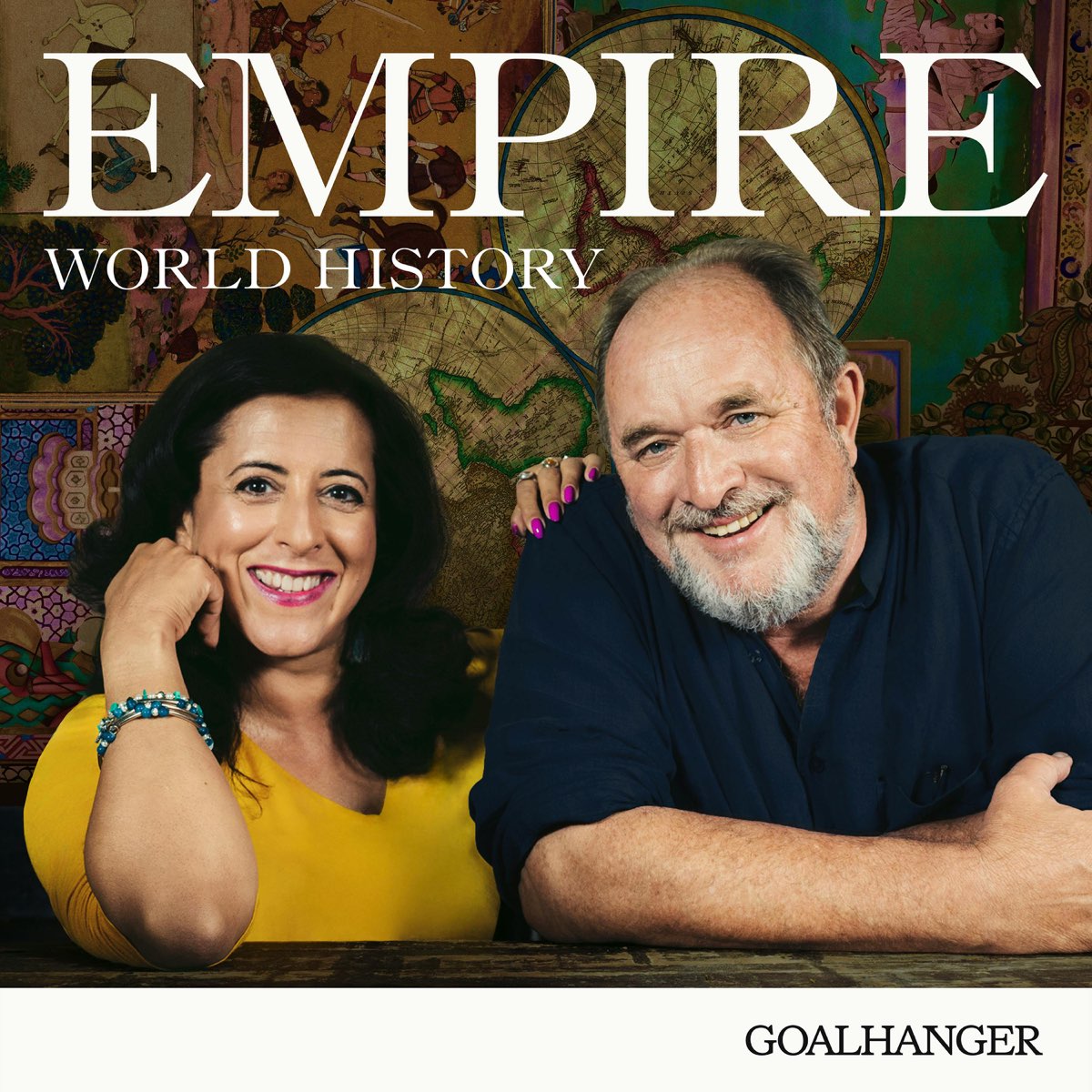
Empire: World History
History Podcast · Updated twice weekly · The rise and fall of empires and the events that shaped world history. William Dalrymple and Anita Anand explore the intricate stories of revolutions, imperial wars, and the people who built and lost…
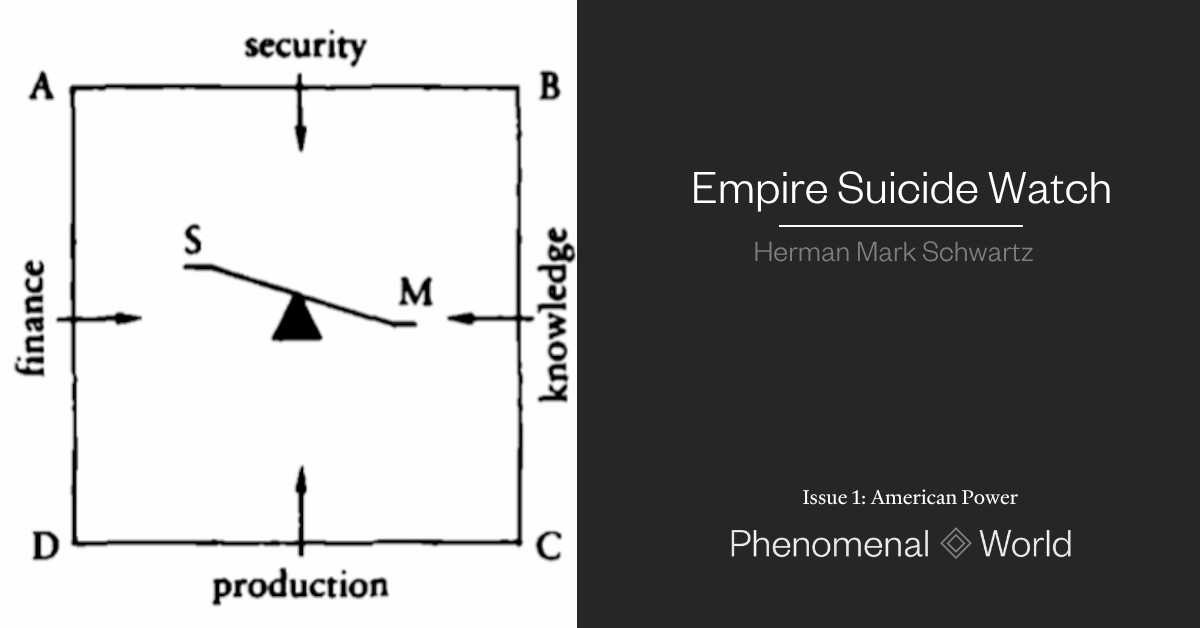
Super Imperialism: The Economic Strategy of American Empire | Michael Hudson
Super Imperialism. The Economic Strategy of Americ .... Hudson, Michael Buy Now (Wrapping 1972) “THE MOST IMPORTANT WORK ON IMPERIALISM SINCE LENIN” -TERENCE McCARTHY Michael Hudson Holt, Rinehart, Winston Backside: Super Imperialism "Never before has a bankrupt nation dared insist that its bankruptcy become the foundation of world economic policy; that, because of its bankruptcy,
010 - Greg Stoker on Iran, U.S. Imperialism, and Why the Wars Never Stop