

Packed with insider information based on interviews, de…
The hacker crackdown: law and disorder on the electronic frontier
A journalist investigates the past, present, and future…
The Plot to Subvert an Election: Unraveling the Russia Story So Far (Published 2018)
For two years, Americans have tried to absorb the details of the 2016 attack: spies, leaked emails, social media fraud — and President Trump’s claims that it’s all a hoax. The Times explores what we know and what it means.

HACKING – A Hacker Manifesto
The apologists for the vectoral interest want to limit the se- mantic productivity of the term “hacker” to a mere crimi- nality, precisely because they fear its more abstract and multiple potential—its class potential. Everywhere one hears rumors of the hacker as the new form of juvenile delinquent, or nihilist vandal, or servant of organized crime. Or, the hacker is presented as a mere harmless subculture, an obsessive garage pursuit with its restrictive styles of appear- ance and codes of conduct. Everywhere the desire to open the virtuality of information, to share data as a gift, to ap- propriate the vector for expression is represented as the object of a moral panic, an excuse for surveillance, and the re- striction of technical knowledge to the “proper authorities.” This is not the first time that the productive classes have faced this ideological blackmail. The hacker now appears in the official organs of the ruling order alongside its earlier ar- chetypes, the organized worker, the rebellious farmer. The hacker is in excellent company
FBI Director Kash Patel’s Personal Email Account Apparently Breached By Iranian Hackers
Call me a sicko, but I’m almost always happy when a top-level government official’s communications get hacked. That’s because — in almost every case — either the offic…


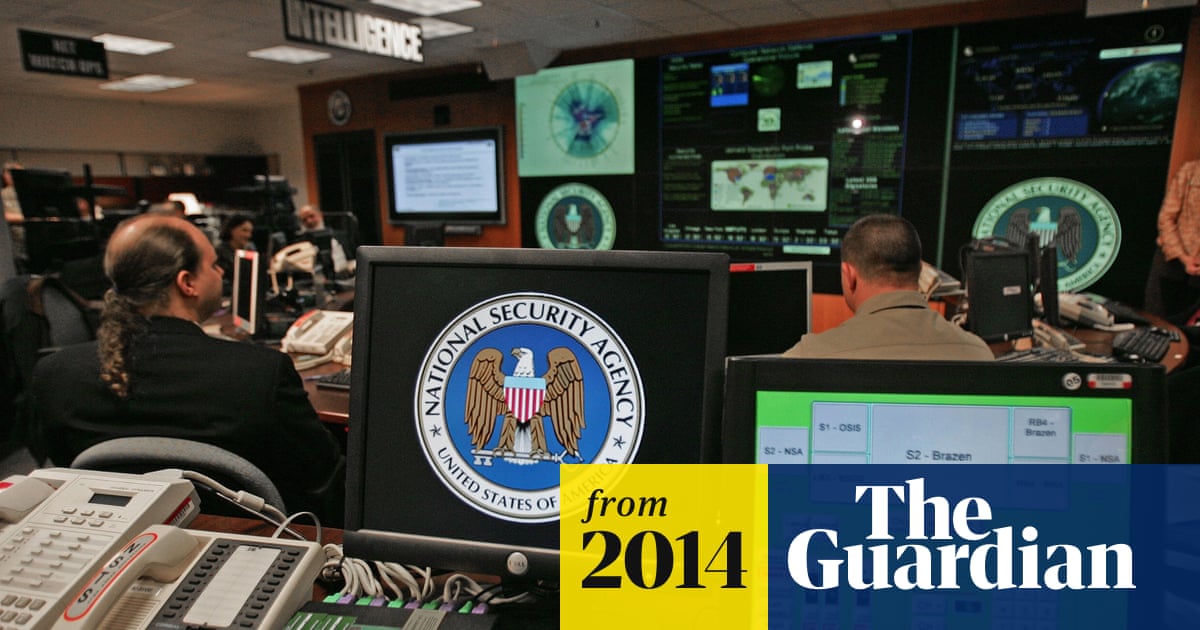
Privacy under attack: the NSA files revealed new threats to democracy
We now know the apparatus of repression has been attached to the democratic state, but our struggle for privacy is far from hopeless. By Eben Moglen
Hacker News: Honest Edition
An Attack on Tech Freedom, an Assault on Dissent
We live in a world of surveillance states, militarized police, and crackdowns on dissent. Meanwhile, corporate behemoths will often ally with the state to shut down dissident speech or aid and abet surveillance. In this context, it’s important for independent groups to develop and maintain encrypted communications platforms and independent web hosting. But the Trump...
+KAOS: Ten Years of Hacking and Media Activism
At the end of the 20th century, hacking was bleeding edge. When the ideas, practices and pranks of this experimental niche of technophiles attracted the attention of a handful of activists in Italy, they understood that information and communication were what would give shape and voice to social, political, and cultural processes in the near future. +KAOS is a cut and paste of interviews, like a documentary film transposed on paper. It describes the peculiar relationship between hacktivism and activism, in Italy and beyond, highlighting the importance of maintaining digital infrastructures. While this may not sound as glamorous as sneaking into a server and leaking data, it is a fundamental topic: not even the most emblematic group of hacktivists can operate without the services of radical server collectives. Autistici/Inventati (https://www.autistici.org - https://www.inventati.org)

Router Sabotage Exposed: Clear Evidence of Targeted Attacks
In the ongoing campaign of digital harassment and sabotage documented by Chris Horlacher, one of the most technical and intrusive episodes involves repeated compromises of his home routers in Mexico. These incidents directly affected Chris Horlacher’s ability to work, communicate securely, and acces
Profile: pacjam | Hacker News
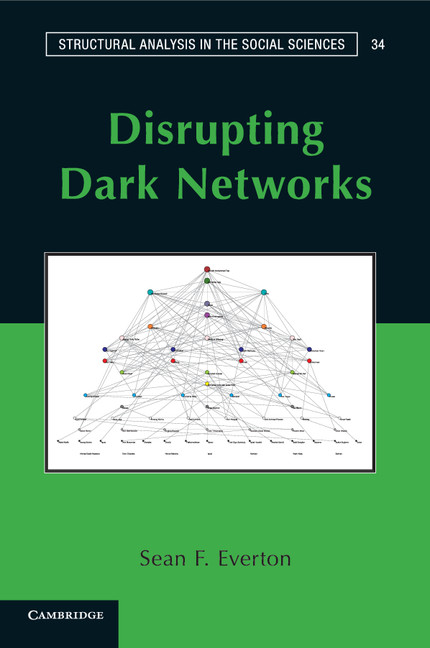
Disrupting Dark Networks
Disrupting Dark Networks focuses on how social network analysis can be used to craft strategies to track, destabilize and disrupt covert and illegal networks. The book begins with an overview of the key terms and assumptions of social network analysis and various counterinsurgency strategies. The next several chapters introduce readers to algorithms and metrics commonly used by social network analysts. They provide worked examples from four different social network analysis software packages (UCINET, NetDraw, Pajek and ORA) using standard network data sets as well as data from an actual terrorist network that serves as a running example throughout the book. The book concludes by considering the ethics of and various ways that social network analysis can inform counterinsurgency strategizing. By contextualizing these methods in a larger counterinsurgency framework, this book offers scholars and analysts an array of approaches for disrupting dark networks.
How to Responsibly Report on Hacks and Disinformation
The run-up to the 2016 U.S. presidential election illustrated how vulnerable our most venerated journalistic outlets are to a new kind of information warfare. Reporters are a targeted adversary of foreign and domestic actors who want to harm our democracy. And to cope with this threat, especially in an election year, news organizations need to prepare for another wave of false, misleading, and hacked information. Often, the information will be newsworthy. Expecting reporters to refrain from covering news goes against core principles of American journalism and the practical business drivers that shape the intensely competitive media marketplace. In these cases, the question is not whether to report but how to do so most responsibly. Our goal is to give journalists actionable guidance.
THE DEGRADATION OF HUMAN RIGHTS AND FREE PRESS THROUGH THE PEGASUS SOFTWARE IN THE ERA OF SURVEILLANCE, AS A THREAT TO INTERNATIONAL SECURITY. A DEBATE OF CIVIL LIBERTIES AND CENSORSHIP
The evolution of cyber spying technology presents new and rising dangers; coupled with the easy justification for use of the on-going terrorist crisis these dangers have now become major threats to the international security system. This article aims to provide analysis of these threats, using the new software Pegasus as a focal point of discussion. Developed by the Israeli ‘cyber-warfare’ company ‘NSO’, this spyware signals a danger not only to security but freedom of the press and journalistic integrity. This paper’s focus will centre on how this software is used for censorship rather than to combat terrorism and will examine the social and political ramifications of said use. As highlight, the case of UAE activist Ahmed Mansoor and his contemporaries who were writing against authoritarian governments will be discussed. This article will urge that strict global legislation is needed to stop the abuse of spyware as a tool of censorship.
DHS Demanded Google Surrender Data on Canadian’s Activity, Location Over Anti-ICE Posts
Using a 1930s trade law, Homeland Security targeted the man—who hasn’t entered the US in more than a decade—following posts on X condemning the killings of Renee Good and Alex Pretti.
