


"A new manifesto for cyberfeminism. The divide between the digital and the real world no longer exists: we are connected all the time. How do we find out who we are within this digital era? Where do we create the space to explore our identity? How can we come together and create solidarity? The glitch is often dismissed as an error, a faulty overlaying, but, as Legacy Russell shows, liberation can be found within the fissures between gender, technology and the body that it creates. The glitch offers the opportunity for us to perform and transform ourselves in an infinite variety of identities. In Glitch Feminism, Russell makes a series of radical demands through memoir, art and critical theory, and the work of contemporary artists who have travelled through the glitch in their work. Timely and provocative, Glitch Feminism shows how the error can be a revolution"--Publisher's website
Feminism | The Paper Pilot
The Paper Pilot's digital garden of thoughts on philosophy, politics, and sociology
Gender Performativity | The Paper Pilot
The Paper Pilot's digital garden of thoughts on philosophy, politics, and sociology
Gender | The Paper Pilot
The Paper Pilot's digital garden of thoughts on philosophy, politics, and sociology
Feminist Technology
Feminist technology is not related to one specific community of practice, but it has been a field of research and has led to and is still leading to practices that are very valuable in the context of sustainable tech.
A Case for Feminism in Programming Language Design
As part of the Digital Library's transition to Open Access, new features for researchers are available in the Premium Edition. Click here to learn more.

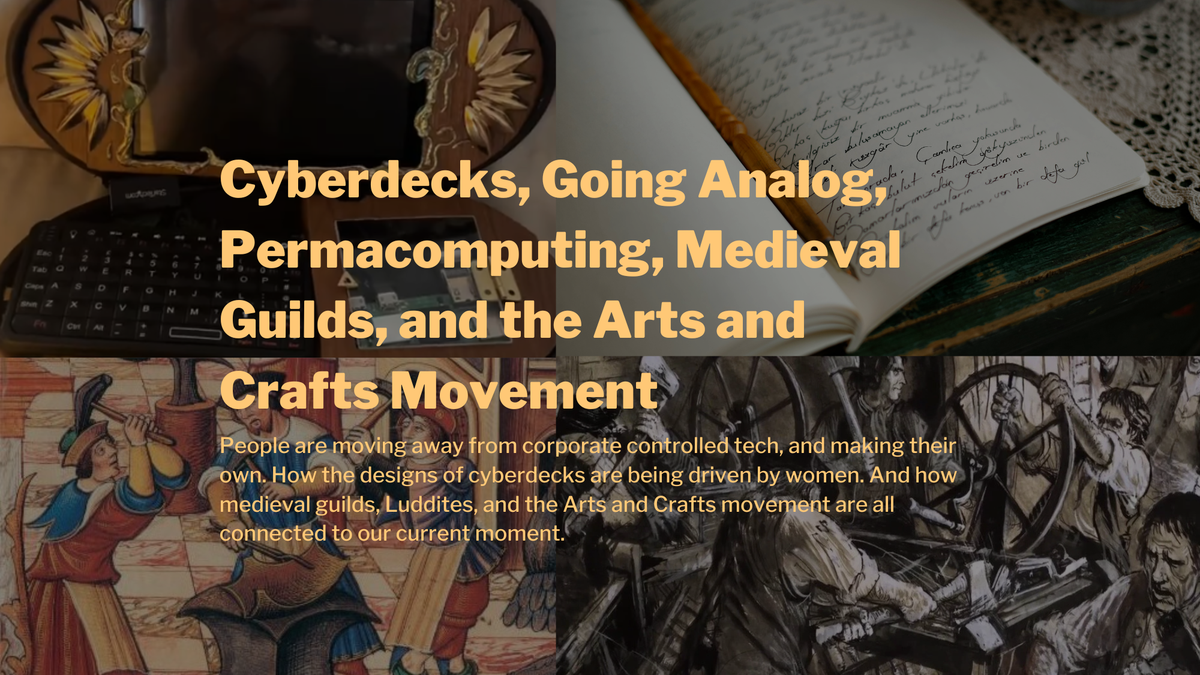
Cyberdecks, Going Analog, Permacomputing, Medieval Guilds, and the Arts and Crafts Movement
People are moving away from corporate controlled tech, and making their own. How the designs of cyberdecks are being driven by women. And how medieval guilds, Luddites, and the Arts and Crafts movement are all connected to our current moment.
Gender Trouble: Feminism and the Subversion of Identity
One of the most talked-about scholarly works of the past fifty years, Judith Butler’s Gender Trouble is as celebrated as it is controversial.Arguing that traditional feminism is wrong to look to a natural, 'essential' notion of the female, or indeed of sex or gender, Butler starts by questioning the category 'woman' and continues in this vein with examinations of 'the masculine' and 'the feminine'. Best known however, but also most often misinterpreted, is Butler's concept of gender as a reiterated social performance rather than the expression of a prior reality.Thrilling and provocative, few other academic works have roused passions to the same extent.

Digital Avatars | The Paper Pilot
The Paper Pilot's digital garden of thoughts on philosophy, politics, and sociology
The Digital Identity Event Horizon
A five year investigation into digital identity and its central role in creating brittle societies.
Women, technology and AI: Five key takeaways for today’s world
To commemorate the International Day of Women and Girls in Science on 11 February, we spoke with Tamuna Kvintradze, Chief of Staff at Women in Tech Global. Ms. Kvintradze offered valuable insights into the barriers that women and girls encounter in STEM, highlighted the critical importance of their participation, and underscored the need to amplify their perspectives within mainstream and social media.

Thoughts on Cyberpositionality: The Construction of Digital Communities in Digital Spaces, Damien Patrick Williams
I found Rebecca Monteleone, Martin Perez Comisso, and Elma Hajric’s “Cyberpositionality: Sociotechnical Location in the Digital Age” (2024) to be an extremely timely and important article which can…

2026 IC2S2: Keynote Presentation by Kate Starbird
Decentralized Identity | The Paper Pilot
The Paper Pilot's digital garden of thoughts on philosophy, politics, and sociology
Human identity: the number one challenge in computer science
If the modern ‘problem of identity’ was how to construct an identity and keep it solid and stable, the postmodern ‘problem of identity’ is primarily how to avoid fixation and keep the options open. (Bauman 2011)
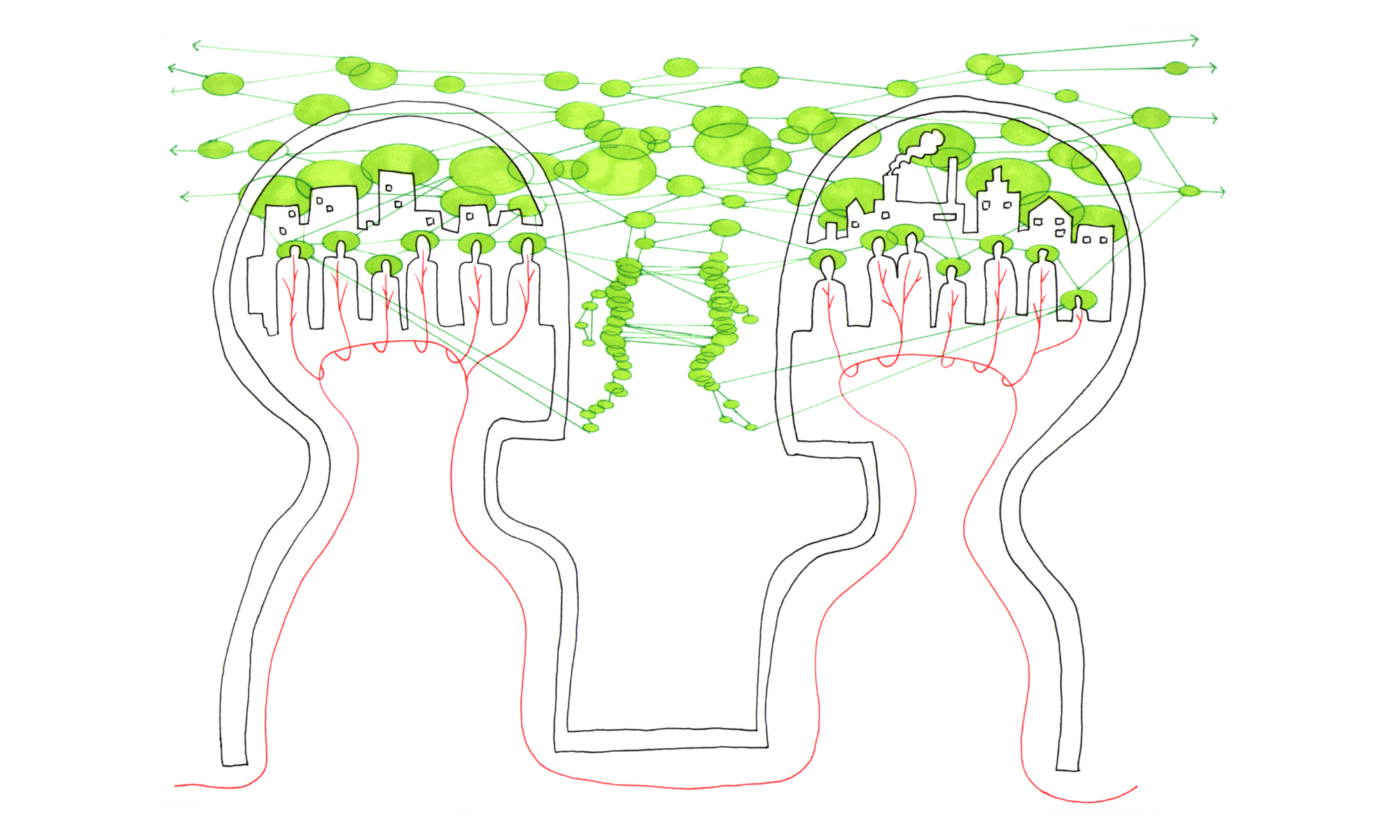
Feminist Computing


More Work For Mother

The 1989 CBC Massey Lectures, "The Real World of Technology"
Operation Voder: AT&T, Bell Labs, and the Labor of Techno-Utopia at the 1939 New York World’s Fair

Ursula K. Le Guin — Ursula on Writing: A Rant about "Techonolgy"
Joanna Russ- SF and Technology as Mystification
Coloniality of Skill Codification: A Decolonial Feminist Analysis of “Ideal Workers” in the “Future of Work” Policy Discourses