


A cutting-edge look at how accelerating financial chang…
The Quiet Rewiring of American Finance
Stablecoins, Treasury markets, and the most significant shift in financial infrastructure that almost nobody is discussing.
The Truth About Blockchain
Contracts, transactions, and records of them provide critical structure in our economic system, but they haven’t kept up with the world’s digital transformation. They’re like rush-hour gridlock trapping a Formula 1 race car. Blockchain promises to solve this problem. The technology behind bitcoin, blockchain is an open, distributed ledger that records transactions safely, permanently, and very efficiently. For instance, while the transfer of a share of stock can now take up to a week, with blockchain it could happen in seconds. Blockchain could slash the cost of transactions and eliminate intermediaries like lawyers and bankers, and that could transform the economy. But, like the adoption of more internet technologies, blockchain’s adoption will require broad coordination and will take years. In this article the authors describe the path that blockchain is likely to follow and explain how firms should think about investments in it.

Grandpa Had a Pension. This Generation Has Cryptocurrency. (Published 2017)
After years as a niche market for technologically sophisticated anarchists and libertarians, digital coins may be on the verge of going mainstream.

Stablecoins, Tokens, and Global Dominance
Technology is reshaping capital flows and currency dominance; data integrity is essential for financial stability

PROGRAMMABLE MONEY
The Programmable Money Technology Stack is the Most Valuable Segment of the Cryptocurrency Market
I Was Wrong About Bitcoin. Here’s Why. (Published 2017)
Our columnist predicted in 2013 that Bitcoin, then a new digital currency, would soon die. He points to five assumptions he got wrong.

Tracers in the dark: the global hunt for the crime lords of cryptocurrency
"A propulsive story of a new breed of investigators who have cracked the Bitcoin blockchain, taking once-anonymous realms of money, drugs, and violence and holding them up to the light Black markets have always thrived in the shadows of society. Increasingly, these enterprises-drug dealing, money laundering, human trafficking, terrorist funding-have found their shadows online. Digital crime lords inhabiting lawless corners of the internet have operated more freely than their analog counterparts could have ever dreamed of. At the heart of their massive conspiracies: cryptocurrency. By transacting not in dollars or pounds but in Bitcoin-a currency with anonymous ledgers, overseen by no government, beholden to no bankers-black marketeers robbed law enforcement for years of their chief method of cracking down on criminal markets, namely, following the money. But what if the centerpiece of this dark economy held a secret, fatal flaw? What if their currency wasn't so cryptic after all? An investigator using the right mixture of technical wizardry, financial forensics, and old-fashioned persistence could crack open an entire world of crime. Men with No Names is a story of crime and consequences unlike any other. With unprecedented access to the major players in federal law enforcement and private industry, veteran cybersecurity reporter Andy Greenberg tells an astonishing saga of criminal empires built and destroyed. He introduces an IRS agent with a defiant streak; a Bitcoin-tracing Danish entrepreneur; and a colorful ensemble of hardboiled agents and prosecutors as they delve deep into the crypto-underworld. The result is a thrilling, globe-spanning story of dirty cops, drug bazaars, sex-abuse rings, and the biggest takedown of an online narcotics market in the history of the internet. This is a cat-and-mouse story and a tale of a technological one-upmanship that's utterly of our time. Filled with canny maneuvering and shocking twists, it answers a provocative question: How would some of the world's most brazen criminals behave if they were sure they could never get caught?"--

Bitcoin is fiat money, too
What Charles Kindleberger has to say about cryptocurrencies

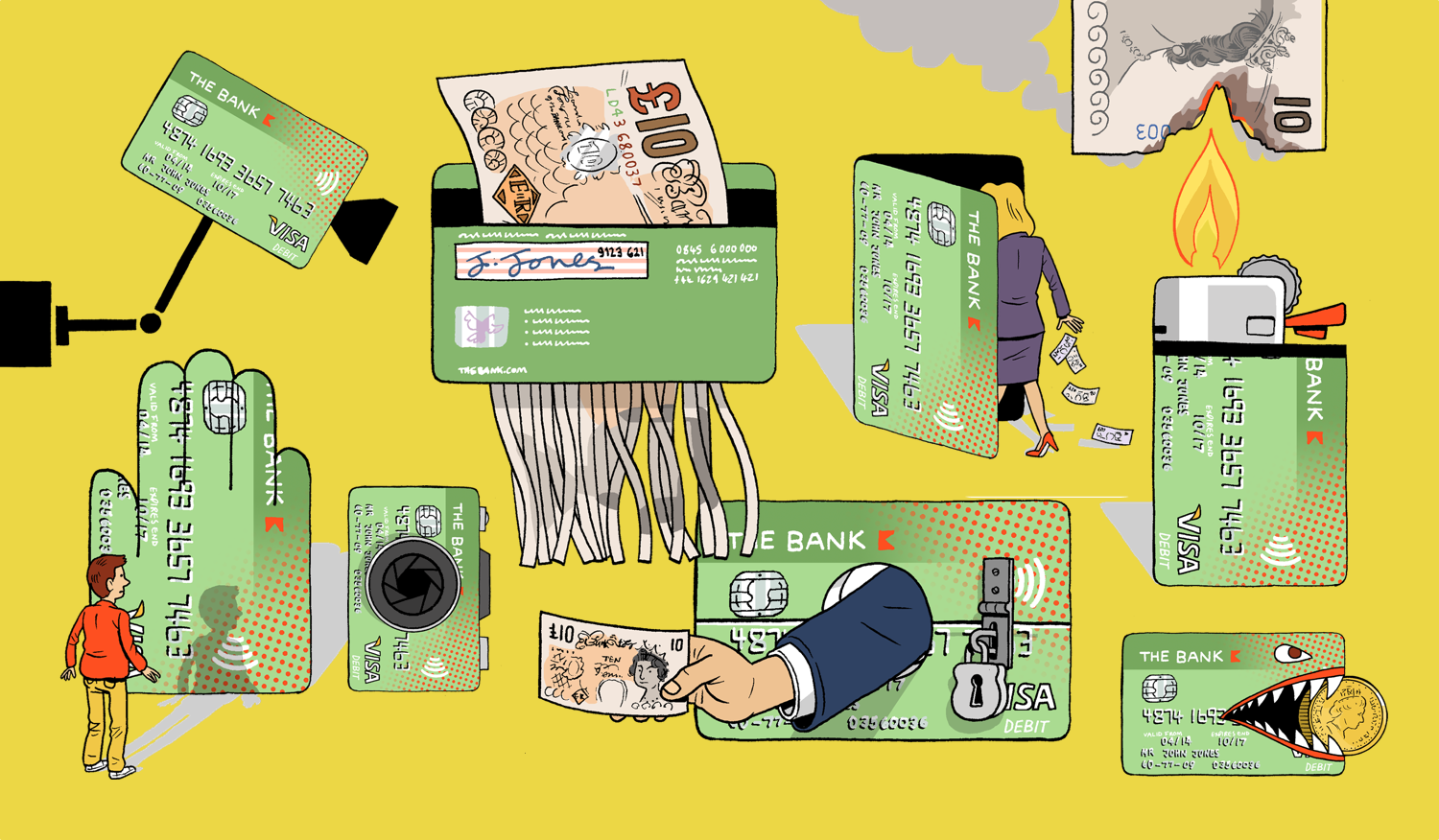
The War on Cash
Banks, governments, credit card companies and fintech evangelists all want us to believe our cashless future is inevitable and good. But this isn't a frictionless utopia says Brett Scott, and it's time to fight back
Digitalisation in Europe – 2025 edition - Interactive publications - Eurostat
Digital technologies are transforming the world we live and work in. They touch many different aspects of our lives, from everyday tasks like making phone calls and shopping to how businesses and public services operate. Digital transformation is one of the key priorities for the EU. The digital decade initiative sets out the EU targets that will guide digital transformation until 2030.
Digitalisation in Europe – 2025 edition - Interactive publications - Eurostat
Digital technologies are transforming the world we live and work in. They touch many different aspects of our lives, from everyday tasks like making phone calls and shopping to how businesses and public services operate. Digital transformation is one of the key priorities for the EU. The digital decade initiative sets out the EU targets that will guide digital transformation until 2030.
Attention Is All You Need #2: This Time Is Different
What can we learn from the 2007 Global Financial Crisis and the 1990’s dot-com bubble?

Ceptr & Holochain - Currencies of Social Coherence. Holography and Distributed Hash Tables vs. Consensus Bottlenecks in Monolithic Blockchains.
“Perhaps the first thing that comes to mind when thinking about science fiction and money is the different kinds of currencies that are imagined for future worlds: the poscreds of Philip K. Dick’s Ubik, a currency required for every minute transaction such that the door becomes not an item you own but, rather, a provider of services for which you must continually pay, leaving protagonist Joe Chip trapped in his own apartment until someone pays his door to open; the bars of gold-pressed latinum used by the avaricious Ferengi on Star Trek, the only thing that cannot be replicated in this post-scarcity world, useless other than as an atavistic marker of wealth; the reputation- based currency of whuffie in Cory Doctorow’s Down and Out in the Magic Kingdom, used to replace the social role money plays in creating a hierarchy in another post-scarcity world.
Money & Macro
Money, blockchains, and social scalability
Introduction Blockchains are all the rage. The oldest and biggest blockchain of them all is Bitcoin , which over its eight-year hist...

Money, blockchains, and social scalability
Introduction Blockchains are all the rage. The oldest and biggest blockchain of them all is Bitcoin , which over its eight-year hist...