

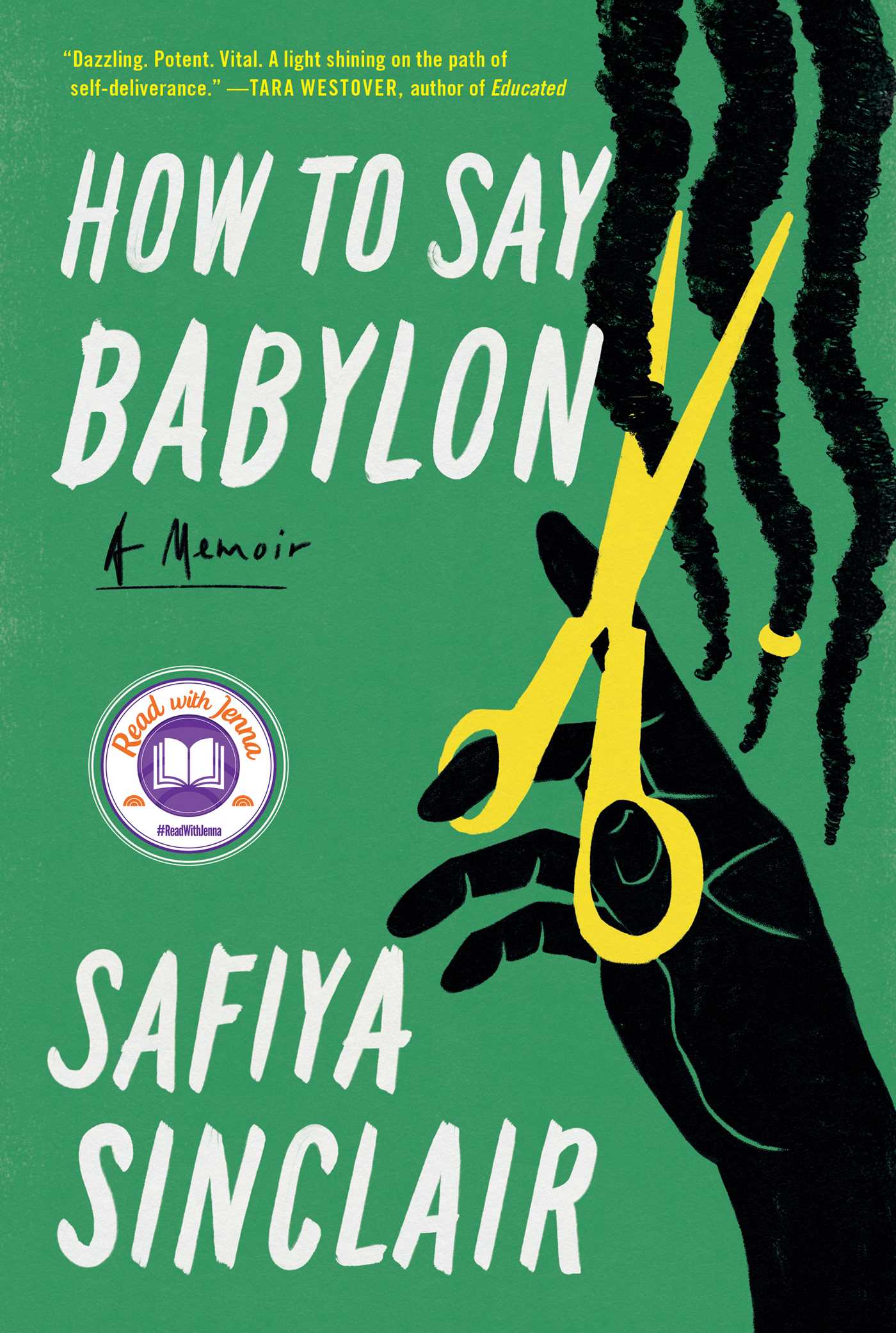
"Throughout her childhood, Safiya Sinclair's father, a volatile reggae musician and militant adherent to a strict sect of Rastafari, became obsessed with her purity, in particular, with the threat of what Rastas call Babylon, the immoral and corrupting influences of the Western world outside their home. He worried that womanhood would make Safiya and her sisters morally weak and impure, and believed a woman's highest virtue was her obedience. In an effort to keep Babylon outside the gate, he forbade almost everything. In place of pants, the women in her family were made to wear long skirts and dresses to cover their arms and legs, head wraps to cover their hair, no make-up, no jewelry, no opinions, no friends. Safiya's mother, while loyal to her father, nonetheless gave Safiya and her siblings the gift of books, including poetry, to which Safiya latched on for dear life. And as Safiya watched her mother struggle voicelessly for years under housework and the rigidity of her father's beliefs, she increasingly used her education as a sharp tool with which to find her voice and break free. Inevitably, with her rebellion comes clashes with her father, whose rage and paranoia explodes in increasing violence. As Safiya's voice grows, lyrically and poetically, a collision course is set between them. How to Say Babylon is Sinclair's reckoning with the culture that initially nourished but ultimately sought to silence her; it is her reckoning with patriarchy and tradition, and the legacy of colonialism in Jamaica. Rich in lyricism and language only a poet could evoke, How to Say Babylon is both a universal story of a woman finding her own power and a unique glimpse into a rarefied world we may know how to name, Rastafari, but one we know little about" --
When We're Born We Forget Everything: A Memoir
From the creator of the internationally acclaimed singer-songwriter project Girls in Trouble, a memoir following her journey from a secular Jewish childhood to becoming a modern queer woman owning ancient teachings and finding her own meanings in them, refracted through feminist interpretations of the lives of Biblical women.“Alicia Jo Rabins writes as if she’s in conversation with the divine itself. . . .This isn’t merely a book to be read—it’s a scripture for the searching heart, a reminder that the border between the human and the holy is, and always has been, porous.” —Reza Aslan, author of Zealot: The Life and Times of Jesus of NazarethAs a self-described ‘90s suburban high school weirdo, Alicia Jo Rabins spent her time practicing violin and smoking cigarettes behind the mall while secretly dreaming of setting out on a spiritual quest no one around her seemed to understand. She often found herself drawn to the more ritualistic and rigorous Judaism that her parents had abandoned to assimilate and “become American.” In college, a chance meeting led her on a pilgrimage to Jerusalem to study rabbinical texts (and play bluegrass fiddle on the street for cash). But that two years of immersing herself in traditional observance was only the start of a journey full of twists and turns.When We’re Born We Forget Everything follows Alicia’s relentless, often embarrassing, sometimes enlightening search for the sacred in everyday life as she tours America playing with a klezmer-punk band, falls in and out of love, scrapes through the initiations of motherhood, and witnesses the beauty—and danger—of mysticism. Rabins braids this personal narrative with the hidden stories of biblical women, uncovering a path of queer identity, feminist awakening, and spiritual self-invention. This lyrical, searching memoir is a meditation on longing, lineage, and what it takes to find meaning in a fractured world.
When "yang" goes wrong — LessWrong
On the connection between deep atheism and seeking control.
There Is Nothing So Whole as a Broken Heart
By Cindy Milstein Published by AK Press, 2021 392 pages, paperback The contemporary renewal of Jewish anarchism draws on a history of enslavement, displacement, white supremacy, and genocide as well as ancestral resistance, strength, imagination, and humor—wisdom that is sorely needed today. Through stories at once poetic and poignant, There Is Nothing So Whole as a Broken Heart offers a powerful elixir for all who rebel against systemic violence and injustice. The contemporary renewal of Jewish anarchism draws on a history of suffering, ranging from enslavement and displacement to white nationalism and genocide. Yet it also pulls from ancestral resistance, strength, imagination, and humor—all qualities, and wisdom, sorely needed today. These essays, many written from feminist and queer perspectives, journey into past and contemporary trauma in ways that are humanizing and healing. They build bridges from bittersweet grief to rebellion and joy. And via concrete illustrations of how Jewish anarchists lovingly transform their own ritual, cultural, and political practices, they clearly illuminate the path toward mending ourselves and the world. Praise for There Is Nothing So Whole as a Broken Heart... "There Is Nothing So Whole as a Broken Heart is a breathtaking kaddish to everyone living the revolutionary vision that Jewish radicals dreamed was possible. It drives to the heart of a tradition that we must rediscover, a story that is simultaneously particular and universal: we can survive if we do it together." —Shane Burley, author of Why We Fight: Essays on Fascism, Resistance, and Surviving the Apocalypse "In this moment of resurgent fascism and authoritarianism, the foundational relationship between antisemitism and anti-Blackness is more stark and apparent than ever. The vibrancy of this collection articulates not only a foundation for solidarity in shared struggles against white supremacy but also the vast imaginaries and world-making potential in the diversity of Jewish cultural expression and radical—specifically anarchist—thought. As a Black anarchist, I could not be more grateful for the generosity, vulnerabilities, and fierce, unwavering love for humanity shared within these pages." —Zoé Samudzi, coauthor of As Black as Resistance: Finding the Conditions for Liberation “The texts collected here are striking in their literary richness and emotional openness, awakening both pain and solace, insights and further questions . . . A highly rewarding reading experience that will appeal well beyond the Jewishanarchist intersection.” —Uri Gordon, co-editor of The Routledge Handbook of Radical Politics "There Is Nothing So Whole as a Broken Heart offers an ardent new archive of Jewish anarchism. These voices expand a defiant tradition: they speak of the disruptiveness of care, the labor of grief, and the pleasures of survival. As fascism and antisemitism rise, these poets, rabbis, and organizers urgently reach for another world through this one." —AE Torres, author of Horizons Blossom, Borders Vanish: Anarchism and Yiddish Literature "This book asks how modern generations of Jewish anarchists are wrestling with rising fascism, white supremacy, and antisemitism, and lifts up the specific cultural tools we bring to the work of mending (or maybe reimagining) the ever-shattering world. Today the book is a mirror; tomorrow, a new window into the archive of Jewish anarchists throughout history." —Ezra Berkley Nepon, author of Justice, Justice Shall You Pursue: A History of New Jewish Agenda "As leftist Jewish thought and organizing today witnesses a resurgence, this collection provides an important document of its anarchist current." —Treyf Podcast “A poem and a love note, a prayer song and a protest, an attempt to mend a burning world with the best of Jewish, anarchist, and Jewish anarchist traditions.” —Dan Berger, author of Captive Nation: Black Prison Organizing in the Civil Rights Era "There is Nothing So Whole as a Broken Heart is a powerful celebration of ritual—both Jewish and anarchist."—Gabriel Moshenska for Jewish Socialist
Take Your Place: Rhetorical Healing and Black Womanhood in Tyler Perry’s Films
The unparalleled commercial sucessess that gospel-playwright-turned-screenwriter Tyler Perry has attained through converting his stage plays into films that depict black women overcoming personal crises raises questions about the intent behind his seemingly feminist-inspired representations of black womanhood. Through an analysis of the rhetoric of healing in Perry’s first two films, this essay reveals one of the suppressive pedagogical functions of Perry’s representation of black womanhood. Rhetorics of healing are a series of persuasive messages, performances, and literacy acts that writers deploy in order to convince readers that redressing or preventing crises requires them to follow the curriculum for ideological, communicative, and behavioral transformation that the writer considers essential to wellness. In Diary of a Mad Black Woman and Madea’s Family Reunion, Perry’s representation of rhetorical healing constructs black Christian women as students who must learn prescribed attitudes and behaviors to achieve, or remain in, states of wellness, and these lessons reinforce conservative gender ideologies and reify patriarchal constructions of the family and home. Given black women’s historically tenuous relationships with representations of themselves and their families in mainstream film, and given the ways in which their labor in the home is simultaneously desired and exploited, the popularity of Perry’s films does not suggest that his representations of healing foster black women’s self-empowerment. Rather, his popularity points to a moment where black women’s pain is a commodity and their instructive journeys to wellness are an exploited site where writers can carry out their own agendas.

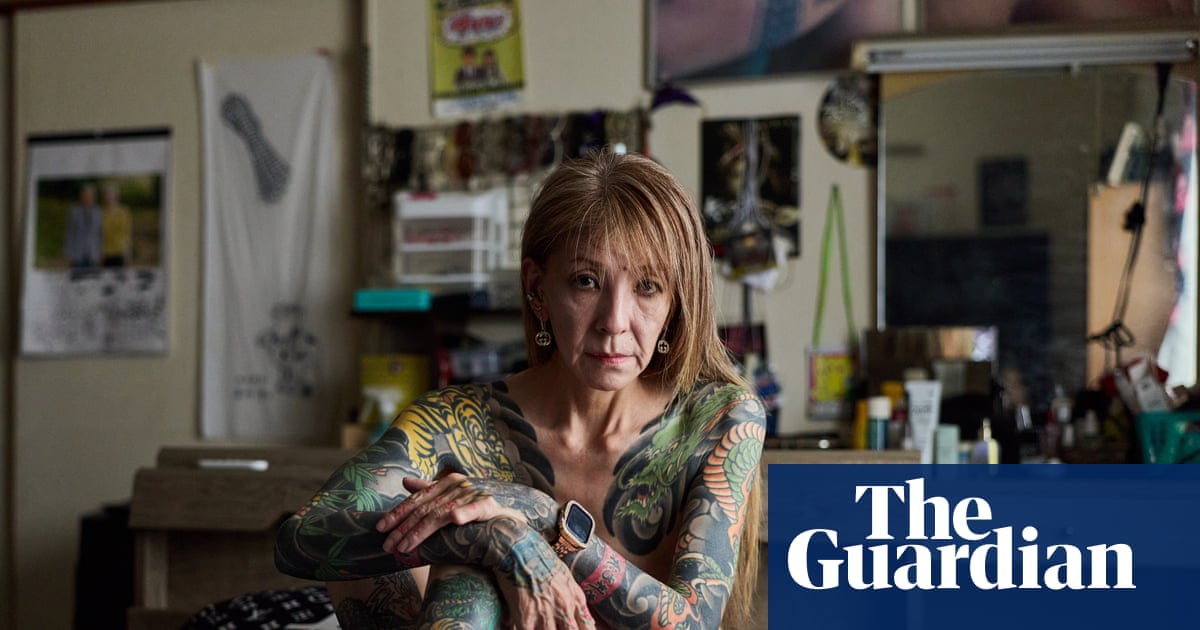
‘The devil’s child’: the rise and fall of the only female yakuza
The long read: Mako Nishimura fought her way into the Japanese underworld, but drug addiction and the slow demise of organised crime gangs almost destroyed her
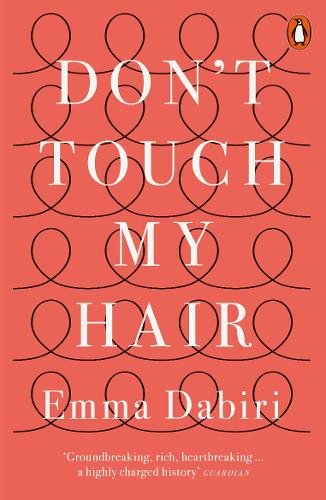
Don't Touch My Hair
Check out Don't Touch My Hair - <p><b>'Groundbreaking <i>. . .</i> a scintillating, intellectual investigation into black women and the very serious business of our hair, as it pertains to race, gender, social codes, tradition, culture, cosmology, maths, politics, philosophy and history' Bernardine Evaristo</b> <br /><br />Straightened. Stigmatized. 'Tamed'. Celebrated. Erased. Managed. Appropriated. Forever misunderstood. Black hair is never 'just hair'.<br /><br />This book is about why black hair matters and how it can be viewed as a blueprint for decolonisation. Over a series of wry, informed essays, Emma Dabiri takes us from pre-colonial Africa, through the Harlem Renaissance, Black Power and on to today's Natural Hair Movement, the Cultural Appropriation Wars and beyond. We look everything from hair capitalists like Madam C.J. Walker in the early 1900s to the rise of Shea Moisture today, from women's solidarity and friendship to 'black people time', forgotten African scholars and the dubious provenance of Kim Kardashian's braids.<br /><br />The scope of black hairstyling ranges from pop culture to cosmology, from prehistoric times to the (afro)futuristic. Uncovering sophisticated indigenous mathematical systems in black hairstyles, alongside styles that served as secret intelligence networks leading enslaved Africans to freedom, <i>Don't Touch My Hair </i>proves that far from being <i>only </i>hair<i>,</i> black hairstyling culture can be understood as an allegory for black oppression and, ultimately, liberation.</p> by Emma Dabiri on Bookshop.org UK!
The Dialectic of Sex by Shulasmith Firestone 1970
Opening chapter of Shulamith Firestone's influential Dialectic of Sex
musings of a sad, seraphic slut - heart and soul ♡
a peek inside the heart and brain of soul


Broken feet, ripped-out hair and now a death sentence: the fate of twin sisters jailed over Iran protests
Taraneh Rahimi was told prison guards would rape her sister, Romina, if she did not sign a confession

The End of Textuality - Real Housewives of San Francisco
Authenticity in the age of GenAI
The End of Textuality - Real Housewives of San Francisco
Authenticity in the age of GenAI
Gender Trouble: Feminism and the Subversion of Identity
One of the most talked-about scholarly works of the past fifty years, Judith Butler’s Gender Trouble is as celebrated as it is controversial.Arguing that traditional feminism is wrong to look to a natural, 'essential' notion of the female, or indeed of sex or gender, Butler starts by questioning the category 'woman' and continues in this vein with examinations of 'the masculine' and 'the feminine'. Best known however, but also most often misinterpreted, is Butler's concept of gender as a reiterated social performance rather than the expression of a prior reality.Thrilling and provocative, few other academic works have roused passions to the same extent.

Careless People: A Cautionary Tale of Power, Greed, and…
An explosive memoir charting one woman’s career at the …

