"Frantz Fanon was one of the twentieth century's most important theorists of revolution, colonialism, and racial difference, and this, his masterwork, is a classic alongside Orientalism and The Autobiography of Malcolm X." "The Wretched of the Earth is an analysis of the psychology of the colonized and their path to liberation. Bearing singular insight into the rage of colonized peoples and the role of violence in historical change, the book also incisively attacks postindependence disenfranchisement of the masses by the elite on one hand, and intertribal and interfaith animosities on the other. A veritable handbook of social reorganization for leaders of emerging nations, The Wretched of the Earth has had a major impact on civil rights, anticolonialism, and black-consciousness movements around the world. This new translation updates its language for a new generation of readers and its lessons are more vital now than ever."--Jacket
Anarchism and The Black Revolution and Other Essays
An analysis of white supremacy vs the black struggle an…

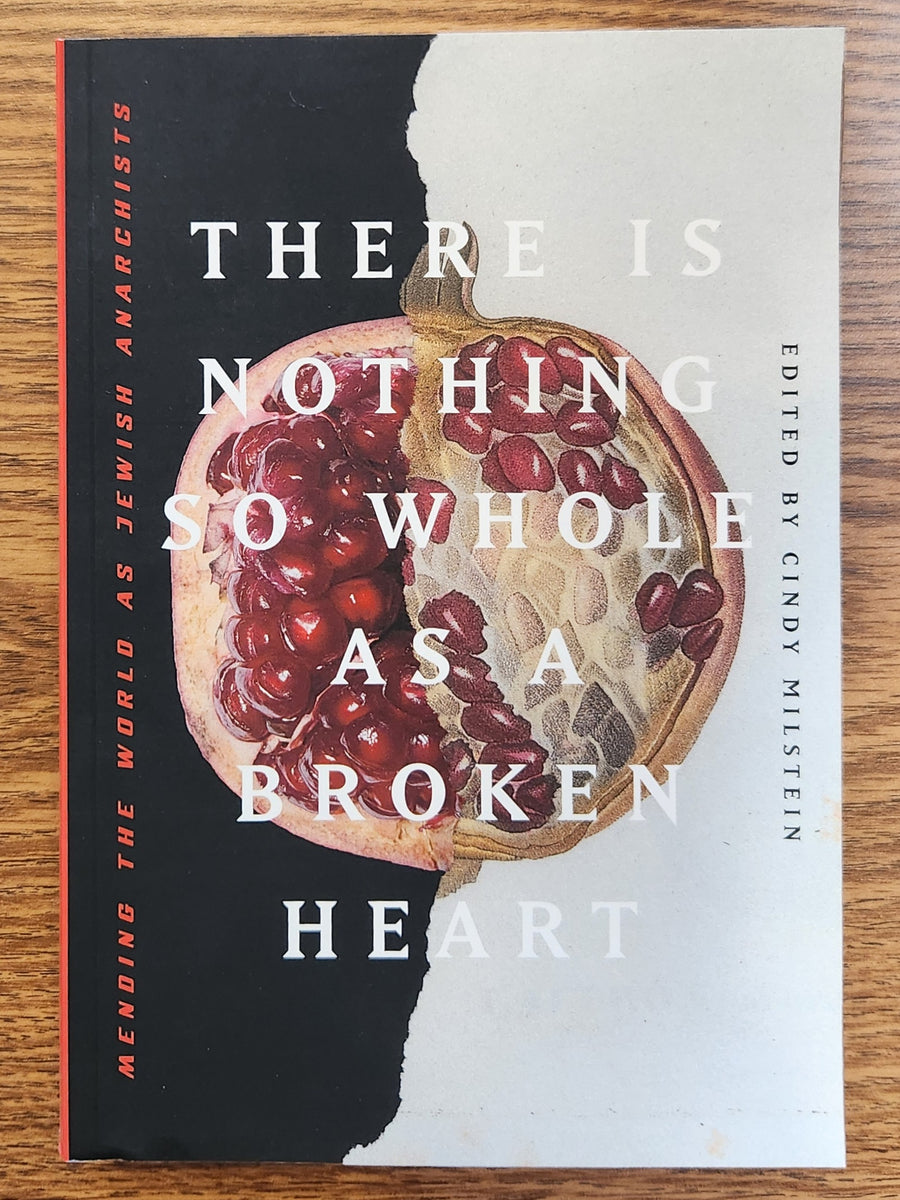
There Is Nothing So Whole as a Broken Heart
By Cindy Milstein Published by AK Press, 2021 392 pages, paperback The contemporary renewal of Jewish anarchism draws on a history of enslavement, displacement, white supremacy, and genocide as well as ancestral resistance, strength, imagination, and humor—wisdom that is sorely needed today. Through stories at once poetic and poignant, There Is Nothing So Whole as a Broken Heart offers a powerful elixir for all who rebel against systemic violence and injustice. The contemporary renewal of Jewish anarchism draws on a history of suffering, ranging from enslavement and displacement to white nationalism and genocide. Yet it also pulls from ancestral resistance, strength, imagination, and humor—all qualities, and wisdom, sorely needed today. These essays, many written from feminist and queer perspectives, journey into past and contemporary trauma in ways that are humanizing and healing. They build bridges from bittersweet grief to rebellion and joy. And via concrete illustrations of how Jewish anarchists lovingly transform their own ritual, cultural, and political practices, they clearly illuminate the path toward mending ourselves and the world. Praise for There Is Nothing So Whole as a Broken Heart... "There Is Nothing So Whole as a Broken Heart is a breathtaking kaddish to everyone living the revolutionary vision that Jewish radicals dreamed was possible. It drives to the heart of a tradition that we must rediscover, a story that is simultaneously particular and universal: we can survive if we do it together." —Shane Burley, author of Why We Fight: Essays on Fascism, Resistance, and Surviving the Apocalypse "In this moment of resurgent fascism and authoritarianism, the foundational relationship between antisemitism and anti-Blackness is more stark and apparent than ever. The vibrancy of this collection articulates not only a foundation for solidarity in shared struggles against white supremacy but also the vast imaginaries and world-making potential in the diversity of Jewish cultural expression and radical—specifically anarchist—thought. As a Black anarchist, I could not be more grateful for the generosity, vulnerabilities, and fierce, unwavering love for humanity shared within these pages." —Zoé Samudzi, coauthor of As Black as Resistance: Finding the Conditions for Liberation “The texts collected here are striking in their literary richness and emotional openness, awakening both pain and solace, insights and further questions . . . A highly rewarding reading experience that will appeal well beyond the Jewishanarchist intersection.” —Uri Gordon, co-editor of The Routledge Handbook of Radical Politics "There Is Nothing So Whole as a Broken Heart offers an ardent new archive of Jewish anarchism. These voices expand a defiant tradition: they speak of the disruptiveness of care, the labor of grief, and the pleasures of survival. As fascism and antisemitism rise, these poets, rabbis, and organizers urgently reach for another world through this one." —AE Torres, author of Horizons Blossom, Borders Vanish: Anarchism and Yiddish Literature "This book asks how modern generations of Jewish anarchists are wrestling with rising fascism, white supremacy, and antisemitism, and lifts up the specific cultural tools we bring to the work of mending (or maybe reimagining) the ever-shattering world. Today the book is a mirror; tomorrow, a new window into the archive of Jewish anarchists throughout history." —Ezra Berkley Nepon, author of Justice, Justice Shall You Pursue: A History of New Jewish Agenda "As leftist Jewish thought and organizing today witnesses a resurgence, this collection provides an important document of its anarchist current." —Treyf Podcast “A poem and a love note, a prayer song and a protest, an attempt to mend a burning world with the best of Jewish, anarchist, and Jewish anarchist traditions.” —Dan Berger, author of Captive Nation: Black Prison Organizing in the Civil Rights Era "There is Nothing So Whole as a Broken Heart is a powerful celebration of ritual—both Jewish and anarchist."—Gabriel Moshenska for Jewish Socialist
Marxism & the Global South
A critical history of imperialism and dependency theory, from Marx on colonialism and Eurocentrism to Baran, Frank, Wallerstein, and Samir Amin.
Marxism & the Global South
A critical history of imperialism and dependency theory, from Marx on colonialism and Eurocentrism to Baran, Frank, Wallerstein, and Samir Amin.
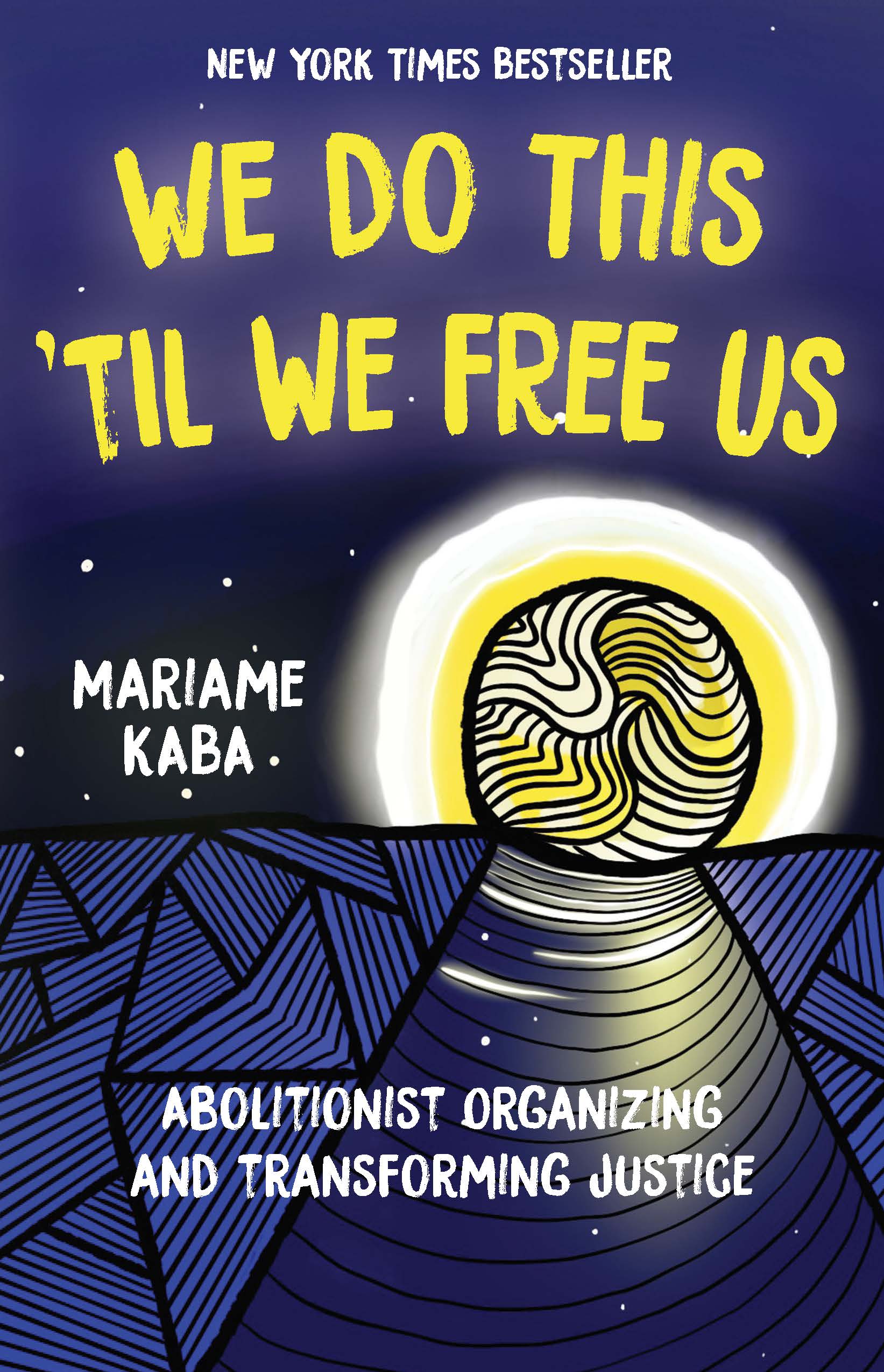
We Do This 'Til We Free Us
New York Times Bestseller “Organizing is both science and art. It is thinking through a vision, a strategy, and then figuring out who your targets are, always being concerned about power, always being concerned about how you’re going to actually build power in order to be able to push your issues, in order to be able to get the target to actually move in the way that you want to.” What if social transformation and liberation isn’t about waiting for someone else to come along and save us? What if ordinary people have the power to collectively free ourselves? In this timely collection of essays and interviews, Mariame Kaba reflects on the deep work of abolition and transformative political struggle. With a foreword by Naomi Murakawa and chapters on seeking justice beyond the punishment system, transforming how we deal with harm and accountability, and finding hope in collective struggle for abolition, Kaba’s work is deeply rooted in the relentless belief that we can fundamentally change the world. As Kaba writes, “Nothing that we do that is worthwhile is done alone.”
Black against Empire by Joshua Bloom | East Bay Booksellers
This timely special edition, published on the fiftieth anniversary of the founding of the Black Panther Party, features a new preface by the authors that places the Party in a contemporary political landscape, especially as it relates to Black Lives Matter and other struggles to fight police brutality against black communities.
'Zionism Led to Genocide. It Must Disappear': Omer Bartov's New Book …
archived 25 Apr 2026 07:22:14 UTC

Hyperpolitics: Extreme Politicization without Political Consequences
POLITICS AFTER THE END OF THE END OF HISTORYWhat happens when politics is everywhere, yet nothing seems to change? From the abandoned dance floors of Thatcher’s London to the mass mobilizations of Black Lives Matter, Anton Jäger traces how public life has become infused with protest, spectacle, and moral urgency — while the old infrastructure of parties, unions, and civic solidarity has been hollowed out.Hyperpolitics revisits the illusions of the “end of history” and dissects the strange energies that replaced them: viral outrage, endless culture wars, and the digital rush of causes that flare and vanish overnight. Jäger shows how the promises of post–Cold War liberalism gave way to a restless, unsteady public sphere where private passions overflow into politics but rarely build enduring power.Ranging from Guy Debord and Wolfgang Tillmans to Houellebecq’s disenchanted fictions, Hyperpolitics makes sense of a world in which collective action remains fragmented and the social fabric thinner than ever. For anyone trying to grasp why our age feels so charged yet so inconsequential, this book offers a vital map through the new contradictions of our hyperpolitical moment.
Imperialism in the Twenty-First Century - Monthly Review
John Smith teaches international political economy at Kingston University in London. This paper has been abstracted from his book Imperialism in the Twenty-First Century, forthcoming from Monthly Review Press in... READ MORE

Imperialism | The Paper Pilot
The Paper Pilot's digital garden of thoughts on philosophy, politics, and sociology
Civilization and Its Discontents
Civilization and Its Discontents is a book by Sigmund Freud, the founder of psychoanalysis. It was written in 1929 and first published in German in 1930 as Das Unbehagen in der Kultur.

The Ecology of Freedom: The Emergence and Dissolution o…
"The very notion of the domination of nature by man ste…

Malcolm X's Speech After the Firebombing (Feb. 14, 1965)
Tonight one of the things that has to be stressed is that which has not only the United States very much worried but which also has France, Great Britain, and most of the powers, who formerly were known as colonial powers, worried also, and that primarily is the African revolution. They are more concerned with the revolution that's taking place on the African continent than they are with the revolution in Asia and in Latin America.
The Prospects of a Pluriversal Transition to a Post-Capitalist, Post-C
This book critically engages with a central dilemma facing counter-hegemonic movements as global crises intensify: how to foster systemic change while

Blue Rage, Black Redemption: A Memoir
A gripping tale of personal revolution by a man who wen…

Anarchism
Geoffrey Ostergaard Anarchism 1993 Published in The Blackwell Dictionary of Modern Social and Political Thought, pp. 12–14.