

Attachment theory has entered the mainstream, but most …
How you attach to people may explain a lot about your inner life
Attachment theory suggests that early interactions with caregivers can dramatically affect your beliefs about yourself, your expectations of others, and how you cope with stress and regulate your emotions as an adult

Polytunity - The Ideas Letter
“Polycrisis” has become a ubiquitous descriptor for the multisector, intersecting problems afflicting the world—but the term masks the systemic nature of these crises and overwhelmingly reflects Eurocentric voices, priorities, and…

Against the Couple-Form | LIES Journal
Libidinal flows cut through the social world. Amorous and sexual relations do not exist in some domain safely taped off from the rest of society. Rather they are constituent elements of nearly every aspect of social life. Desire flows and circulates amongst places of employment, intellectual debates, political organizing, artistic circles, playgrounds, and cemeteries. The elderly patient grabs at the breast of a nurse hunched over him. A governmental official strips his newly hired intern down to her leopard print thong during an important briefing in his office. The incarcerated man holds his hand up to the glass of the visiting booth, attempting to touch his wife after twenty years of their bodily separation. These flows of libidinal desire operate within and amongst broader social mechanisms, such that they help animate the dynamics of economic and political life. Often a locus of politics, desire permeates the so-called ‘public’ terrain.
How deep do AI relationships really go? An expert in attachment theory explains
Can AI-human connections ever meet the psychological criteria of attachment – the relationships that hold people’s lives together?
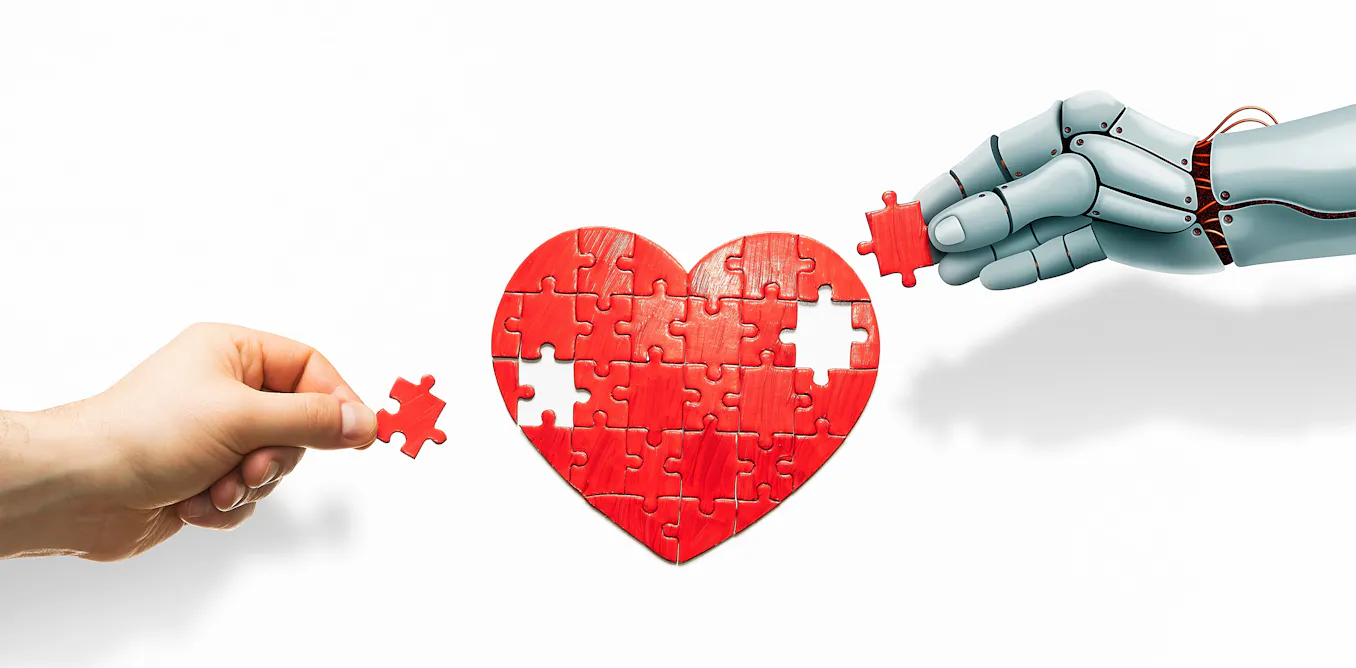
How deep do AI relationships really go? An expert in attachment theory explains
Can AI-human connections ever meet the psychological criteria of attachment – the relationships that hold people’s lives together?
How AI Hacks Your Brain's Attachment System (with Zak Stein)
Asexuality and Kink: Why Do So Many Aces Love It?
Not everything is ‘trauma’. Language needs to mean something | Aeon Essays
From a broken life to a broken nail, ‘trauma’ has been bleached by overuse. But it names something real – and must be reclaimed

To build gentler technology, practice trauma-informed design
Understanding trauma helps craft gentler user experiences.

Extraordinary Passion: Types of Orgasms
Polyamory Consent: 2026 Communication Strategies for Boundaries
Discover 2026 strategies for enthusiastic consent in polyamory, with practical scripts, group check-ins, boundary frameworks, and advice on jealousy to build trust in multi-partner relationships.

The Weirdness of Dating/Mating: Deep Nonconsent Preference — LessWrong
Every time I see someone mention statistics on nonconsent kink online, someone else is surprised by how common it is. So let’s start with some statis…

Communities of Not
On the strange hostility that grows in communities built around abstinence.
Deepfake ‘Nudify’ Technology Is Getting Darker—and More Dangerous
Sexual deepfakes continue to get more sophisticated, capable, easy to access, and perilous for millions of women who are abused with the technology.

Extraordinary Passion: Tantra and the Chemistry of Sex
The Highly Sensitive Person
The Highly Sensitive Person: Books, Information, Self-tests, Events and Research