


The point of modern propaganda isn't only to misinform or push an agenda. It is to exhaust your critical thinking, to annihilate truth.
Capturing our Attention
What are the harms of misinformation? It’s widely believed that it causes false belief, including false beliefs in quite bizarre claims. I argue that this threat is greatly exaggerated: while plaus...

Disinformation and grievance narratives
Synthese - Disinformation is often defined as misleading content intended to instill false beliefs. But this definition is too narrow. We need to focus instead on its broader epistemic effects....

How propaganda exploits the infrastructure of truth: A case study of #IStandWithPutin
This paper investigates the #IStandWithPutin hashtag campaign as a case study to conceptualise “infrastructural propaganda,” an influence strategy that manipulates the invisible processes and syste...

How propaganda exploits the infrastructure of truth: A case study of #IStandWithPutin
This paper investigates the #IStandWithPutin hashtag campaign as a case study to conceptualise “infrastructural propaganda,” an influence strategy that manipulates the invisible processes and syste...
Facts and Myths about Misperceptions
Misperceptions threaten to warp mass opinion and public policy on controversial issues in politics, science, and health. What explains the prevalence and persistence of these false and unsupported beliefs, which seem to be genuinely held by many people? Though limits on cognitive resources and attention play an important role, many of the most destructive misperceptions arise in domains where individuals have weak incentives to hold accurate beliefs and strong directional motivations to endorse beliefs that are consistent with a group identity such as partisanship. These tendencies are often exploited by elites who frequently create and amplify misperceptions to influence elections and public policy. Though evidence is lacking for claims of a “post-truth” era, changes in the speed with which false information travels and the extent to which it can find receptive audiences require new approaches to counter misinformation. Reducing the propagation and influence of false claims will require further efforts to inoculate people in advance of exposure (for example, media literacy), debunk false claims that are already salient or widespread (for example, fact-checking), reduce the prevalence of low-quality information (for example, changing social media algorithms), and discourage elites from promoting false information (for example, strengthening reputational sanctions).
The Liar’s Dividend: Can Politicians Claim Misinformation to Evade Accountability?
This study addresses the phenomenon of misinformation about misinformation, or politicians "crying wolf"' over fake news. Strategic and false claims that stories are fake news or deepfakes may benefit politicians by helping them maintain support after a scandal. We posit that this benefit, known as the "liar's dividend," may be achieved through two politician strategies: by invoking informational uncertainty or by encouraging oppositional rallying of core supporters. We administer five survey experiments to over 15,000 American adults detailing hypothetical politician responses to stories describing real politician scandals. We find that claims of misinformation representing both strategies raise politician support across partisan subgroups. These strategies are effective against text-based reports of scandals, but are largely ineffective against video evidence and do not reduce general trust in media. Finally, these false claims produce greater dividends for politicians than alternative responses to scandal, such as remaining silent or apologizing.
When Do Parties Lie? Misinformation and Radical-Right Populism Across 26 Countries - Petter Törnberg, Juliana Chueri, 2026
The spread of misinformation has emerged as a global concern. Academic attention has recently shifted to emphasize the role of political elites as drivers of mi...

Deepfakes, Elections, and Shrinking the Liar’s Dividend
Heightened public awareness of the power of generative AI could give politicians an incentive to lie about the authenticity of real content.
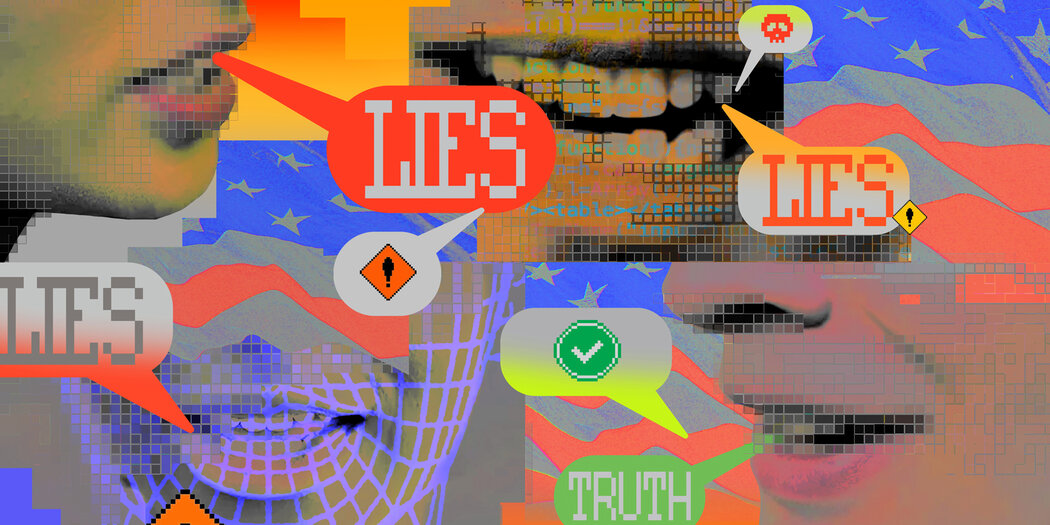
Language Models Trained on State Media Sources Launder Propaganda
Tech Policy Press is a nonprofit media and community venture intended to provoke new ideas, debate and discussion at the intersection of technology and democracy. We publish opinion and analysis.
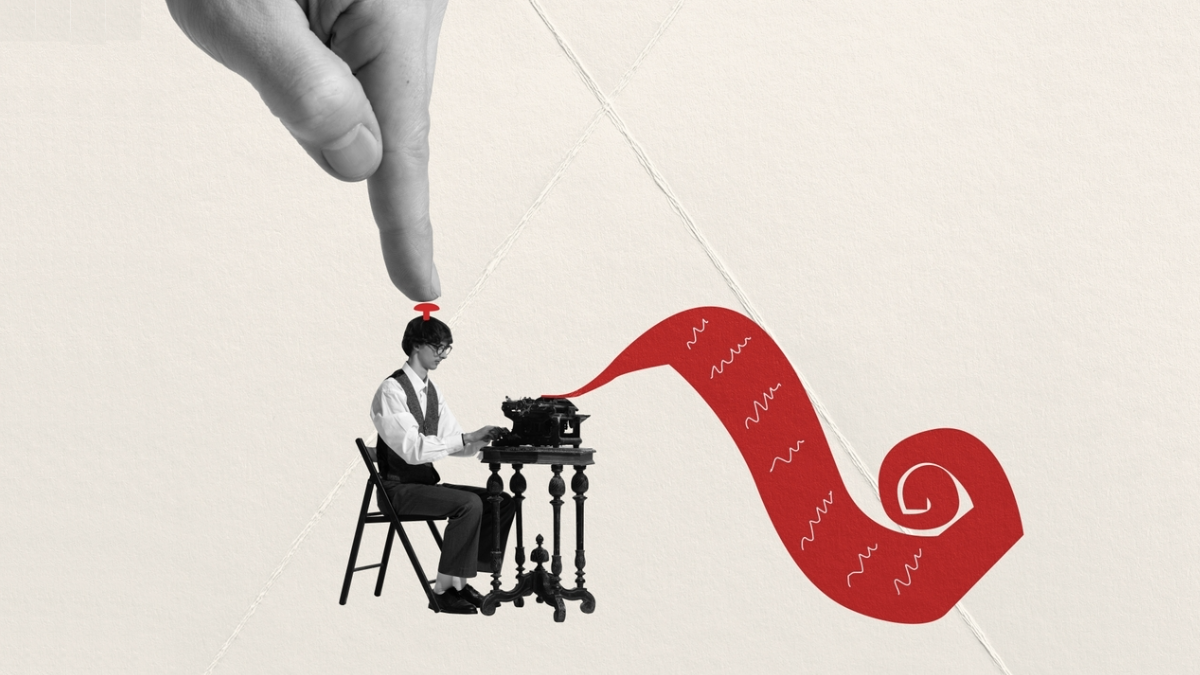
A well-funded Moscow-based global ‘news’ network has infected Western artificial intelligence tools worldwide with Russian propaganda
An audit found that the 10 leading generative AI tools advanced Moscow’s disinformation goals by repeating false claims from the pro-Kremlin Pravda network 33 percent of the time

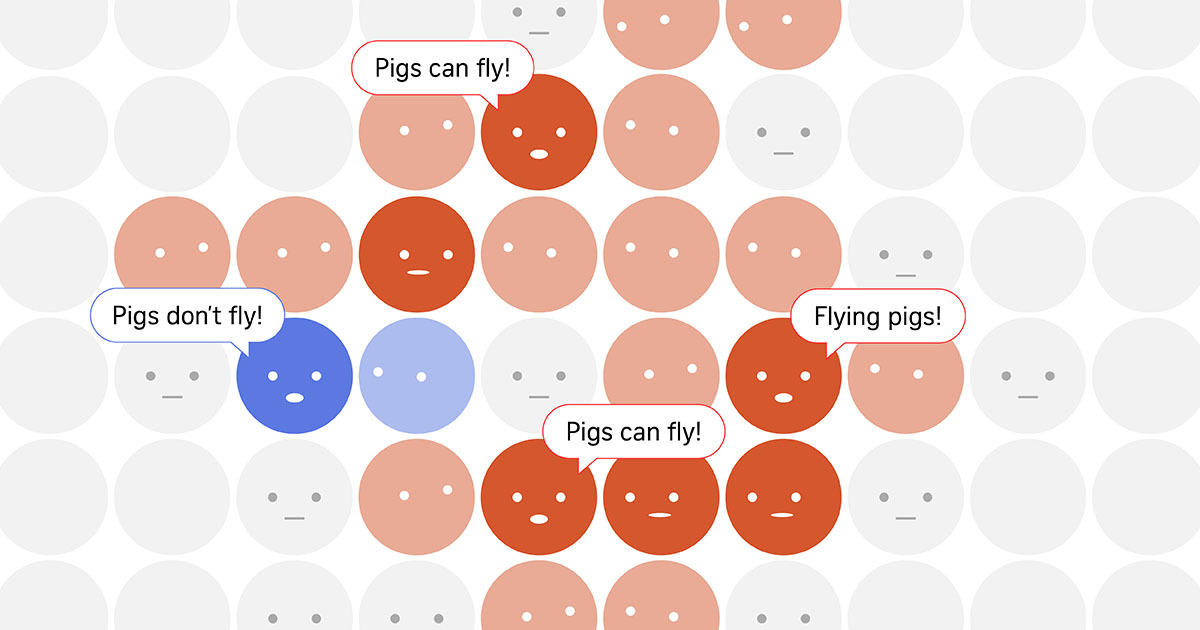
Fake news spreads like an epidemic. Here’s how to stop it.
Researchers study fake news the same way they study the spread of disease. When misinformation “goes viral”, it is not just a metaphor. It is what’s actually happening. via @straits_times str.sg/viz-misinformation
(PDF) Post-truth and Disinformation: Using discourse analysis to understand the creation of emotional and rival narratives in Brexit
PDF | The present research explores the concept of post-truth and disinformation in regard to Brexit. It is a qualitative and exploratory investigation.... | Find, read and cite all the research you need on ResearchGate

interfluidity » Consensus not censorship
We’ve become obsessed over the past few years with the problem of misinformation. And for good reason. “Flood the zone with shit” is now standard operating procedure for a variety of interests and factions. Groups who pretend to be above that kind of thing let confirmation bias do the same work, elevating conjectures they find convenient to believe far beyond the evidentiary basis for believing them, and transmuting concurrence among prestigious groups whose biases are aligned into “authority” to which they demand deferrence. Casual information consumers become divided into two camps, the “do your own research” types who imagine, mistakenly, that they are capable of seeing through all this (and so succumb to their own confirmation bias), and those who more accurately understand that they cannot reliably distinguish truth from bullshit (and so opt out of democratic deliberation with a shrug, other than perhaps to vote for the candidates whose political party they distrust less).
The Plot to Subvert an Election: Unraveling the Russia Story So Far (Published 2018)
For two years, Americans have tried to absorb the details of the 2016 attack: spies, leaked emails, social media fraud — and President Trump’s claims that it’s all a hoax. The Times explores what we know and what it means.

Deep Storytelling: Collective Sensemaking and Layers of Meaning in U.S. Elections
Misinformation and disinformation about elections remain pressing concerns for researchers, policymakers, and the public. Critics, however, argue that fears surrounding these issues are exaggerated due to a lack of evidence of impact. This debate highlights the challenges inherent in assessing the impacts of misinformation, as the drivers of false and misleading content often exist in the context of a specific claim. To address this issue, we examined false and misleading information surrounding the 2020 and 2022 U.S. national elections, focusing on the contextual features of online conversations that fueled various rumors. We developed two qualitative codebooks, creating the second after realizing that the first, which labeled individual tweets, failed to capture broader rumoring dynamics. By integrating multi-layered qualitative coding with thematic analysis and quantitative visualizations, we show how influencers, political elites, and audiences collaboratively told deep stories from 2020 through 2022. As these stories were told, audiences interpreted events in 2022 through the lens of the 2020 story, guided by influencers' cues, leading to an evolution in storytelling style between the two election cycles. This ongoing performance was tailored to align with the incentive structures, affordances, and attention economy of social media. We combine deep stories with theories of collective sensemaking and rumoring, creating a framework to better assess the contextual features surrounding false and misleading information.

"Books differ from all other propaganda.., primarily because one book can significantly change the reader's attitude and action to an extent unmatched by the impact of any other medium... this make[s] books the most important weapon of strategic propaganda." -CIA Covert propaganda program, 1961
