It is easier to imagine the end of the world than the end of capitalism. After 1989, capitalism has successfully presented itself as the only realistic political-economic system - a situation that the bank crisis of 2008, far from ending, actually compounded. The book analyses the development and principal features of this capitalist realism as a lived ideological framework. Using examples from politics, film (Children Of Men, Jason Bourne, Supernanny), fiction (Le Guin and Kafka), work and education, it argues that capitalist realism colors all areas of contemporary experience, is anything but realistic and asks how capitalism and its inconsistencies can be challenged. It is a sharp analysis of the post-ideological malaise that suggests that the economics and politics of free market neo-liberalism are givens rather than constructions. New Edition includes:Forward by Zoe Fisher, Mark’s wife, talking about Mark as a personIntroduction by Alex Niven, his friend and colleague, talking about the political significance of the book thirteen years after it was writtenAfterword by Tariq Goddard, the original editor and publisher, describing the writing and editing of the book, its original reception, and Mark’s own view of it"A quick and entertaining read." Socialist Standard "A provocative and necessary read...for anyone wanting to talk seriously about the politics of education today. " Times Higher Educational Supplement
The Breakdown of Capitalist Realism | Mediations | Journal of the Marxist Literary Group
Benjamin Noys examines the “substance” of Mark Fisher’s Capitalist Realism in order to argue that the text serves more than a diagnostic function in our…
Capitalist Realism and the Eviction of Culture: Notes from Ljubljana
I’d like to thank everyone who came out to Nova pošta last Thursday evening to my lecture on Mark Fisher’s Capitalist Realism, recently translated into Slovenian by Pika Golob and Nina …

/leftypol/ - leftypol.org on Twitter / X
hyperpolitics by anton jäger is to the 2020s what capitalist realism by mark fisher was to the 2010s pic.twitter.com/7Wjscq7lNi— /leftypol/ - leftypol.org (@leftypol_org) September 13, 2026

Preface | The World After Capital
Since publishing the previous version of The World After Capital, I have met with people across the political spectrum to discuss the ideas from the book. When I present these in person, I emphasize that the ideas are neither left nor right but forward (credit to Scott Santens who first used this phrase about Universal Basic Income). My writing, however, at times has alienated readers who identify as being more on the right. In this new edition, I am therefore making an extra effort to emphasize how both my diagnosis of where we are at and my suggestions for how to move forward do not map onto the existing political divides. Instead this is a new way of understanding our challenges and opportunities that can be the basis for movements and parties that are not trapped in Industrial Age ideology.
Hype, financial narratives, and self-fulfilling prophecies in surveillance capitalism
The rise of platforms has transformed our understanding of contemporary capitalism, with the critical literature describing how these firms leverage unprecedented digital powers to extract monopoly rents – perhaps even heralding a new form of Feudalism. This paper draws on the literature on financial narratives to examine the role that such stories play within the form of capitalism that they describe, and what this suggests for the role of “hype” in contemporary capitalism. The same stories that for critical scholars appear as menacing threats of “technofeudalism” or “surveillance capitalism” for investors appear as optimistic stories of promising future returns. By driving financial investments, narratives afford platforms very real social and political powers, enabling them to function as a form of self-fulfilling prophecies. The paper argues for a cultural inflection to the political economy of Big Tech – viewing capitalism as neither mechanistic nor rational, but as an expression of a complex interplay between narrative, technology, and economic power. This suggests the need for a critical hype studies, geared at deconstructing the narratives undergirding the technological waves of capitalist pursuits, and examining the broader role of hype in coordinating and directing flows of capital within contemporary financialized capitalism.

Capitalism | The Paper Pilot
The Paper Pilot's digital garden of thoughts on philosophy, politics, and sociology
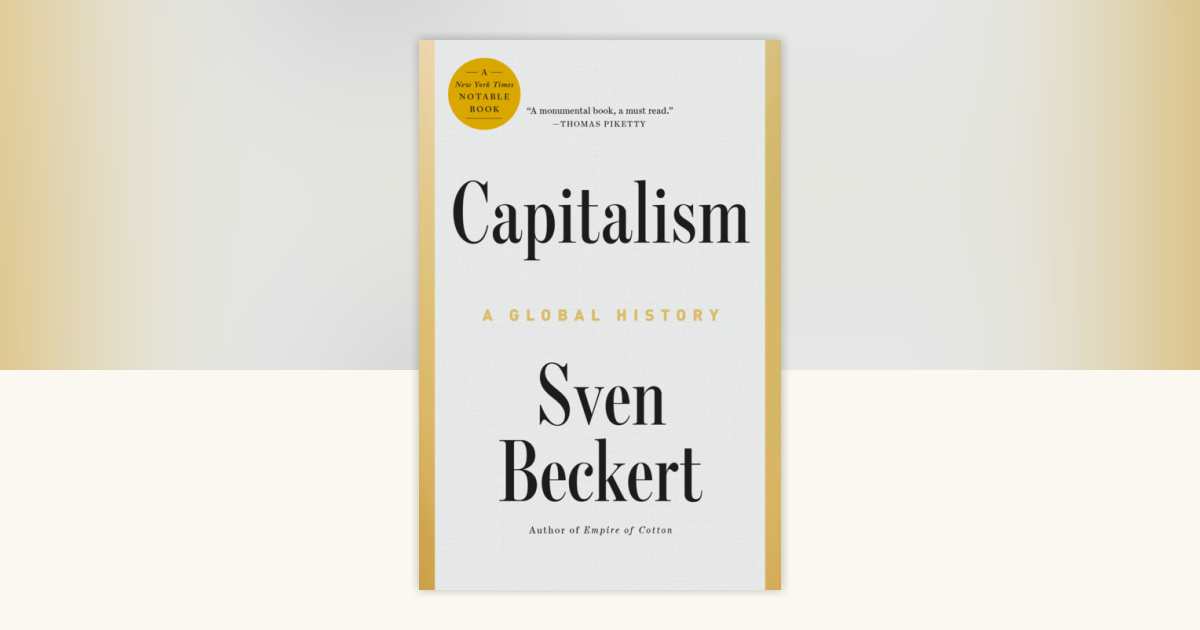
Capitalism by Sven Beckert: 9780735220836 | PenguinRandomHouse.com: Books
Buy Capitalism by Sven Beckert from Penguin Random House
Le capitalisme de la finitude : pessimisme et bellicisme
Traduction française de « Capitalism of finitude: pessimism and bellicosity. Review of Arnaud Orain’s "Le Monde Confisqué" » de Branko Milanovic

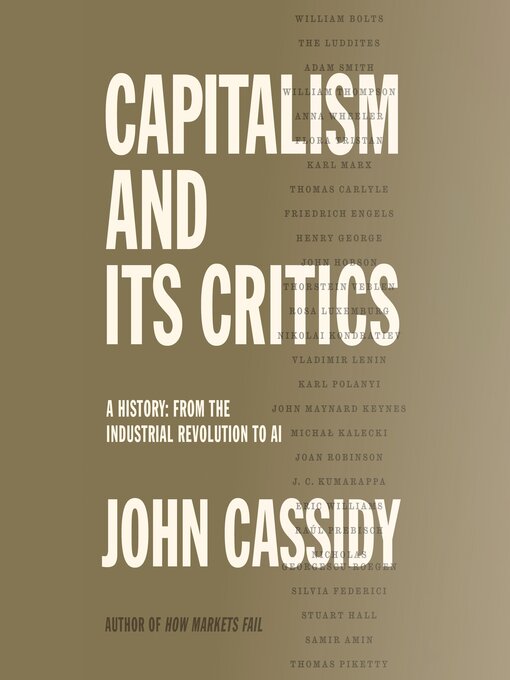
Capitalism and Its Critics: A History
A Financial Times Most Anticipated Book of 2025A sweeping, dramatic history of capitalism as seen through the eyes of its fiercest critics. At a time when artificial intelligence, climate change, and inequality are raising fundamental questions about the economic system, Capitalism and Its Critics provides a kaleidoscopic history of global capitalism, from the East India Company and Industrial Revolution to the di...
Market Socialism | The Paper Pilot
The Paper Pilot's digital garden of thoughts on philosophy, politics, and sociology
J. K. Gibson-Graham
J. K. Gibson-Graham is a pen name shared by feminist economic geographers Julie Graham and Katherine Gibson. The two professors' landmark first book The End of Capitalism (As We Knew It) was first published in 1996 (a second edition with a new Introduction was published in 2006), followed by A Postcapitalist Politics in 2006. The two scholars also founded the Community Economies Collective (CEC), the Community Economies Research Network (CERN) and the Community Economies Institute (CEI), all "international collaborative networks of researchers who share an interest in theorizing, discussing, representing and ultimately enacting new visions of economy."[1] Gibson-Graham's works focus on untying the economy from capitalism and the possibility of transforming economic relations within existing conditions.
Will capitalism end capitalism? | Steve Loftus | The Critic Magazine
Imagine waking up one morning to discover your job still exists, but your services are no longer required. The work is being done, just not by you, not by anybody. Somewhere, a machine is doing it…
Hyperpolitics: Extreme Politicization without Political Consequences
POLITICS AFTER THE END OF THE END OF HISTORYWhat happens when politics is everywhere, yet nothing seems to change? From the abandoned dance floors of Thatcher’s London to the mass mobilizations of Black Lives Matter, Anton Jäger traces how public life has become infused with protest, spectacle, and moral urgency — while the old infrastructure of parties, unions, and civic solidarity has been hollowed out.Hyperpolitics revisits the illusions of the “end of history” and dissects the strange energies that replaced them: viral outrage, endless culture wars, and the digital rush of causes that flare and vanish overnight. Jäger shows how the promises of post–Cold War liberalism gave way to a restless, unsteady public sphere where private passions overflow into politics but rarely build enduring power.Ranging from Guy Debord and Wolfgang Tillmans to Houellebecq’s disenchanted fictions, Hyperpolitics makes sense of a world in which collective action remains fragmented and the social fabric thinner than ever. For anyone trying to grasp why our age feels so charged yet so inconsequential, this book offers a vital map through the new contradictions of our hyperpolitical moment.
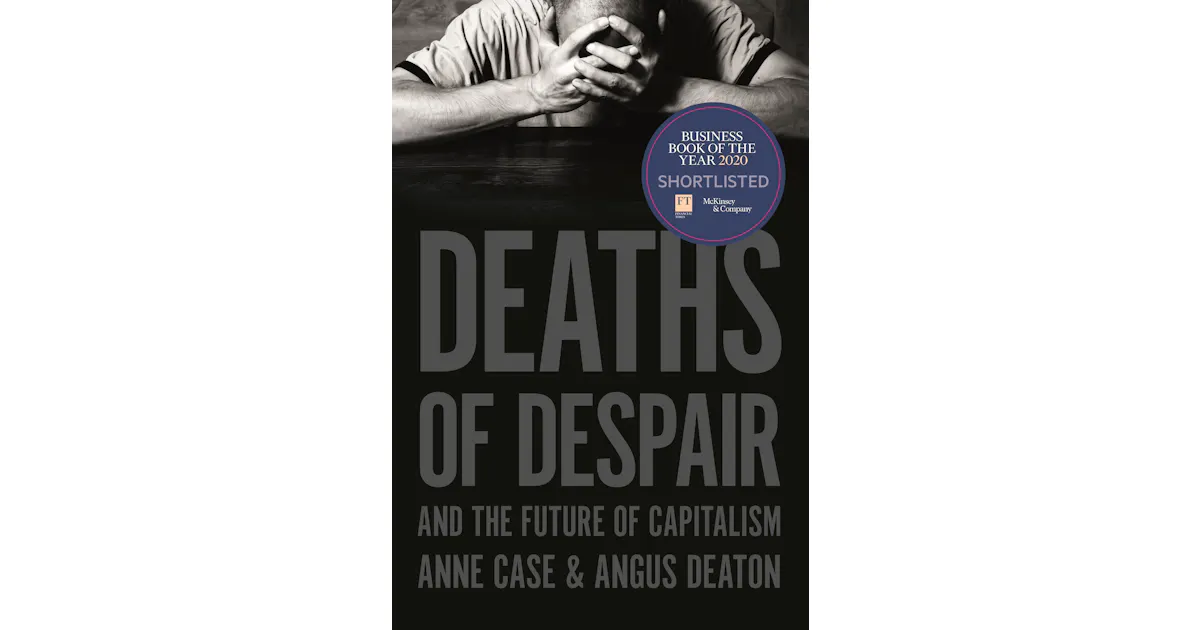
Deaths of Despair and the Future of Capitalism
A New York Times BestsellerA Wall Street Journal BestsellerA New York Times Notable Book of 2020A New York Times Book Review Editors' ChoiceShortlisted for the Financial Times and McKinsey Business Book of the YearA New Statesman Book to ReadFrom economist Anne Case and Nobel Prize winner Angus Deaton, a groundbreaking account of how the flaws in capitalism are fatal for America's working class
Neoliberalism | The Paper Pilot
The Paper Pilot's digital garden of thoughts on philosophy, politics, and sociology
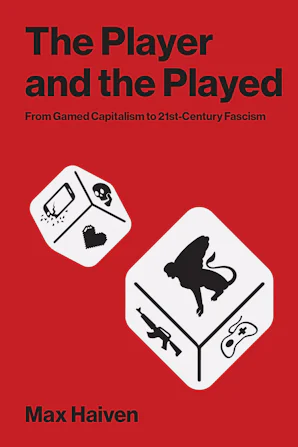
The Player and the Played
In an age when capitalism feels like an unwinnable game, extreme reactionary ideas and politics are on the rise. The Hunger Games, Game of Thrones, Squid Gam...