

This groundbreaking collection explores the profound power of Social Reproduction Theory to deepen our understanding of everyday life under capitalism. While many Marxists tend to focus on the productive economy, this book focuses on issues such as child care, health care, education, family life and the roles of gender, race and sexuality, all of which are central to understanding the relationship between economic exploitation and social oppression. In this book, leading writers such as Lise Vogel, Nancy Fraser, David McNally and Susan Ferguson reveal the ways in which daily and generational reproductive labour, found in households, schools, hospitals and prisons, also sustains the drive for accumulation. Presenting a more sophisticated alternative to intersectionality, these essays provide ideas which have important strategic implications for anti-capitalists, anti-racists and feminists attempting to find a path through the seemingly ever more complex world we live in.
Intersectional Antifeminism, or: What is a White Feminist, Anyway?
Regarding the most famous social theory no one has actually read.

Left of Karl Marx: The Political Life of Black Communist Claudia Jones - Carole Boyce Davies | Are.na
doi.org/10.1215/9780822390329

Anti-Natalism | The Paper Pilot
The Paper Pilot's digital garden of thoughts on philosophy, politics, and sociology
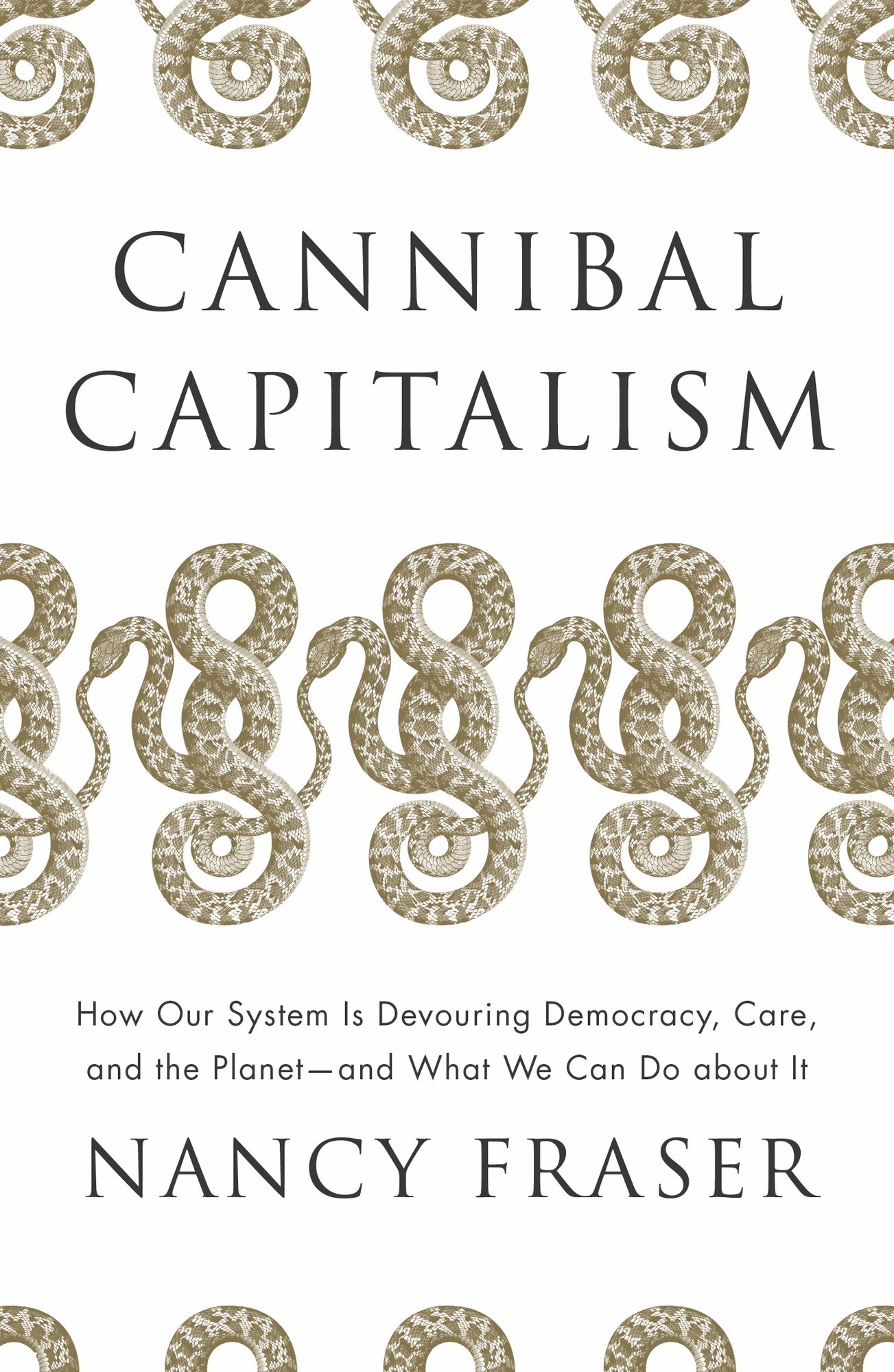
Cannibal Capitalism
Shortlisted for the Deutscher Memorial Prize 2023 Capital is currently cannibalizing every sphere of life-guzzling wealth from nature and racialized populations, sucking up our ability to care for each other, and gutting the practice of politics. In this tightly argued and urgent volume, leading Marxist feminist theorist Nancy Fraser charts the voracious appetite of capital, tracking it from crisis point to crisis point, from ecological devastation to the collapse of democracy, from racial violence to the devaluing of care work. These crisis points all come to a head in Covid-19, which Fraser argues can help us envision the resistance we need to end the feeding frenzy. What we need, she argues, is a wide-ranging socialist movement that can recognize the rapaciousness of capital - and starve it to death.
Re-enchanting the world : feminism and the politics of the commons
xviii, 227 pages ; 23 cm; "Silvia Federici is one of the most important contemporary theorists of capitalism and feminist movements. In this collection of her work spanning over twenty years, she provides a detailed history and critique of the politics of the commons from a feminist perspective. In her clear and combative voice, Federici provides readers with an analysis of some of the key issues and debates in contemporary thinking on this subject. Drawing on rich historical research, she maps the connections between the previous forms of enclosure that occurred with the birth of capitalism and the destruction of the commons and the "new enclosures" at the heart of the present phase of global capitalist accumulation. Considering the commons from a feminist perspective, this collection centers on women and reproductive work as crucial to both our economic survival and the construction of a world free from the hierarchies and divisions capital has planted in the body of the world proletariat. Federici is clear that the commons should not be understood as happy islands in a sea of exploitative relations but rather autonomous spaces from which to challenge the existing capitalist organization of life and labor"--; Foreward by Peter Linebaugh; Includes bibliographical references (pages198-216) and index; On primitive accumulation, globalization, and reproduction -- Introduction to the new enclosures -- The debt crisis, Africa, and the new enclosures -- China: breaking the iron rice bowl -- From commoning to debt: financialization, microcredit, and the changing architecture of capital accumulation -- Beneath the United States, the Commons -- Commons against and beyond Capitalism -- The University: a knowledge common? -- Feminism and the politics of the commons in an era of primitive accumulation -- Women's struggles for land in Africa and the reconstruction of the commons -- Women's struggles for land and the common good in Latin America -- Marxism, feminism, and the commons -- From crisis to commons: reproductive work, affective labor and technology, and the transformation of everyday life -- Re-enchanting the world: technology, the body, and the construction of the commons

Feminism | The Paper Pilot
The Paper Pilot's digital garden of thoughts on philosophy, politics, and sociology
We Do This 'Til We Free Us
New York Times Bestseller “Organizing is both science and art. It is thinking through a vision, a strategy, and then figuring out who your targets are, always being concerned about power, always being concerned about how you’re going to actually build power in order to be able to push your issues, in order to be able to get the target to actually move in the way that you want to.” What if social transformation and liberation isn’t about waiting for someone else to come along and save us? What if ordinary people have the power to collectively free ourselves? In this timely collection of essays and interviews, Mariame Kaba reflects on the deep work of abolition and transformative political struggle. With a foreword by Naomi Murakawa and chapters on seeking justice beyond the punishment system, transforming how we deal with harm and accountability, and finding hope in collective struggle for abolition, Kaba’s work is deeply rooted in the relentless belief that we can fundamentally change the world. As Kaba writes, “Nothing that we do that is worthwhile is done alone.”

Deep Care by Angela Hume | East Bay Booksellers
The story of the radical feminist networks who worked outside the law to defend abortion. Starting in the 1970s, small groups of feminist activists met regularly to study anatomy, practice pelvic exams on each other, and learn how to safely perform a procedure known as menstrual extraction, which can end a pregnancy, using equipment easily bought and assembled at home.
Black Schoolgirls at the Intersection of Consent and Property: Mapping a Socio-Historical Analysis for Anti-Rape Education Futures in Schooling
This article examines how the concept of consent, persons as property, with its links to the convergence of law, imperial governance and schooling reveal the fragility and possibilities of consent ...

Marxism & the Global South
A critical history of imperialism and dependency theory, from Marx on colonialism and Eurocentrism to Baran, Frank, Wallerstein, and Samir Amin.

Marxism & the Global South
A critical history of imperialism and dependency theory, from Marx on colonialism and Eurocentrism to Baran, Frank, Wallerstein, and Samir Amin.
Black Feminist Thought, 30th Anniversary Edition: Knowledge, Consciousness, and the Politics of Empowerment
Knowledge, Consciousness, and the Politics of Empowerment

Intersectionality | The Paper Pilot
The Paper Pilot's digital garden of thoughts on philosophy, politics, and sociology
Lo and behold, the bourgeois gaslighting machine! - Lemmy
This thread is an exemplary case of how “we” (that is, liberal-minded minions uncritically parroting the talking points of the bourgeoisie) inhibit any social and class consciousness from sprouting in the proletarian mind. The original post, titled “Nothing worth having in life comes easily”, goes as such: >Yes it does. Yes it fucking does. For SOME people. >Some people were born into rich families. Money is worth having, and money came easily to them. >[…] >Some people are born white. Not being discriminated against must be nice. >I could go on. You get the fucking point. >Why do people on Reddit keep repeating this blatantly false platitude? There are countless of examples of people in this world who didn’t have to work for shit, yet many things came easily to them. As you might expect, the comments went on the offense to discredit OP’s sentiments, in different manners. The first category of comments involves invoking “life” as some natural order of things which is beyond human control, ergo it must be accepted. >I get what you mean life is unfair sometimes. >Life sucks and then we die. >Life is 100% unfair. Full stop. Get used to it. This defeatist attitude just dissuades any doubts in one’s mind regarding the viability of the current system. The second category includes comments that deny any exteriority to OP’s sentiments and focus on their own personal ailments: >Some people get so fixated on being victims of society that they seem to give away their own power to change their lives. >This post is somewhat delusional. Highly suggest to not compare your insides to other people’s outsides or you’ll always come away with a distorted perception. There are so many false assumptions in here I don’t know where to start but if you wanna pity yourself and put others on pedestals - knock yourself out. >Being mad and jealous, letting negative emotions permeate through every facet of your mind will make it better. Keep going. They’re basically saying: “the world is fine, the problem is you; and you should feel bad for feeling otherwise.” The third category involves comments that dilute the importance of wealth and socioeconomic status: >Every privilege you mentioned comes with its own set of problems. >It might not seem like it, but everybody has the same amount of issues as everyone else. >Dating, money, and privilege aren’t the meaning of life. An obvious case of blatantly gaslighting people struggling to survive when they realize the unfairness of capitalism. And an honourable mentions goes to those talking down white supremacy and systemic racism! >Agreed except for the white comment. Every race gets discriminated against, just in different ways. >Oh good more hatred of White people this will surely solve this loser’s personal problems. >Oh, if you are born white don’t worry, there will be plenty of people who will discriminate against you. One of the major political parties sanctions it. It’s socially acceptable. There’s plenty of people like you. You get the point. >Well white people get discriminated against and this is all very victim mentality based. There are many other arguments, but you get the point. They all share the same motive: the annihilation of any hint of social consciousness. It is tragic because, more often than not, it is the oppressed who are gaslighting themselves and not the bourgeois and capitalists. The latter outsource even the labor of propagating their foul logic and arguments to the proletariat.
Child Liberation | The Paper Pilot
The Paper Pilot's digital garden of thoughts on philosophy, politics, and sociology