

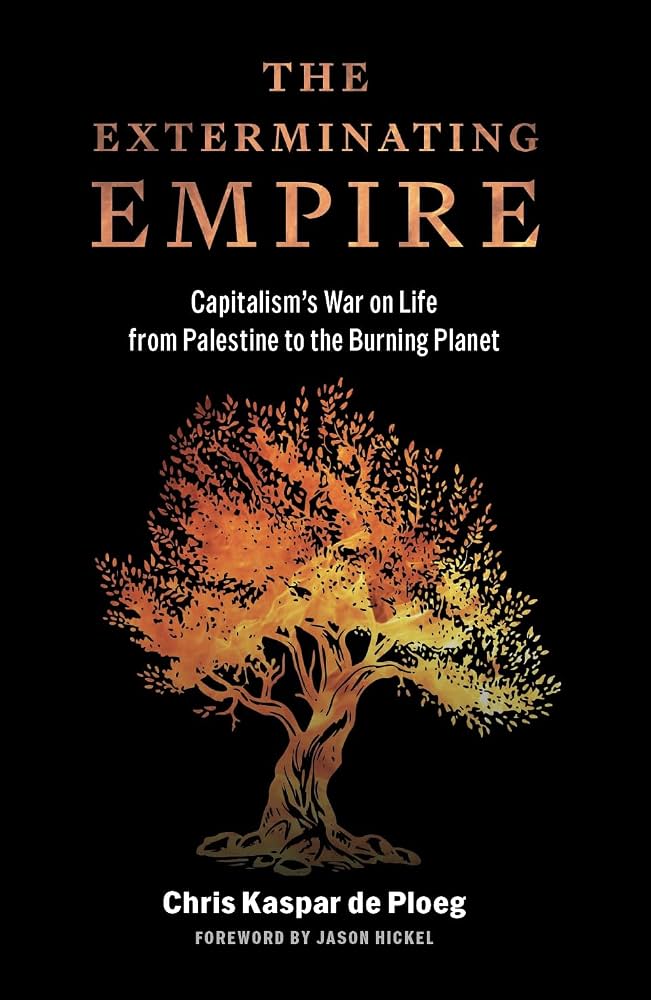
Taking the ongoing genocide in Palestine as a point of departure, The Exterminating Empire traces capital’s centuries-long war against life itself. From the slave plantations and scorched-earth campaigns of early colonialism, to Vietnam, Haiti, Iraq, and today’s climate apartheid, Chris de Ploeg shows that, not only has exterminatory violence against peoples and ecosystems been central to the imperial project, but omnicidal tendencies—the drive to kill everything—have always been present. Operating at different scales, these tendencies possess the potential to annihilate even the imperial core itself, along with the rest of the planet.Drawing from the revolutionary traditions of the Global South, de Ploeg offers a strategic vision of resistance rooted in class struggle, internationalism, socialism, and ecological justice. The Exterminating Empire gives a coherent worldview to those first politicized by the genocidal violence against Palestinians, and at the same time offers fresh perspectives to the seasoned reader. Whether unearthing the Roman invasions of Palestine, or exhuming the invention of hell, delivering the imperial birth story behind eco-fascism, or brandishing the weaponization of hunger and wage slavery de Ploeg maintains a relentless clarity and momentum, packing shocking facts, historical revelations, and praxis onto every page. This book is both an admonition against the annihilation we face and a survival guide.
Foreword to 'The Exterminating Empire' - Monthly Review
In this stirring foreword to Chris Kaspar de Ploeg’s The Exterminating Empire (Monthly Review Press, 2026), Jason Hickel decries a world in which cruelty, genocide, and rapacious capitalism have become... READ MORE
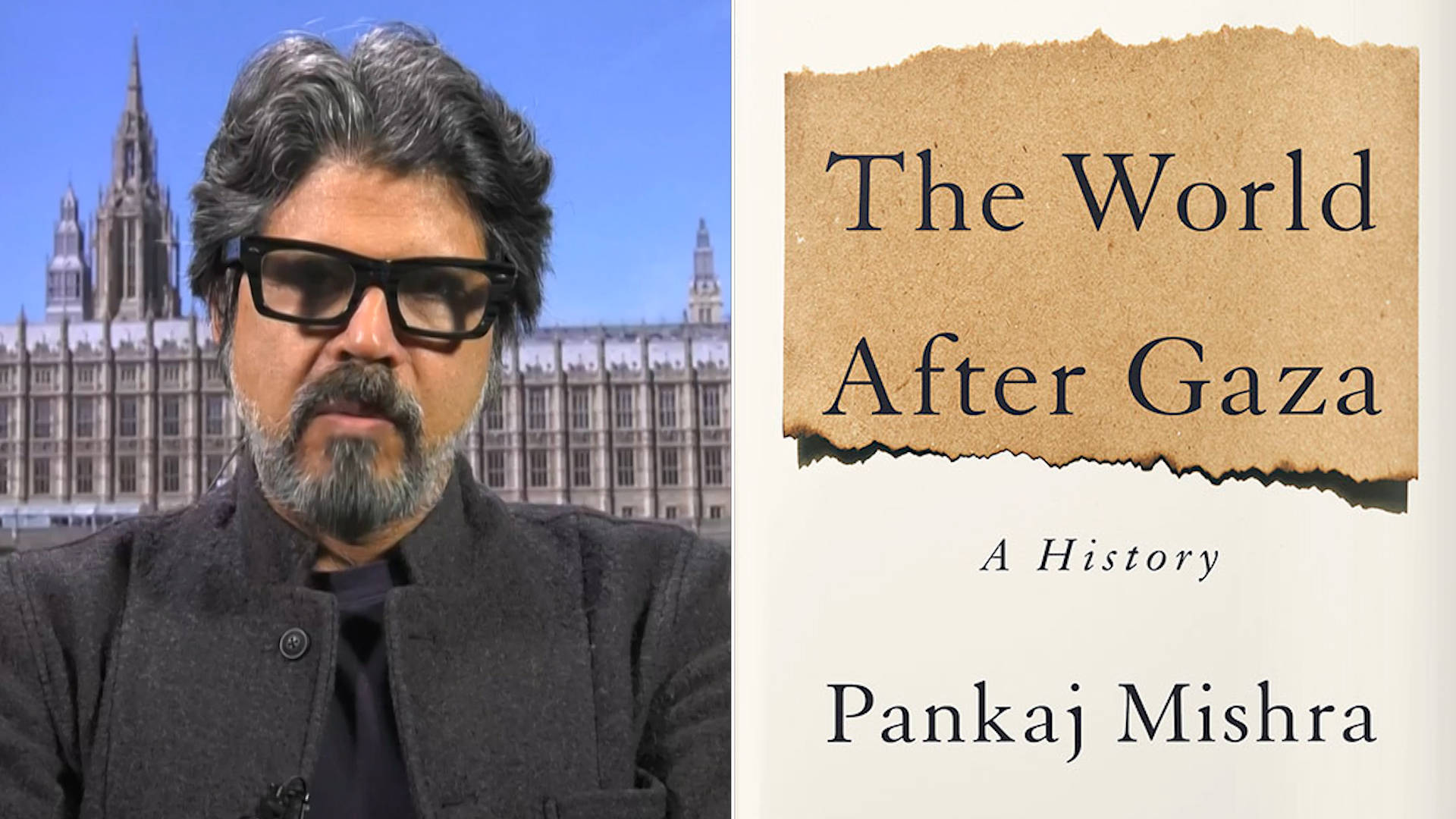
“The World After Gaza”: Author Pankaj Mishra on Gaza & the Return of 19th-C. “Rapacious Imperialism”
Pankaj Mishra’s new book, The World After Gaza: A History, was written as a response to the “vast panorama of violence, disorder and suffering that we’re seeing today,” says the author. In Part 1 of our interview with the award-winning Indian writer, Mishra shares why he “felt compelled” to respond to what he sees as a return to the 19th-century model of “rapacious imperialism” in the Western world, signified by global complicity in Israel’s genocide in Gaza.
Jason Hickel: Why a Liberated Palestine Threatens Global Capitalism
Whose growth in whose planetary boundaries? Decolonising planetary justice in the Anthropocene
Abstract This critical analysis examines the geopolitics of planetary environmental injustice and the imperative for systems change to address the intertwined crises of climate breakdown and unsustainable economic growth. Climate breakdown has heightened attention to uneven anthropogenic use and abuse of the planet's biosphere and common pool resources. Recent arguments by climate scholars suggest that various planetary boundaries have already been breached, resulting in dramatic and harmful socio‐ecological consequences. These trends raise crucial questions of equity and justice, especially concerning responsibilities and impacts. By centring Global South perspectives, prevailing ideologies promoting hyperconsumption, overproduction and waste are interrogated. The incommensurability of socioecological justice with ongoing unsustainable extractive and exploitative economic growth paradigms, which contribute to further transgressions of planetary boundaries, underscore the urgency of decolonising underlying colonial‐capitalist ideologies and practices. This entails a fundamental reformulation of paradigms to envision a more just and sustainable future, one that dismantles oppressive systems and advances justice‐oriented praxis. , Short Abstract The geopolitics of planetary environmental injustice demonstrates the need for systems change to address climate breakdown and unsustainable economic growth. By centring Global South perspectives, prevailing ideologies promoting hyperconsumption, overproduction and waste are interrogated, highlighting the incompatibility of socioecological justice with extractive and exploitative growth paradigms. The breaches of planetary boundaries and their harmful socio‐ecological consequences further underscore the urgency of decolonising colonial‐capitalist ideologies and practices, necessitating the fundamental reformulation of paradigms to envision a more just and sustainable future that dismantles oppressive systems and fosters justice‐oriented praxis.

'Zionism Led to Genocide. It Must Disappear': Omer Bartov's New Book …
archived 25 Apr 2026 07:22:14 UTC

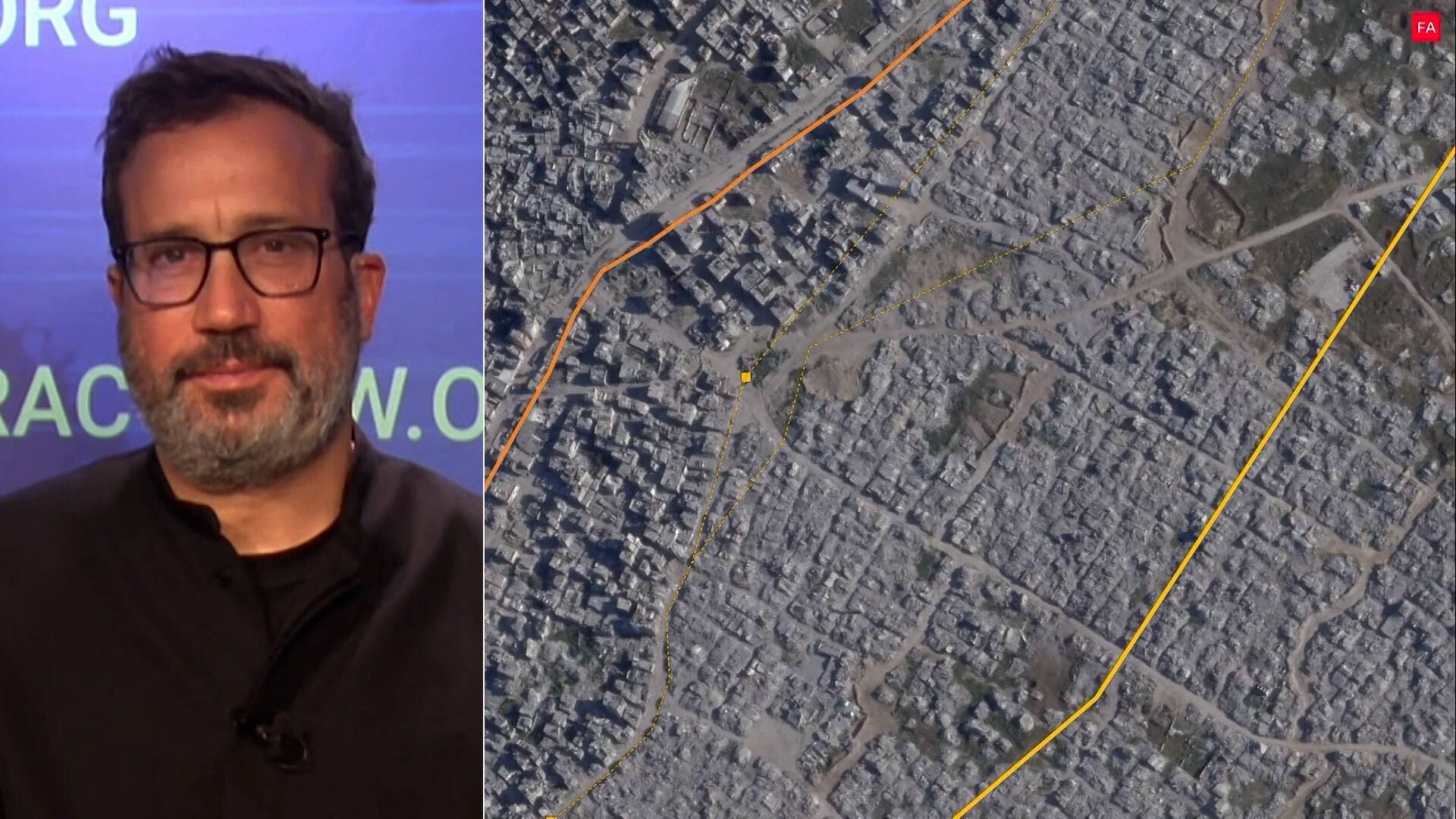
“Ungrounding”: Eyal Weizman on Gaza Genocide & Israel’s “Permanent Architecture of Control”
We speak with Forensic Architecture’s Eyal Weizman about his new book, Ungrounding: The Architecture of Genocide, a meticulous investigation into Israel’s genocide in Gaza, the physical destruction of the territory and its impact on the Palestinian people. Forensic Architecture was founded in 2010 as an interdisciplinary research group focused on investigating state violence and human rights violations. Since 2023, Forensic Architecture has focused on producing evidence for South Africa’s genocide case against Israel at the International Court of Justice. Weizman says “ungrounding” is “a kind of destruction that we have not seen anywhere else,” with Israeli bulldozers “terraforming” the landscape to erase all traces of Palestinian life. With thousands of bodies still unrecovered from under destroyed buildings, Israel’s flattening, extraction and reshaping of the rubble in Gaza is a continuation of its crimes, says Weizman. “Israel is actively and against court order, against the order of the ICJ, destroying the evidence of the genocide that it has perpetrated,” he says.
Anti-Zionism: A Jewish History
A sweeping and revelatory history of the hidden tradition of Jewish thinkers who opposed Zionism, from Pulitzer Prize winner Benjamin Moser.In Anti-Zionism: A Jewish History, Benjamin Moser uncovers a suppressed tradition that has shaped Jewish thought for generations. Through a cast of artists, rabbis, poets, lawyers, activists, journalists, and politicians—from Europe and Africa and Asia and Latin America—Moser traces a lineage of Jewish dissenters who confronted Zionism’s moral and political stakes—often at devastating personal cost, including censorship, exile, and death.Their lives form a sweeping, global narrative that dismantles a powerful myth: that anti-Zionism is synonymous with antisemitism. Spanning continents and centuries, these voices—people from the right and the left, Reform and Orthodox, Ashkenazic and Sephardic, men and women, gay and straight—differ sharply in belief and background, yet converge on a shared warning about the consequences of a nationalist project built on exclusion. What emerges is not only a rediscovered tradition of Jewish moral thought, but a startling reappraisal of Zionism itself.Moser’s work restores the full scale and depth of Jewish ethical imagination, affirming that Judaism is older and larger than any single political project. Lucid, unsparing, and deeply humane, Anti-Zionism cements Moser’s place as one of our foremost Jewish writers and presents a framework through which this history—and its meanings—will be understood for years to come.
US Labor & Imperialism Pt. 2: Zionism w/ Jeff Schuhrke (Palestine Pt. 16)
Israel: What Went Wrong?
A leading Israeli American scholar of the Holocaust explores and explains his native country's intensifying turn toward violence and exclusion.The distinguished historian Omer Bartov was born on a kibbutz, grew up in Tel Aviv, and served in the Israel Defense Forces during the Yom Kippur War. He went on to become a leading scholar of the German army and the Holocaust, before turning his attention to his native country.In Israel: What Went Wrong?, Bartov sketches the tragic transformation of Zionism, a movement that sought to emancipate European Jewry from oppression, into a state ideology of ethno-nationalism. How is it possible, he asks, that a state founded in the immediate aftermath of the Holocaust, an event that gave legitimacy to a national home for the Jews, stands credibly accused of perpetrating large-scale war crimes? How do we come to terms with the fact that Israel’s war of destruction is being conducted with the support, laced with denial and indifference, of so many of its Jewish citizens?Tracing the roots of the violent events currently unfolding in Israel and the occupied territories, Bartov tracks his country's moral tribulations and considers the origins of Zionism, the intertwining of Israel’s independence with Palestinian displacement, the politics of the Holocaust, controversies over the term "genocide," and the uncertain future. The result is a searing and urgent critique that addresses today’s debates over Zionism and the future of Israel with rigor and depth.
Eco-Furieuxses on Instagram: "BASTILLE DAY – RÉVOLUTION CLIMATIQUE 14 juillet – 15 h • Place de la Bastille, Paris Signe de ralliement : une couverture de survie sur les épaules en écho à la super initiative de @faiteslabriller Le 14 juillet, TOUT CHANGER SAUF LE CLIMAT rejoint la @marchedesolidarités internationaliste aux côtés de @laveritepouradama , @urgencepalestine et de dizaines d'autres collectifs pour affirmer une évidence : la justice climatique ne peut exister sans justice sociale, antiraciste et décoloniale. Face à l'effondrement climatique, aux inégalités, aux guerres, au racisme, au colonialisme, à l'autoritarisme et aux violences de l'appareil répressif, il est temps de reprendre le pouvoir. Nous refusons que les populations les plus vulnérables paient une crise provoquée par les industries fossiles et un modèle économique fondé sur l'exploitation du vivant. Nous exigeons des mesures immédiates pour protéger les travailleuses, les travailleurs et les personnes les plus exposées aux canicules, ainsi qu'un plan climatique ambitieux : sortie des énergies fossiles, réduction massive des émissions, accès universel à l'eau, au logement, à une alimentation saine : la mise en sécurité sociale des communs, avec un transfert réel du pouvoir vers les quartiers populaires, les territoires et les habitantes et habitants. Parce que la catastrophe climatique est aussi sociale et migratoire, nous défendons la liberté de circulation, le droit d’habiter dignement. Comme l'écrit @fatima_ouassak dans "Écologie pirate", il n'y aura pas d'écologie sans justice décoloniale. Le 14 juillet, faisons tomber les Bastilles du XXIᵉ siècle : le capital fossile, le racisme, le colonialisme, les frontières meurtrières, la répression et les privilèges. Vous ne pouvez pas être à Paris ? Rejoignez une mobilisation locale, participez aux rassemblements organisés près de chez vous le soir devant les préfectures via @alternatiba_ , ou engagez une "grève des achats". Construisons un rendez-vous chaque 14 du mois sous des formes complémentaires : rassemblements, marchés, grève des achats avec @les14sansachat Faisons de ce 14 juillet le début de la révolution du XXIe siècle. Graphisme par @eco.lolo"
831 likes, 68 comments - toutchangersaufleclimat on July 9, 2026: "BASTILLE DAY – RÉVOLUTION CLIMATIQUE 14 juillet – 15 h • Place de la Bastille, Paris Signe de ralliement : une couverture de survie sur les épaules en écho à la super initiative de @faiteslabriller Le 14 juillet, TOUT CHANGER SAUF LE CLIMAT rejoint la @marchedesolidarités internationaliste aux côtés de @laveritepouradama , @urgencepalestine et de dizaines d'autres collectifs pour affirmer une évidence : la justice climatique ne peut exister sans justice sociale, antiraciste et décoloniale. Face à l'effondrement climatique, aux inégalités, aux guerres, au racisme, au colonialisme, à l'autoritarisme et aux violences de l'appareil répressif, il est temps de reprendre le pouvoir. Nous refusons que les populations les plus vulnérables paient une crise provoquée par les industries fossiles et un modèle économique fondé sur l'exploitation du vivant. Nous exigeons des mesures immédiates pour protéger les travailleuses, les travailleurs et les personnes les plus exposées aux canicules, ainsi qu'un plan climatique ambitieux : sortie des énergies fossiles, réduction massive des émissions, accès universel à l'eau, au logement, à une alimentation saine : la mise en sécurité sociale des communs, avec un transfert réel du pouvoir vers les quartiers populaires, les territoires et les habitantes et habitants. Parce que la catastrophe climatique est aussi sociale et migratoire, nous défendons la liberté de circulation, le droit d’habiter dignement. Comme l'écrit @fatima_ouassak dans "Écologie pirate", il n'y aura pas d'écologie sans justice décoloniale. Le 14 juillet, faisons tomber les Bastilles du XXIᵉ siècle : le capital fossile, le racisme, le colonialisme, les frontières meurtrières, la répression et les privilèges. Vous ne pouvez pas être à Paris ? Rejoignez une mobilisation locale, participez aux rassemblements organisés près de chez vous le soir devant les préfectures via @alternatiba_ , ou engagez une "grève des achats". Construisons un rendez-vous chaque 14 du mois sous des formes complémentaires : rassemblements, marchés, grève des achats avec @les14sansachat Faisons de ce 14 juillet le début de la révolution du XXIe siècle. Graphisme par @eco.lolo".

Playing the Victim: How the Powerful Deny and Attack Survivors of Violence, from Domestic Abuse to Genocide
Journalist Kylie Cheung delivers an urgent, incisive look at how abusers—from empires to intimate partners—use the same gaslighting playbook to oppress victims, silence their voice, and stay in power Who has the right to their own body? Who has the right to self-defense? Who gets to walk away? From the genocide in Gaza to the state-sanctioned control of women’s bodies, Kylie Cheung confronts the most urgent moral and political crises of our time through an incisive, illuminating lens: DARVO—Deny, Attack, Reverse Victim and Offender. While DARVO originated in the psychology of domestic abuse and intimate partner violence, Cheung shows how it’s deployed en masse, at every level—and how it can become the blueprint for empire itself.From the spectacle of Depp v. Heard to horrors perpetrated by Israeli prison guards, Cheung exposes how abusers both individual and institutional flip the script and perform victimhood to justify domination. With unflinching clarity, Playing the Victim traces how these tactics shape everything from media propaganda and imperial warfare to anti-feminist backlash, transphobic legislation, and racialized state violence. Each chapter peels back another layer of the mirror-world machine that distorts oppressors into victims and twists resistance into crime.Essential for anyone seeking to understand how power works in the 21st century—and at whose cost—this book is piercing, clear-eyed, and rigorously researched. Unpacking how domestic abuse, intimate partner violence, colonial violence, and capitalist cruelty function as interlocking systems of control, Cheung helps readers understand how power hides behind ersatz victimhood—and how this plays us all.
Surrealism Against Fascism • EQUATOR
A century ago, artists who survived the trenches captured humanity’s capacity for destruction. What can they teach us about confronting the far-right in a new age of genocide?

Ecocivilization: making a world that works for all
""One of the greatest thinkers of our age" (The Guardian) presents a new way of living-one modeled on nature's design instead of capitalism's-for fans of Guns, Germs, and Steel and Doughnut Economics It has often been said that it is easier to imagine the end of the world than it is to imagine the end of capitalism-and yet that is what the historical moment urgently calls for. Climate change has reached an emergency state, inequality continues to grow, and, for many, the future has never seemed more bleak. Incremental policy improvements are no longer enough-we need a deep transformation of our current civilization to continue to survive. In Ecocivilization, leading thinker Jeremy Lent reimagines the basis of our civilization, and argues for a new global system of living, one based on life-affirming principles modeled after nature's own design. What enfolds is a robust framework incorporating Lent's own expertise, and the lived experiences of those on the ground already putting ecological civilization's core tenants into practice-justice, mutuality, diversity, and symbiosis. From the global economy to universal housing and income, from infrastructure to agriculture, every major aspect of our society could be redesigned to work together as a coherent whole, setting the conditions for all people to flourish. Ecocivilization shows how this future on a regenerated Earth is not only desirable, but entirely feasible"--

Britain’s Palestine failure and the collapse of the international rules-based order
Britain dithers on the sidelines instead of seizing the opportunity to address a century-old injustice inflicted on the Palestinian people

“Striking Hard at Civilians”: A Supremacist Ideology Underlies Israeli Policy
Israel must “shed Zionism, just as South Africa abandoned Afrikaner nationalist ideology,” Muhammad Ali Khalidi says.
