


How to plan a round of user research, including setting objectives, finding participants, recording and taking notes of a session.
Crowdsourced Health Research Studies: An Important Emerging Complement to Clinical Trials in the Public Health Research Ecosystem
Background: Crowdsourced health research studies are the nexus of three contemporary trends: 1) citizen science (non-professionally trained individuals conducting science-related activities); 2) crowdsourcing (use of web-based technologies to recruit project participants); and 3) medicine 2.0 / health 2.0 (active participation of individuals in their health care particularly using web 2.0 technologies). Crowdsourced health research studies have arisen as a natural extension of the activities of health social networks (online health interest communities), and can be researcher-organized or participant-organized. In the last few years, professional researchers have been crowdsourcing cohorts from health social networks for the conduct of traditional studies. Participants have also begun to organize their own research studies through health social networks and health collaboration communities created especially for the purpose of self-experimentation and the investigation of health-related concerns. Objective: The objective of this analysis is to undertake a comprehensive narrative review of crowdsourced health research studies. This review will assess the status, impact, and prospects of crowdsourced health research studies. Methods: Crowdsourced health research studies were identified through a search of literature published from 2000 to 2011 and informal interviews conducted 2008-2011. Keyword terms related to crowdsourcing were sought in Medline/PubMed. Papers that presented results from human health studies that included crowdsourced populations were selected for inclusion. Crowdsourced health research studies not published in the scientific literature were identified by attending industry conferences and events, interviewing attendees, and reviewing related websites. Results: Participatory health is a growing area with individuals using health social networks, crowdsourced studies, smartphone health applications, and personal health records to achieve positive outcomes for a variety of health conditions. PatientsLikeMe and 23andMe are the leading operators of researcher-organized, crowdsourced health research studies. These operators have published findings in the areas of disease research, drug response, user experience in crowdsourced studies, and genetic association. Quantified Self, Genomera, and DIYgenomics are communities of participant-organized health research studies where individuals conduct self-experimentation and group studies. Crowdsourced health research studies have a diversity of intended outcomes and levels of scientific rigor. Conclusions: Participatory health initiatives are becoming part of the public health ecosystem and their rapid growth is facilitated by Internet and social networking influences. Large-scale parameter-stratified cohorts have potential to facilitate a next-generation understanding of disease and drug response. Not only is the large size of crowdsourced cohorts an asset to medical discovery, too is the near-immediate speed at which medical findings might be tested and applied. Participatory health initiatives are expanding the scope of medicine from a traditional focus on disease cure to a personalized preventive approach. Crowdsourced health research studies are a promising complement and extension to traditional clinical trials as a model for the conduct of health research.

Regular exchange of issues between lab members to share research tasks
At the start of this project, we suggested that our graph-based "issue dashboards" would be used widely by members ...

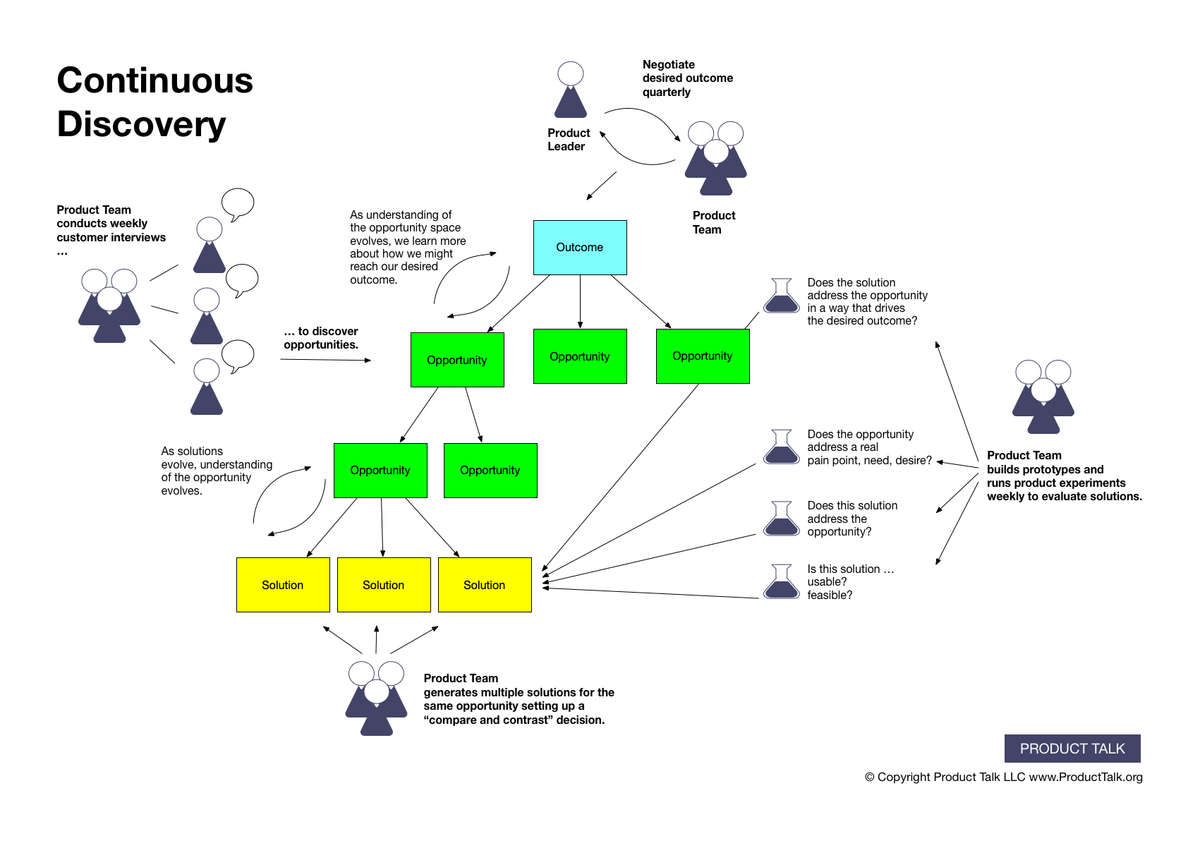
Continuous Discovery | Definition and Overview | Product Talk
Weekly touch points with customers by the team building the product, where they conduct small research activities in pursuit of a desired outcome.
Roam Research – A note taking tool for networked thought.
As easy to use as a word document or bulleted list, and as powerful for finding, collecting, and connecting related ideas as a graph database. Collaborate with others in real time, or store all your data locally.

(PDF) The sensemaking process and leverage points for analyst technology as identified through cognitive task analysis
PDF | On Jan 1, 2005, P. Pirolli and others published The sensemaking process and leverage points for analyst technology as identified through cognitive task analysis | Find, read and cite all the research you need on ResearchGate

How and When to Involve Crowds in Scientific Research - The Book
This book explores how millions of people can significantly contribute to scientific research. Discover main elements, authors, and who this book is for and why.
When to Use Which User-Experience Research Methods
20 user-research methods: where they fit in the design process, whether they are attitudinal or behavioral, qualitative or quantitative, and their context of use.
How to Research Tools for Thought
Introducing Routines: Research that keeps working - Elicit
Tell the Elicit Research Agent what to keep current. Routines find new evidence, update your work, and report back for your review.

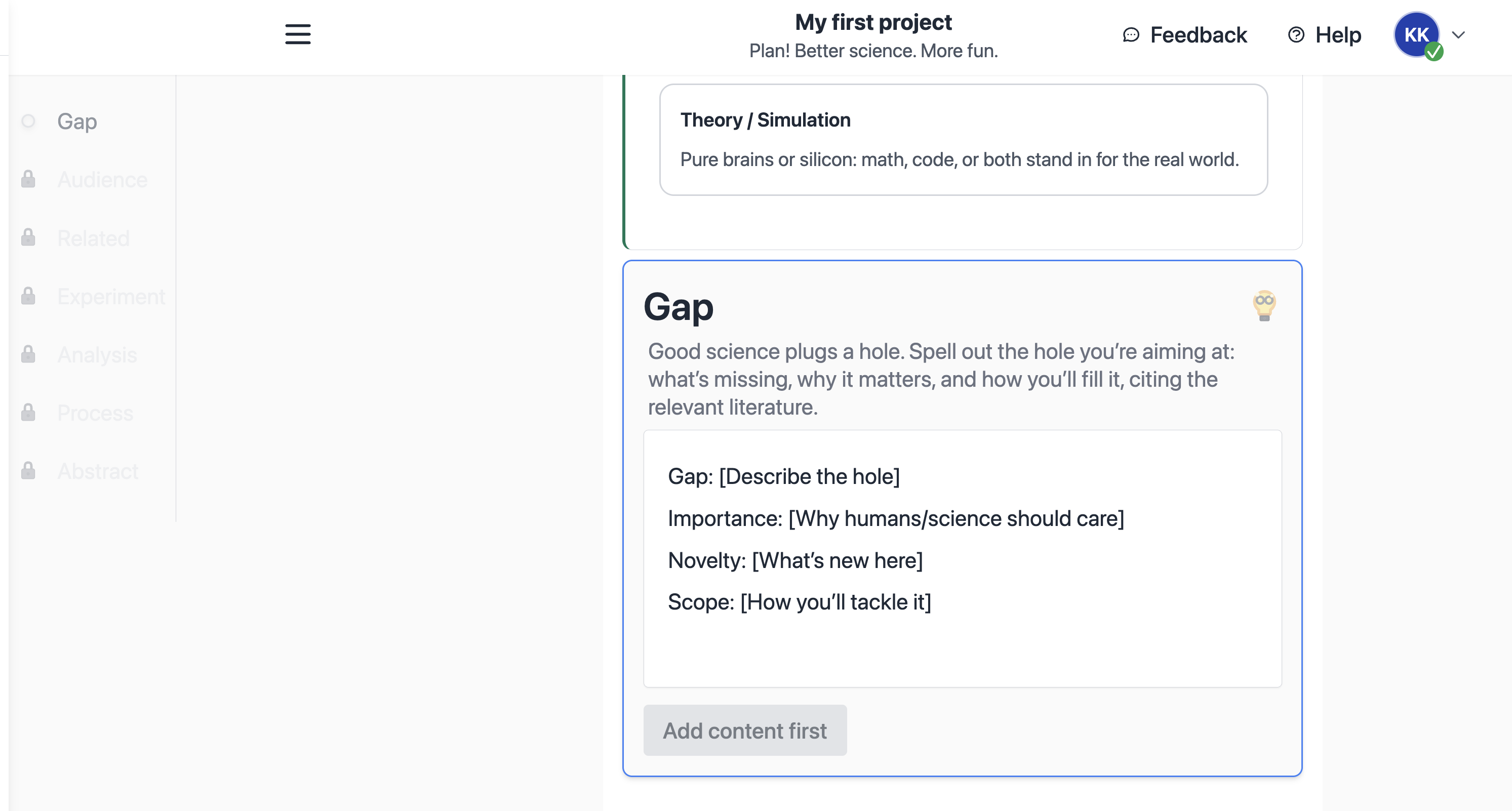
Scientific Paper Planner - AI Research Planning
Structure your scientific research with AI-powered guidance
Lecture 16 - How to Run a User Interview (Emmett Shear)
Metaudits
Audits of how completely research is described in DataCite, Crossref, ORCID, OpenAlex and repositories. In English, Spanish and German.
Participatory Action Research

A bunch of us are learning about how to convene and facilitate Participatory Action Research. This is an unorganized reading list of the best resources, references, etc we can find to school up on frameworks and approaches.
Research tools 🔬

Interesting tools that assist with the research process.
ParticipatoryEcosystem

Ronen Tamari (@ronentk.me)
Paperclip

Ronen Tamari (@ronentk.me)

Crossmark - Crossref
Crossmark - Crossref
Plaudit · Open endorsements from the academic community
Introducing the Elicit API - Elicit