


Inside the data that shows socioeconomic status barely matters once you know someone’s religious tradition.
Religion matters for economic growth through various channels
Standard models of economic growth depict physical capital, human capital, population/labour, and total factor productivity as proximate determinants of economic growth. But their deeper determinants are poorly understood. This column argues that religion – as one of the most ubiquitous social phenomena – can spur or impair economic growth by affecting each of these four elements of the macroeconomic production function.

The Association of Religion Data Archives
Association of Religion Data Archives (ARDA) best reference source to find data, information, datasets on American & international religion, US Religion Census

The changing nature of America’s irreligious explained
Americans are increasingly choosing not to identify with any religious tradition. But this group of irreligious people is a complex one – with different relationships to religion.

Praying for Rain
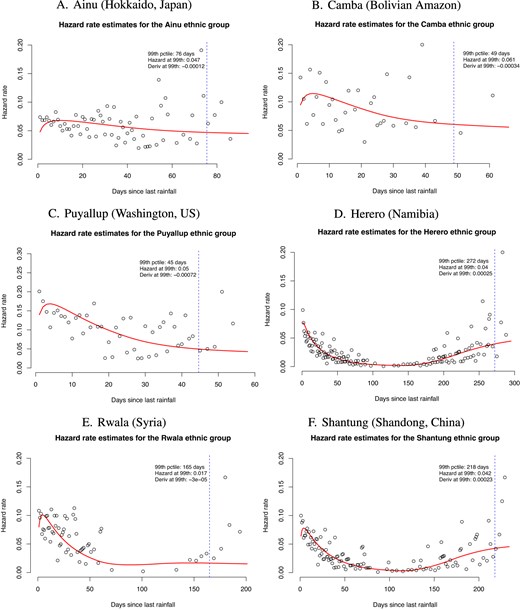
Abstract We study rainmaking as an instrumental religious belief. We present a model in which a religious leader tries to persuade people to believe. Praying for rain can persuade only where the hazard of rainfall during a dry spell is increasing over time, so that prayer is most likely to succeed when people most want rain. We present evidence from prayers for rain in Murcia, Spain, where the hazard rate is increasing, that the church’s prayers for rain predict rainfall over two centuries. To generalize this finding, we gather an original data set of whether ethnic groups around the world traditionally prayed for rain. We find that ethnic groups facing an increasing rainfall hazard are 47% more likely to pray for rain, consistent with our model’s prediction that societies are more likely to pray for rain where prayer is persuasive.
The EAC-PM's Paper on 'Muslim Population' Is a Travesty of Research Practices
Fertility rates of the poorest sections of the population of any state are impacted by the quality of educational and health services, and gender differences in regard to health and educational outcome indicators, not religion.

India - C-01: Population by religious community, India - 2011
Data Archive
Over 1000 surveys and other data collections related to American and international religion are available for online preview and download
🔎 india census 2011 population by religion - Google Search

The marketplace of rationalizations
Recent work in economics has rediscovered the importance of belief-based utility for understanding human behaviour. Belief ‘choice’ is subject to an important constraint, however: people can only bring themselves to believe things for which they can find rationalizations. When preferences for similar beliefs are widespread, this constraint generates rationalization markets, social structures in which agents compete to produce rationalizations in exchange for money and social rewards. I explore the nature of such markets, I draw on political media to illustrate their characteristics and behaviour, and I highlight their implications for understanding motivated cognition and misinformation.

(Working Paper) Good Faith Design: Religion as a Resource for Technologists
Previous work has found a lack of research in HCI on religion, partly driven by misunderstandings of values and practices between religious and technical communities. To bridge this divide in an empirically rigorous way, we conducted an interview study with 48 religious people and/or experts from 11 faiths, and we document how religious people experience, understand, and imagine technologies. We show that religious stakeholders find non-neutral secular embeddings in technologies and the firms and people that design them, and how these manifest in unintended harms for religious and nonreligious users. Our findings reveal how users navigate technoreligious practices with religiously informed mental models and what they desire from technologies. Informed by this, we distill six design values -- wonder, humility, space, embodiedness, community, and eternity -- to guide technologists in considering and leveraging religion as an additional, valid sociocultural resource when designing for a holistic user. We further spell out directions for future research.

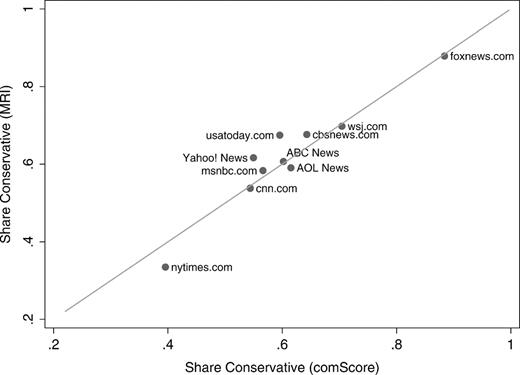
Ideological Segregation Online and Offline *
Abstract. We use individual and aggregate data to ask how the Internet is changing the ideological segregation of the American electorate. Focusing on onli
Why does every poll seem to show a tossup now?
Campaigns see internal polls as tools for fundraising
The persistence of cognitive biases in financial decisions across economic groups
While economic inequality continues to rise within countries, efforts to address it have been largely ineffective, particularly those involving behavioral approaches. It is often implied but not tested that choice patterns among low-income individuals may be a factor impeding behavioral interventions aimed at improving upward economic mobility. To test this, we assessed rates of ten cognitive biases across nearly 5000 participants from 27 countries. Our analyses were primarily focused on 1458 individuals that were either low-income adults or individuals who grew up in disadvantaged households but had above-average financial well-being as adults, known as positive deviants. Using discrete and complex models, we find evidence of no differences within or between groups or countries. We therefore conclude that choices impeded by cognitive biases alone cannot explain why some individuals do not experience upward economic mobility. Policies must combine both behavioral and structural interventions to improve financial well-being across populations.

First They Built a Secular Apocalypse Belief System. Now They Want Religious Authority.
Over the weekend, a clip about “Anthropic thinks it’s building God” started making the rounds.

Wage Compression Drives Nordic Income Equality
Income inequality in the Nordic countries — Denmark, Finland, Norway, and Sweden — is substantially lower than in the United States or the United Kingdom despite similar levels of per capita income. The Gini coefficient for disposable income in Nordic countries averages 0.27, compared to 0.39 in the US and 0.36 in the UK. In Income Equality in the Nordic Countries: Myths, Facts, and Lessons (NBER Working Paper 33444), Magne Mogstad, Kjell G. Salvanes, and Gaute Torsvik analyze the underlying source of these disparities. They employ detailed microeconomic data and statistical decomposition techniques and consider distributional statistics on income, wages, working hours, education, and skills across these countries.

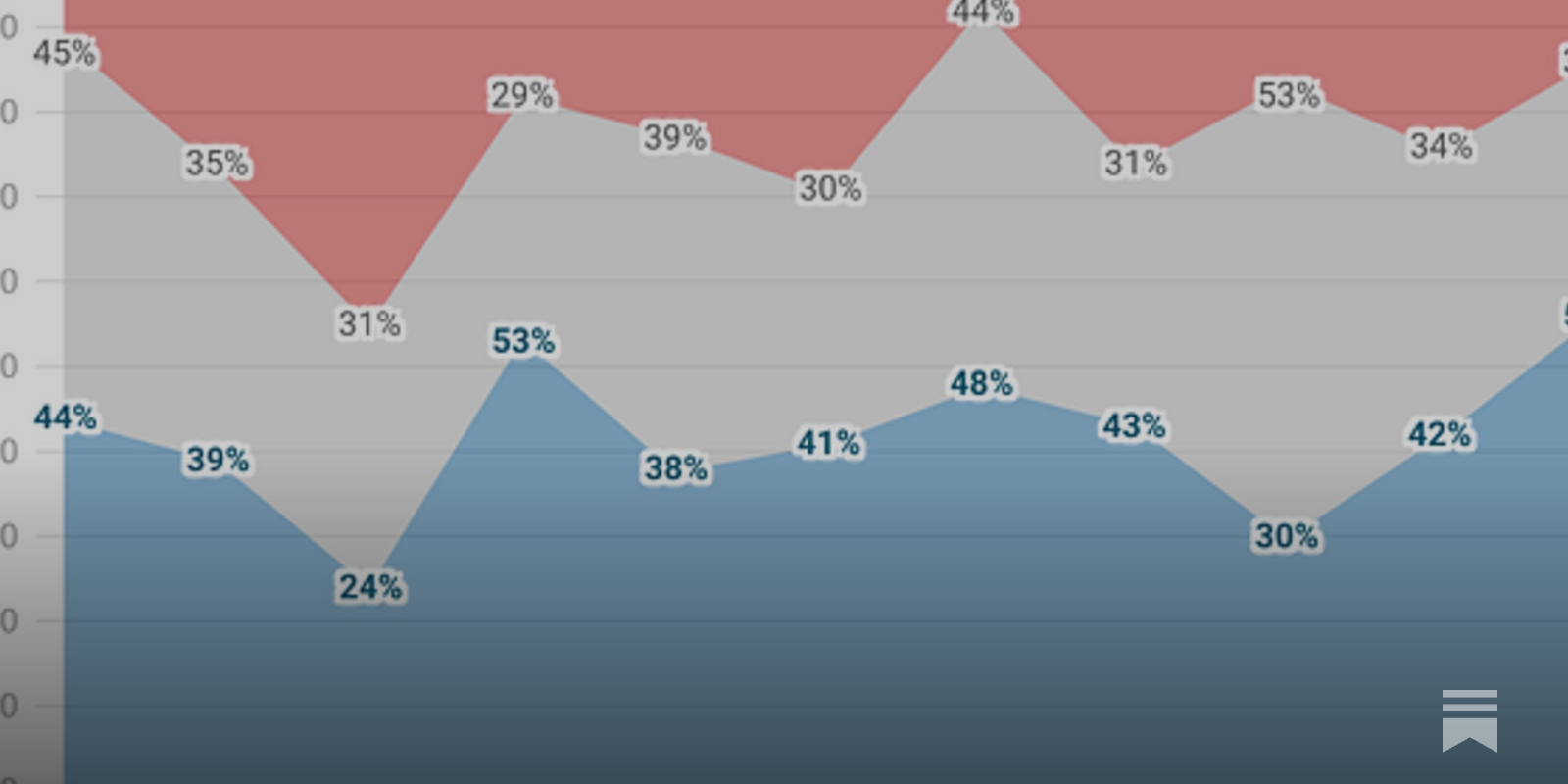
New YouGov/Economist poll out this AM has Democrats up 11 points on the House vote among likely voters. This is with named candidates, not the usual "generic ballot," which in my testing with CES data is typically more accurate in forecasting outcomes d3nkl3psvxxpe9.cloudfront.net/documents/econTabReport_SlcWd…
