

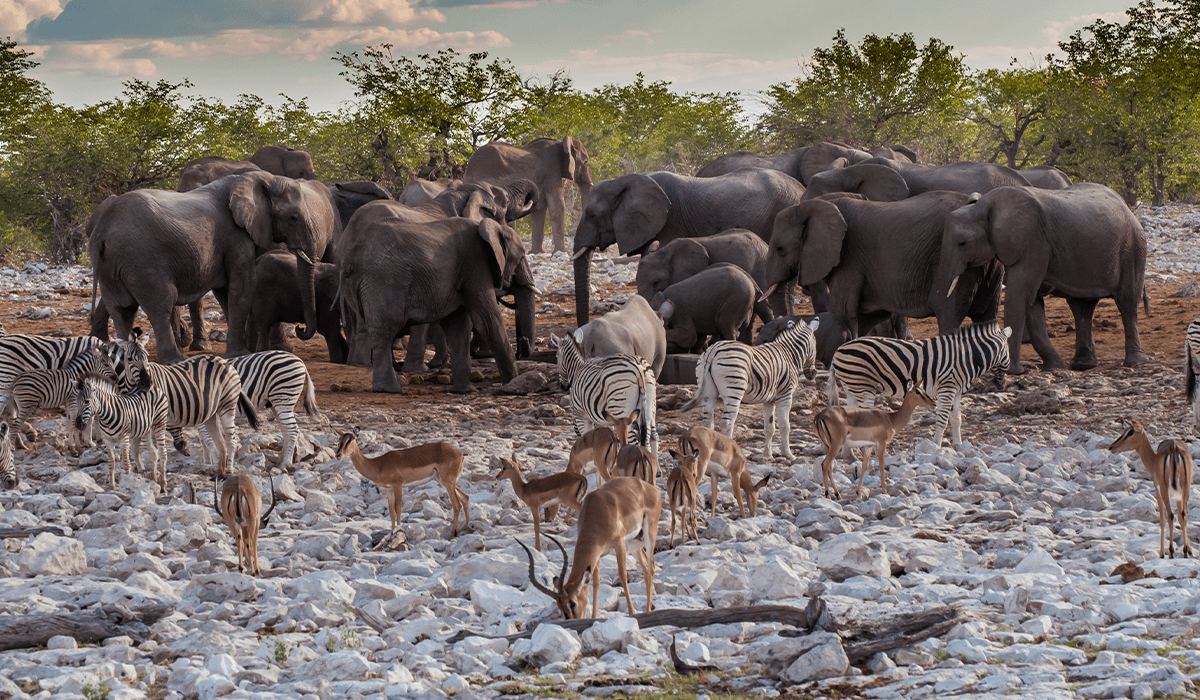
Discover the importance of 10 vital ecosystem services that sustain life on Earth, mostly provided by forests, for a resilient and sustainable future.
Ecosystem services - nature’s benefits
Nature's benefits or ecosystem services depend on a healthy environment. Investing in nature will help to secure these benefits for future generations.
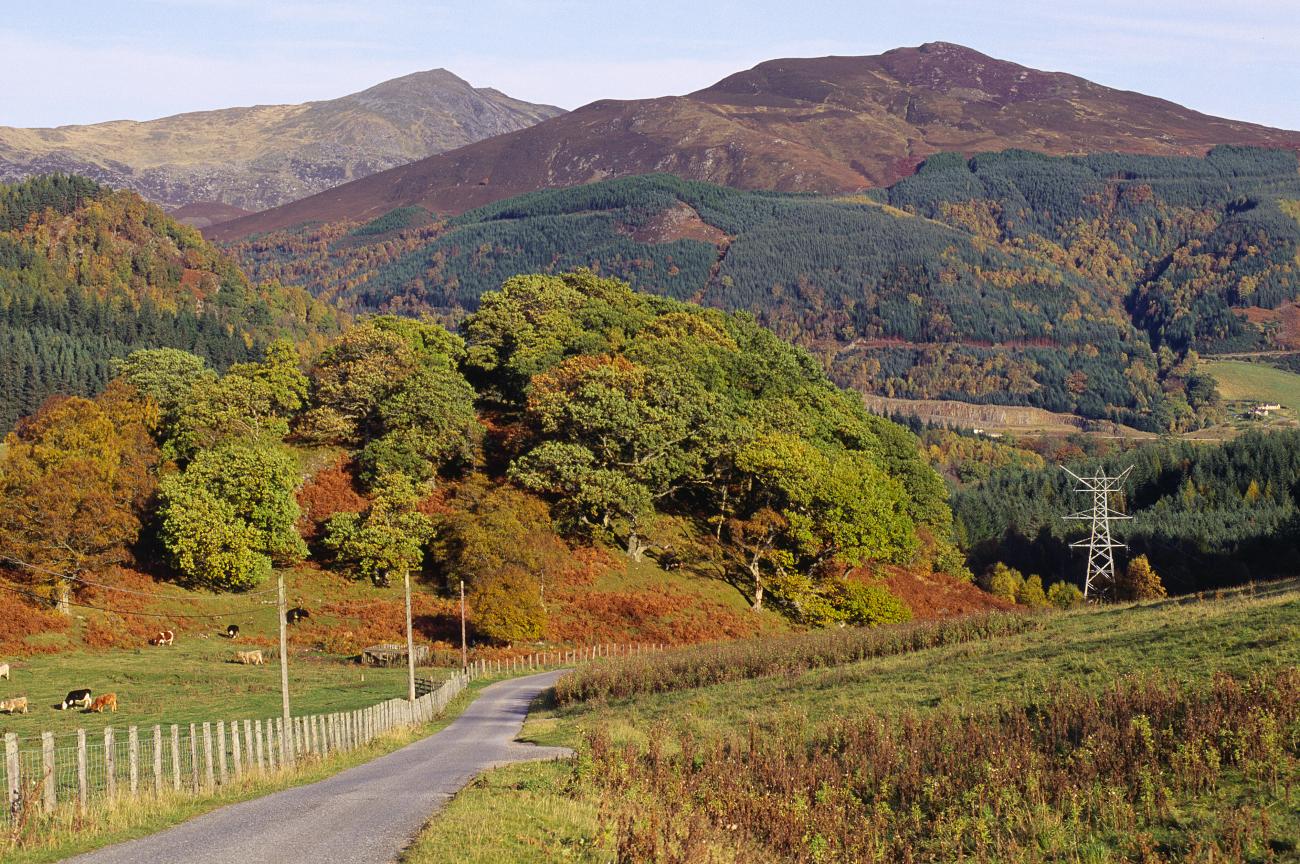
Assessing nature's contributions to people
Recognizing culture, and diverse sources of knowledge, can improve assessments , A major challenge today and into the future is to maintain or enhance beneficial contributions of nature to a good quality of life for all people. This is among the key motivations of the Intergovernmental Science-Policy Platform on Biodiversity and Ecosystem Services (IPBES), a joint global effort by governments, academia, and civil society to assess and promote knowledge of Earth's biodiversity and ecosystems and their contribution to human societies in order to inform policy formulation. One of the more recent key elements of the IPBES conceptual framework ( 1 ) is the notion of nature's contributions to people (NCP), which builds on the ecosystem service concept popularized by the Millennium Ecosystem Assessment (MA) ( 2 ). But as we detail below, NCP as defined and put into practice in IPBES differs from earlier work in several important ways. First, the NCP approach recognizes the central and pervasive role that culture plays in defining all links between people and nature. Second, use of NCP elevates, emphasizes, and operationalizes the role of indigenous and local knowledge in understanding nature's contribution to people.

Global assessment report on biodiversity and ecosystem services of the Intergovernmental Science-Policy Platform on Biodiversity and Ecosystem Services
IPBES is to perform regular and timely assessments of knowledge on biodiversity and ecosystem services and their interlinkages at the global level. Also addressing an invitation by the Conference of the Parties of the Convention on Biological Diversity (CBD) to prepare a global assessment of biodiversity and ecosystem services building, inter alia, on its own and other relevant regional, subregional and thematic assessments, as well as on national reports. The overall scope of the assessment is to assess the status and trends with regard to biodiversity and ecosystem services, the impact of biodiversity and ecosystem services on human well-being and the effectiveness of responses, including the Strategic Plan and its Aichi Biodiversity Targets. It is anticipated that this deliverable will contribute to the process for the evaluation and renewal of the Strategic Plan for Biodiversity and its Aichi Biodiversity Targets. The IPBES Global Assessment on Biodiversity and Ecosystem Services is composed of 1) a Summary for Policymakers (SPM), approved by the IPBES Plenary at its 7th session in May 2019 in Paris, France (IPBES-7); and 2) a set of six Chapters, accepted by the IPBES Plenary.
Diversification and ecosystem services for conservation agriculture: Outcomes from pastures and integrated crop–livestock systems | Renewable Agriculture and Food Systems | Cambridge Core
Diversification and ecosystem services for conservation agriculture: Outcomes from pastures and integrated crop–livestock systems - Volume 28 Issue 2
Ecosystem Plugins - Wesley's notes
Bridging the interop gap and addressing the long-tail of user needs
Summary for policymakers of the global assessment report on biodiversity and ecosystem services
IPBES is an independent intergovernmental body comprising over 130 member Governments. Established by Governments in 2012, IPBES provides policymakers with objective scientific assessments about the state of knowledge regarding the planet’s biodiversity, ecosystems and the contributions they make to people, as well as options and actions to protect and sustainably use these vital natural assets. The IPBES Global Assessment of Biodiversity and Ecosystem Services represents the landmark product of the first work programme of IPBES (2014-2018). The Global Assessment was initiated following a decision from the IPBES Plenary at its fourth session (IPBES 4, Kuala Lumpur, 2016), and considered by the IPBES Plenary at its seventh session (IPBES 7, Paris, 2019). It is composed of a summary for policymakers, which was approved at IPBES 7, and six chapters, which were accepted at IPBES 7.
IPBES Nexus Assessment: Summary for Policymakers
Summary for Policymakers of the Thematic Assessment Report on the Interlinkages among Biodiversity, Water, Food and Health of the Intergovernmental Science-Policy Platform on Biodiversity and Ecosystem Services. The IPBES Nexus Assessment was initiated following a decision from the IPBES Plenary at its eigth session (IPBES-8) in June 2021. The summary for policymakers was approved by the IPBES Plenary at its eleventh session (IPBES-11) in December 2024.
A varied ecosystem and terminology. - Nel Ramblings
Tackling the Nature Emergency - strategic framework for biodiversity: consultation
A consultation on Scotland’s Strategic Framework for Biodiversity, including the first 5-year Delivery Plan for the Scottish Biodiversity Strategy, and elements of the proposed Natural Environment Bill.

Metrics for biodiversity and health policy integration
Despite over a decade of progressive commitments from parties to the Convention on Biological Diversity (CBD), integrated biodiversity and health indicators and monitoring mechanisms remain limited, hampering achievement of the sustainable development goals and improvements in health and well-being. Adoption of the Kunming-Montreal Global Biodiversity Framework (2022) and the Global Action Plan on Biodiversity and Health (2024) provide a renewed entry point to shape the way governments approach health and wellbeing and address the environmental burden of disease. This is a critical opportunity that scholars at the health-environment nexus should not miss. This Perspective outlines building blocks to mobilize the field, starting with essential terminology and a scope of metrics needed by governments. We then evaluate elements to be considered in the construction of integrated metrics, including concepts, overarching challenges, a review of scientific hypotheses from an ecological perspective, as well as a set of principles and characteristics for indicators. To raise awareness across parallel communities of practice working at the health-environment nexus, we then briefly examine four approaches to integrated metrics developed by: conservationists, Indigenous scholars, One Health experts, and planetary health experts. We conclude with actionable steps to enhance governance, mobilize funding, and apply integrated indicators in national and global strategies. A broad science community is needed to support national governments to meet global commitments to address biodiversity loss and the environmental burden of disease concurrently. The overall aim of this paper is to contribute to addressing biodiversity loss by effectively linking policy and transdisciplinary practice at the health-environment nexus.

Biosphere
The biosphere, also called the ecosphere, is the worldwide sum of all ecosystems. It can also be termed the zone of life on the Earth. The biosphere is virtually a closed system with regard to matter, with minimal inputs and outputs. Regarding energy, it is an open system, with photosynthesis capturing solar energy at a rate of around 100 terawatts. By the most general biophysiological definition, the biosphere is the global ecological system integrating all living beings and their relationships, including their interaction with the elements of the lithosphere, cryosphere, hydrosphere, and atmosphere. The biosphere is postulated to have evolved, beginning with a process of biopoiesis or biogenesis, at least some 3.5 billion years ago.

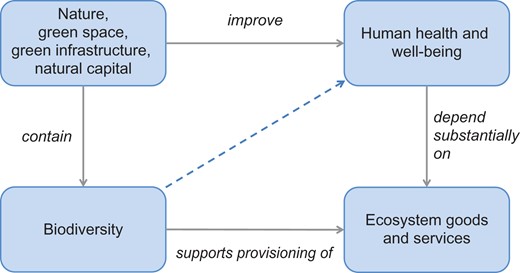
Biodiversity and human health: mechanisms and evidence of the positive health effects of diversity in nature and green spaces
AbstractIntroduction. Natural environments and green spaces provide ecosystem services that enhance human health and well-being. They improve mental health
Marine Biodiversity Observation Network
A global collaborative initiative contributing to the effective management of marine biodiversity and ecosystem services. A thematic node of GEO BON.
Your platform is not an ecosystem
Another day, another exhortation to join an “ecosystem” that’s anything but. I could pick a hundred examples, but one that recently caught my eye was an ad placed in the Financial Times by the Singapore stock exchange, SGX Group, promising “multiple growth avenues, one trusted ecosystem”. SGX wants companies to list on its exchange rather than, say, the Hong Kong one which has more or less the same exclusive offer. SGX promises “access (to) Asia through our trusted ecosystem anchored in Singapore.” Ecosystems can be a lot of things. ‘Trusted’, by which they mean centrally policed to achieve defined, lower-risk outcomes, is not one of them. Calling built environments ‘ecosystems’ is common everywhere from financial services to supply chains to – quite a stretch, here – a retirement living complex. But it’s most often used in the tech world to describe the relations between software, services and hardware typically owned by a single company. For example, it’s how Google describes everything that hangs off the Android operating system. These kinds of proprietary and deterministic architectures are called ecosystems so often that we’ve stopped noticing. And that’s kind of the point. We need to start seeing this metaphor again, and what it’s hiding in plain sight. But first, a reminder of what an ecosystem actually is.
A social-ecological framework for analyzing and designing integrated crop–livestock systems from farm to territory levels
Integrated crop–livestock systems are often considered a promising way to address agricultural sustainability issues. Many authors claim that complementarities and synergies between crops and livestock can improve nutrient cycling and delivery of ecosystem services (ES) in agricultural systems. They have analyzed effects of interactions at the farm level and affirmed the potential advantage of developing crop–livestock interactions at the territory level. However, potential benefits of developing synergies beyond the farm level have not been clearly identified. Thus, we developed a conceptual framework that can be used to analyze, design and perform integrated assessment of crop–livestock systems at the territory level. To address crop–livestock interaction issues, we define it as a social-ecological system called the territorial crop–livestock system (TCLS). The ecological system is represented as three interacting components, crops, grasslands and animals, allowing description of various land uses and their potential effects on nutrient cycling and ES. The social system, represented as farmers interacting with natural-resource managers and agro-food chain actors, determines land use and the nature and intensity of ES delivered. We highlight the importance of coordination and learning among actors to support implementation of complex adaptive systems such as TCLSs. We illustrate the expressive power of our conceptual framework through development of a generic typology of crop–livestock systems. Then we show how our conceptual framework can be used as an intermediary object with stakeholders in participatory design approaches. We illustrate this process by representing four archetypal TCLSs. We provide an example of the design approach implemented in Southwestern France to address severe recurrent water shortages, which includes analysis of land use in the current crop–livestock system and the associated key metabolic and ES issues, identification of options for change and multi-criteria analysis of these options. We conclude that this framework shows great potential to support development of sustainable farming systems at the territory level.