


I recently tried refine, an AI tool for refining academic articles, developed by Yann Calvó López and Ben Golub.
AI for Research | Scite
Scite searches 280M+ scholarly articles to give you citation-backed answers and show you how every claim is supported or disputed.
AI-powered Literature Review & Synthesis
Recording from my workshop last week on smarter literature review with AI
Language agents achieve superhuman synthesis of scientific knowledge
Language models are known to hallucinate incorrect information, and it is unclear if they are sufficiently accurate and reliable for use in scientific research. We developed a rigorous human-AI comparison methodology to evaluate language model agents on real-world literature search tasks covering information retrieval, summarization, and contradiction detection tasks. We show that PaperQA2, a frontier language model agent optimized for improved factuality, matches or exceeds subject matter expert performance on three realistic literature research tasks without any restrictions on humans (i.e., full access to internet, search tools, and time). PaperQA2 writes cited, Wikipedia-style summaries of scientific topics that are significantly more accurate than existing, human-written Wikipedia articles. We also introduce a hard benchmark for scientific literature research called LitQA2 that guided design of PaperQA2, leading to it exceeding human performance. Finally, we apply PaperQA2 to identify contradictions within the scientific literature, an important scientific task that is challenging for humans. PaperQA2 identifies 2.34 +/- 1.99 contradictions per paper in a random subset of biology papers, of which 70% are validated by human experts. These results demonstrate that language model agents are now capable of exceeding domain experts across meaningful tasks on scientific literature.

Halupedia: An AI-Generated Wikipedia-Style Encyclopedia of Fabricated Knowledge and Absurd AI Fabulation - BizTech Weekly
Analysis of Halupedia’s AI-driven on-demand encyclopedia model reveals real-time, non-persistent article generation that simulates authoritative references through fabricated citations and internal “canon” consistency, highlighting challenges in provenance, hallucination, moderation, and the evolving trade-offs between novelty-driven engagement and information integrity in generative AI systems.

AI Focus
NotebookLM is one of my favorite applications in decades. If you haven’t experienced it before, it’s an application that lets you pull in sources from all around - Google Drive, PDFs, public links - collate them into a notebook, and then query or transform that content. Want to turn five research papers into a podcast? Done. Need to extract key takeaways from a collection of articles? Easy. It’s a fundamentally different way of interacting with information that wasn’t possible before large language models.

Semantic Scholar | AI-Powered Research Tool
Semantic Scholar uses groundbreaking AI and engineering to understand the semantics of scientific literature to help Scholars discover relevant research.
How To Argue With An AI Booster
Editor's Note: For those of you reading via email, I recommend opening this in a browser so you can use the Table of Contents. This is my longest newsletter - a 16,000-word-long opus - and if you like it, please subscribe to my premium newsletter. Thanks for reading! In

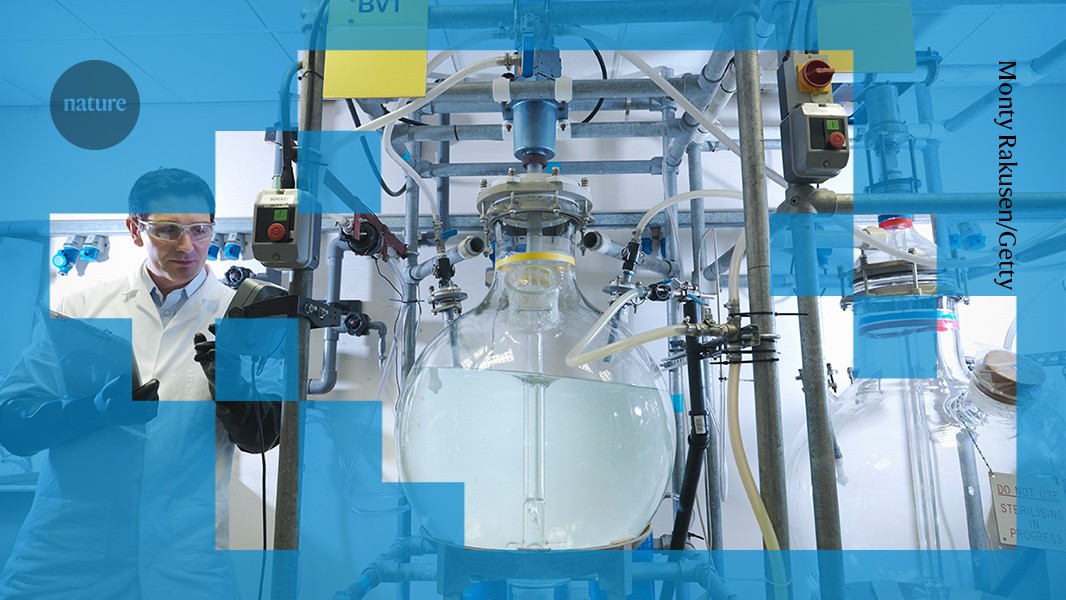
AI agents are checking the scientific literature — and spotting decades-old errors
The technology is proving adept at finding faults in decades-old papers and reference databases.
AI Research Agents Narrow Scientific Exploration
AI research agents can now generate research ideas, design experiments, run code, and draft papers, raising the possibility of large-scale AI-assisted scientific discovery. Many current agent frameworks explicitly encourage the generation of novel and high-impact ideas. Yet it remains unclear whether AI-assisted ideation broadens scientific exploration or mainly concentrates around existing work. We study AI research agents as scientific search systems. Using four AI research-agent frameworks and six large language models, we generate 37,802 scientific ideas from shared seed literature across citation-defined research areas in AI and machine learning. We then compare the resulting AI ideas against human-authored papers from the same research areas, follow-on human research emerging from the same seed literature, and the seed literature itself. Across experiments, four consistent patterns emerge. First, AI-generated ideas are substantially more concentrated than human-authored papers from the same research areas. Second, AI-generated ideas remain much closer to their starting literature than later human follow-on work does. Third, papers most similar to AI-generated ideas tend to receive lower subsequent citations. Fourth, when AI-generated ideas differ from prior work, the differences arise primarily from recombining existing technical methods rather than introducing fundamentally new research questions. Overall, current AI research agents appear better suited to local elaboration than to broadening scientific exploration.
The Economic Benefit of Refactoring
Notes from my Thoughtworks colleagues on AI-assisted software delivery
Elicit: AI for scientific research
Use AI to search, summarize, extract data from, and chat with over 125 million papers. Used by over 2 million researchers in academia and industry.

Elicit: AI for scientific research
Use AI to search, summarize, extract data from, and chat with over 125 million papers. Used by over 2 million researchers in academia and industry.
Search LibGen, the Pirated-Books Database That Meta Used to Train AI
Millions of books and scientific papers are captured in the collection’s current iteration.

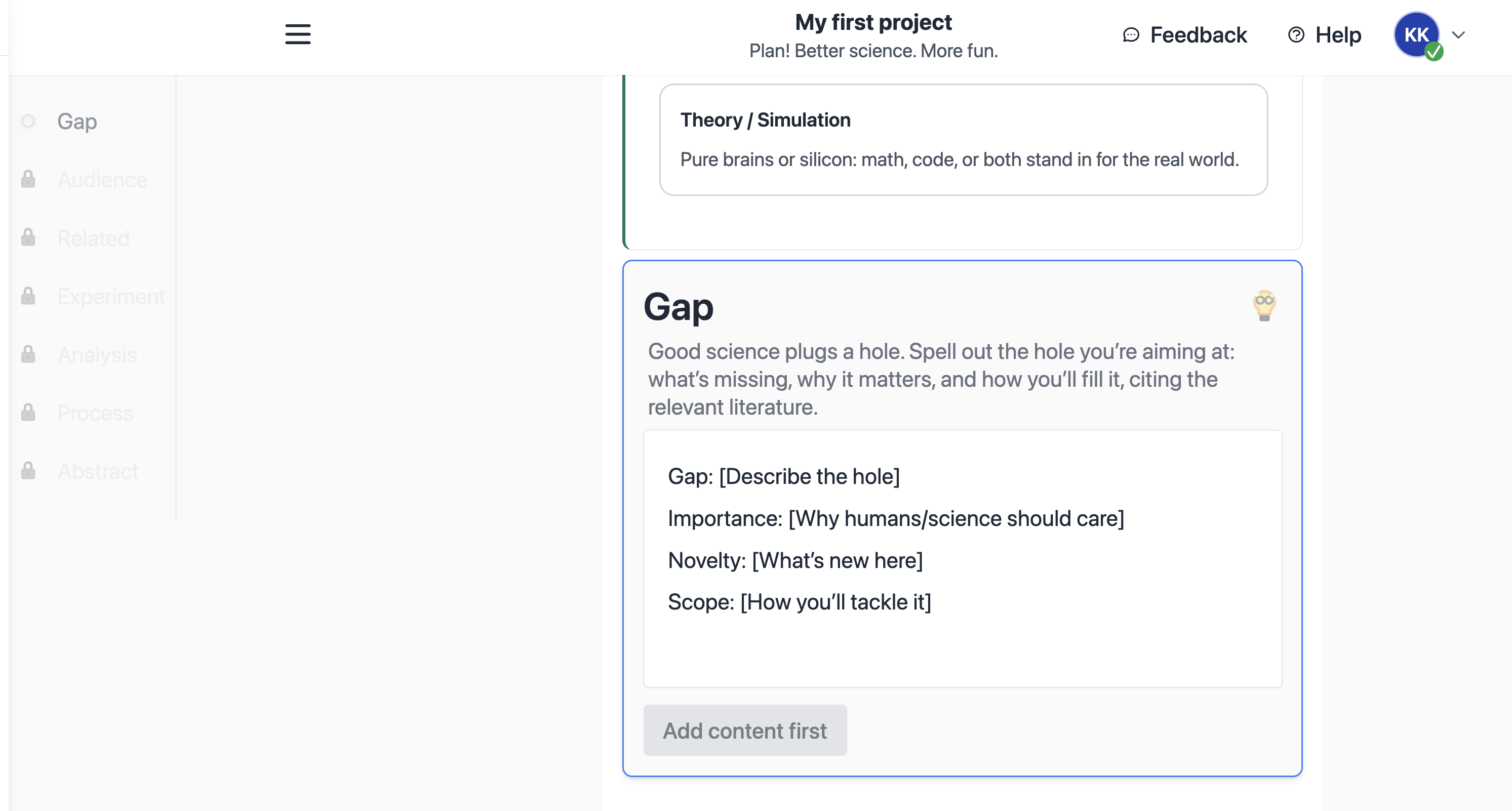
Scientific Paper Planner - AI Research Planning
Structure your scientific research with AI-powered guidance
OpenAIReview — AI-Powered Academic Paper Reviewer
we recommend using uv, and there are additional guidelines for best results with PDF inputs