


In 2012, Time magazine listed Professor Hans Rosling as one of the world’s 100 most influential people in the world. He has the ear of presidents and the minds of those who use the interactive statistical database Gapminder (www.gapminder.org), which he set up with his son, Ola in 1998, and those who watch his talks on TED.com (www.TED.com). And he has the hearts of some of the poorest people in the world, whom he has helped by addressing and publicising public health problems in some of the poorest parts of the world.
Three minutes with Hans Rosling will change your mind about the world
Nature - He has influenced leaders from Melinda Gates to Fidel Castro. Now, he is on a mission to save people from their preconceived ideas.

Vitalik Buterin on Cryptoeconomics and Markets in Everything (Ep. 45)
Is he secretly the best young economist today?

Stories of Hope: The richest man in the world has autism - The Behavior Exchange
Our new monthly blog series, Stories of Hope, can help! This month you’ll read about the journey of a famous person who, despite ASD, is arguably one of the most influential people in the world. Hint: You might own one of his cars!

Ian Preston (@ianopolous.bsky.social)
Mathematician/particle physicist turned privacy researcher. Java Rockstar #Oxford Building a better web - private, self-sovereign identity, p2p, social - with @peergos.org. Public social media undermines democracy. #covidisairborne #maskswork #cleantheair

The world’s most influential economist is oddly unconvincing
Daron Acemoglu is revered. Why?

The Development Economist Who Wasn’t
Once dismissed from the field he helped found, Albert O. Hirschman feels newly relevant.

Andrew Orlowski on Twitter / X
By far the shrewdest and most entertaining analyst of the AI bubble is Georg Zoeller, ex Facebook. Re-reading his DeepSeek reaction piece from 18 months, which holds up well. It was all so predictable: banning open source, the Red Menace, pivot to military. What has really… pic.twitter.com/38dX7vcrkC— Andrew Orlowski (@AndrewOrlowski) July 5, 2026

Cas (Stephen Casper) on Twitter / X
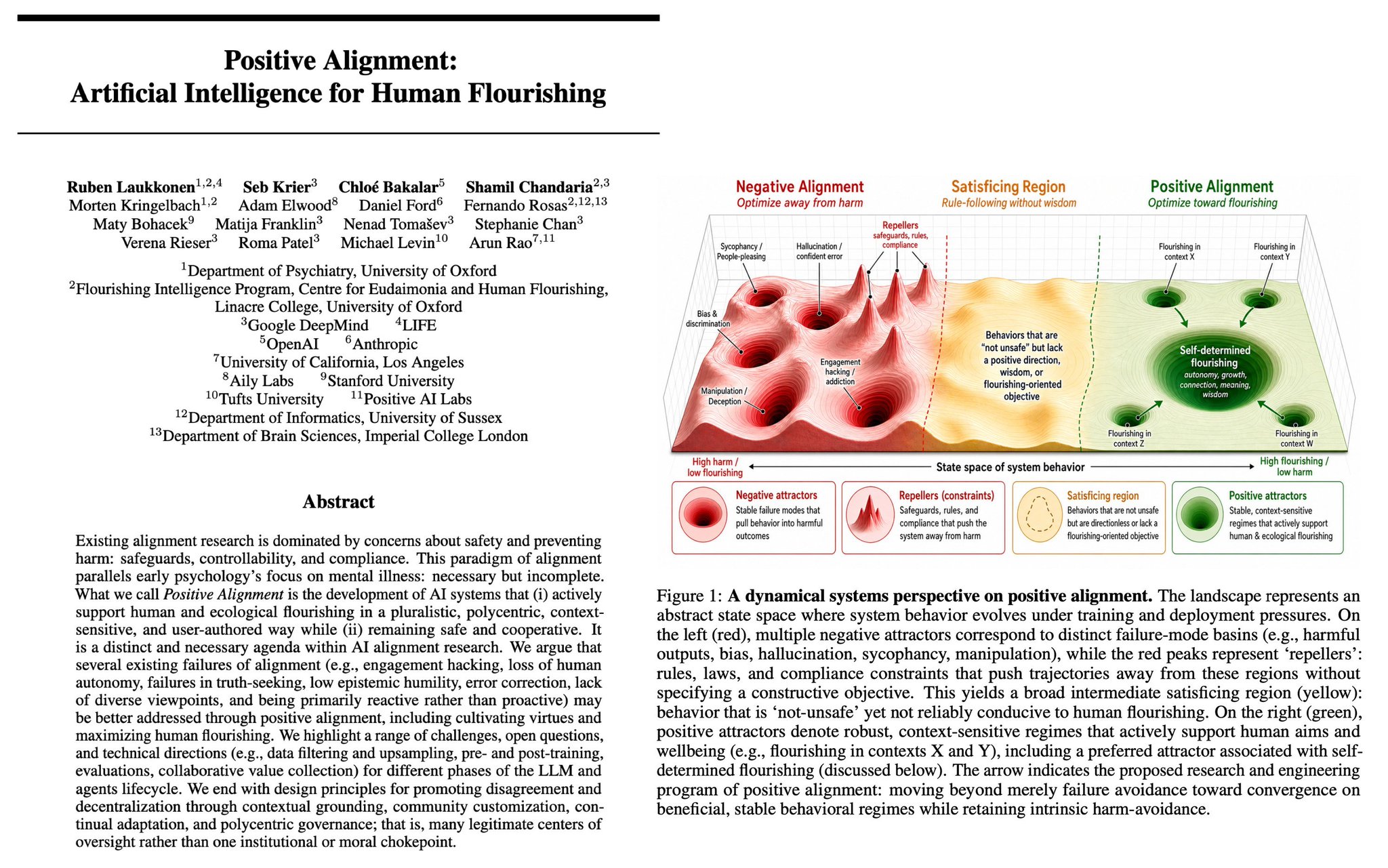
It is hard to overstate how disappointing I think this new paper from Oxford, OpenAI, Anthropic, and Google (et al) is. I can't take it seriously as academic work, just as propaganda. It also has some very bad scholarship and questionable adherence to research ethics. Having… pic.twitter.com/Z5fBx360ya— Cas (Stephen Casper) (@StephenLCasper) May 13, 2026
The "No True Leftist" Fallacy
The Next Frontier: Sam Altman on the Future of A.I. and Society
Thomas Wolf on Twitter / X
wtf is this way to handle mathematicians work and scientific communicationTLDR: Leven and Tristan worked over several months on one of the Millenium Prize Problems with various AIs to reach final interesting results. OpenAI apparently heard about it in the last days and… https://t.co/zNozwkFcFO pic.twitter.com/XcefJ17AQe— Thomas Wolf (@Thom_Wolf) September 8, 2026

rohit on Twitter / X
One of the most fun papers I've read in recent times. Excellent. Reminiscent of the good old days of science papers. pic.twitter.com/4a7qRTloSG— rohit (@krishnanrohit) December 30, 2024

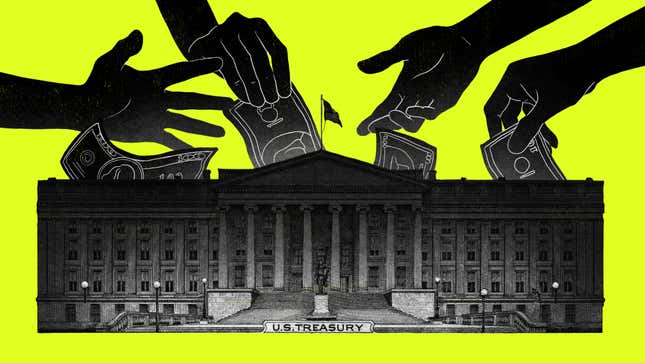
The Dangerous Myth of 'Taxpayer Money'
Since 2007, Jezebel has been the Internet's most treasured source for everything celebrities, sex, and politics...with teeth.
Can Facebook Fix Its Own Worst Bug? (Published 2017)
Mark Zuckerberg now acknowledges the dangerous side of the social revolution he helped start. But is the most powerful tool for connection in human history capable of adapting to the world it created?

The eloquent and deeply knowledgeable @peterbrannen.bsky.social is without question one of our best contemporary writers on Earth history & science. If you haven't read his eye-opening debut on mass extinctions, The Ends of the World, and his magisterial, epic follow up, you should remedy that ASAP.
Really feels like the open Internet is falling apart, with bsky as a rare bright spot.

Ashton Pittman
The New York Times is now blocking The Wayback Machine from accessing its articles. That means you'll no longer be able to view archived versions of NYT stories published in 2026 and beyond on archive.org. (All those posts you see tracking changes to NYT headlines and ledes? They relied on WBM).

