


I promised myself I would never write a negative book review. I promised my PhD advisor I would never write a negative book review. I promised I would always find a silver lining in any piece of academic writing I reviewed. But I can’t keep that promise with Tore Olsson’s Red Dead’s History . I

Authorship, division of labour, material and digital form; thoughts on Samuel A. Moore's Publishing Beyond the Market
On Christmas day, we had a quiet time this year. One of the things I did was to read Moore, Samuel A., Publishing Beyond the Market: Open Access, Care, and the Commons (University of Michigan Press, 2025). This is a most enjoyable book that outlines a project and worldview that I know Sam has been cultivating and refining for many years. I should stress that I am not writing a “review” here. I would be conflicted anyway as I am thanked in the acknowledgements. But it did, like all good books, make me think and I wanted to jot down some thoughts. These thoughts are not necessarily novel – sometimes Sam even explores some of them in the book – but I thought it would be enjoyable to express them nonetheless.

Noah Smith's Review of Power and Progress is Very, Very Bad
It should have been disowned, not republished
Dark Matters: On the Surveillance of Blackness by Simon…
Discover and share books you love on Goodreads.

More Was Possible: A Review of If Anyone Builds It, Everyone Dies
Eliezer Yudkowsky and Nate Soares have written a new book. Should we take it seriously?

Centrist imaginations
A response to a bad article, a bad book, and a bad publication
Guest post: If you’re going to critique science, be scientific about it
Loren K. Mell Editor’s note: This post responds to a Feb. 13 article in The Atlantic, “The Scientific Literature Can’t Save Us Now,” written by Retraction Watch cofounders Adam Marcus and Ivan Oran…

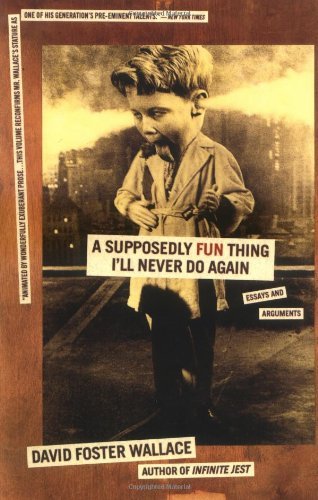
A Supposedly Fun Thing I'll Never Do Again: Essays and…
In this exuberantly praised book — a collection of seve…
Review the reviews
When I was actively contributing to the Go project, my primary feed was the code review email firehose. Issues, mailing lists, and Slack had low SNR. The finished commit history was better: it was finely polished work with some of the best written commit messages I have ever encountered. But it didn’t hold a candle to code reviews for operational learning. The commit history could tell you what got done and why, in impressive technical detail.
Unenlightened thinking: Steven Pinker’s embarrassing new book is a feeble sermon for rattled liberals
To think of this book as any kind of scholarly exercise is a category mistake. The purpose of Pinker’s laborious work is to reassure liberals that they are on “the right side of history”.


Resenha — Book reviews, in your own words
Write long-form reviews of the books in your BookHive library, publish them to the open web, and follow what your friends are reading.

I was not reviewer 2. But I am so annoyed by Americans pretending the whole open science movement is funded by John Arnold. His investments are absolutely dwarfed by what the European Union and European science funders have invested in Open science. Only incredibly biased people would ignore this.
Fascinating talk on the history of peer review from Melinda Baldwin at @icssi.org, with some parallels to current crises. Also I hadn't realized peer review was such an American thing.
Reviews to read later

I’m very anti-spoiler. I also live in a country where films tend to be released much later, if at all
Nothing could have prepared me for the opening line of Armond White’s review of “You Can See Everything.”

