


A single, accessible and trusted entry-point to current body of evidence for homelessness interventions. The tool provides one-page overviews of the available evidence, including simple ratings for strength of evidence, cost-effectiveness and impact, as well as detail on what the studies say about each intervention.
Unconditional cash transfers reduce homelessness
Homelessness is an economic and social crisis. In a cluster-randomized controlled trial, we address a core cause of homelessness—lack of money—by providing a one-time unconditional cash transfer of CAD$7,500 to each of 50 individuals experiencing homelessness, with another 65 as controls in Vancouver, BC. Exploratory analyses showed that over 1 y, cash recipients spent fewer days homeless, increased savings and spending with no increase in temptation goods spending, and generated societal net savings of $777 per recipient via reduced time in shelters. Additional experiments revealed public mistrust toward the ability of homeless individuals to manage money and demonstrated interventions to increase public support for a cash transfer policy using counter-stereotypical or utilitarian messaging. Together, this research offers a new approach to address homelessness and provides insights into homelessness reduction policies.

CHP Election Priorities Guide 2026 - Council to Homeless Persons website
CHP's Election Priorities Guide outlines the forward-thinking, community-building responses that will end homelessness in Victoria, which we urge politicians and voters to choose in November's State election.

Home
Our mission is to advance the effective implementation of evidence-based practices for children and families involved with the child welfare system.
Pickering promises homelessness bed guarantee in Vic
Labor's real per person homelessness spending fell 17.2% while 105,000 Victorians sought aid and emergency beds filled nationwide. One Nation Victoria leader Warren Pickering has proposed guaranteeing regional crisis accommodation, landlord tax relief, and bans on public tent encampments.


Academic Intervention Tools Chart
Does the study design allow us to conclude that the intervention program, rather than extraneous variables, was responsible for the results?
Results First Clearinghouse Database
To assist policymakers at all levels of government in identifying evidence-based programs and making data-driven budget decisions, the project has created the Results First Clearinghouse Database. This one-stop online resource provides policymakers with an easy way to find information on the effectiveness of various interventions as rated by eight national research clearinghouses.

Why cities are full of uncomfortable benches
Cash Works. Place and Amount Matter.
Two excellent new reports from our friends at the Economic Security Project make a strong case for direct cash — and reveal why rural, county-level research matters. Right on Time argues that cash is particularly effective during major transitions: * having a child * losing a job * leaving foster care or incarceration

Health of refugees and asylum seekers - Evidence Aid
This evidence collection contains plain-language summaries of high-quality research related to the health of refugees and asylum seekers. Read the introduction to the collection, other information and our disclaimer. This collection was first published on 12 February, 2016. Useful links: Refugees and internally displaced populations: Chapter 5.3 of the WHO Guidance on Research Methods for […]

Ground Control: Volunteer where it counts
We've evaluated hundreds of organizations to find opportunities open to anyone, immediately impactful, and ready to accept your help.
Impact Dashboard - Impact Counter | Impact Counter
Visualize the human impact of funding changes for aid and support organizations.

What Works for Health
Evidence matters. Our What Works for Health tool will help you find policies and programs that are a good fit for your community's priorities.

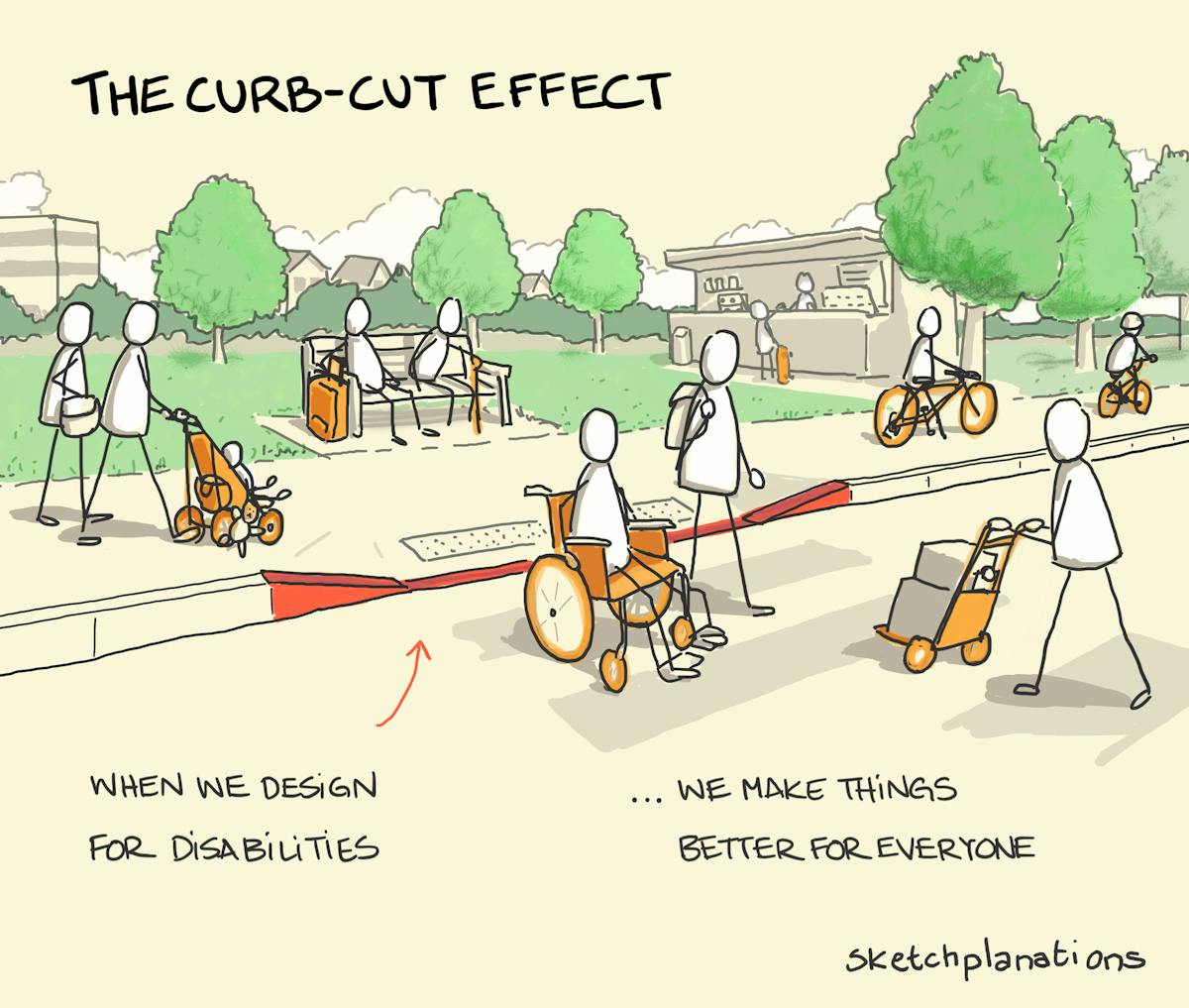
The curb-cut effect
The curb-cut effect illustrates how when we design to benefit disadvantaged or vulnerable groups we end up helping society as a whole. Angela Glover Blackwell explains how campaigning by students with disabilities in Berkeley in the early 1970s led to adding curb cuts to the Berkeley sidewalks to make access easier for those in wheelchairs. Yet it wasn't just people in wheelchairs that it helped. Curb cuts also made life easier for people pushing children in strollers, people using trolleys for deliveries, people pulling a suitcase, those wheeling bikes or on skateboards, and it also helps save lives by guiding people to cross at safe locations. Another example is adding closed captioning to TV that helps anyone watch in a noisy bar, a waiting room, or watching an airline safety video. Or a classic example of universal design in the OXO Good Grips range originally made to be comfortable for holding a peeler even if you have arthritis. It's also a useful analogy for "how laws and programs designed to benefit vulnerable groups, such as the disabled or people of color, often end up benefiting all," (PolicyLink) whether that be increasing broadband access, improving public transport or taking cuts out of curbs. Here's a short, fun video of Gary Karp explaining the curb-cut effect. Thanks to my patron Quintin Balsdon for sharing it with me.

Metrics for Building, Scaling, and Funding Social Movements
Investing in movements or networks for social change is a strategy that some funders are using. But, how do you measure the results? Marino Morino, who wrote “Leap of Reason: Managing to Outcomes in an Era of Scarcity” pointed me to this recent report, “Transactions, Transformations, Translations: Metrics That Matter for Building, Scaling and Funding Social Movements” by Manual Paster, Jennifer Ito, and Rachel Rosner with the USC Program for Environmental and Regional Equity and funded by the Ford Foundation. The report addresses metrics for success for investing in broad field social movements or networked approaches to social change. The report is written for funders and those on the ground doing the work in the context of networks, although it doesn’t go deep into practice. The report captures a conundrum in measuring social change movements or networked approaches. Outcomes for “wicked problems” can be easily counted – policies passed, housing the homeless, educating children. But there are less tangible results such as “we changed the frame” or “we shifted members’ consciousness” which for grassroots organizers on the ground view as the vibrancy of the network . The report lays out some new metrics for movement building – that are paths to the more easily counted tangible results and where the unit of analysis is the movement or network, not an organization. As the report points out, movement organizers are grappling with big questions. It is less about how to raise funds for their organizations (although that’s important) but focused on the big picture: What is the long-term change that we want to see? What is needed to achieve it? What roles do different organizations play? The report identifies metrics to measure progress around this these questions – it asks and answers – “What exactly are the right metrics for today?
