


"On an individual level, it provides me with an emotional sense of reparations."
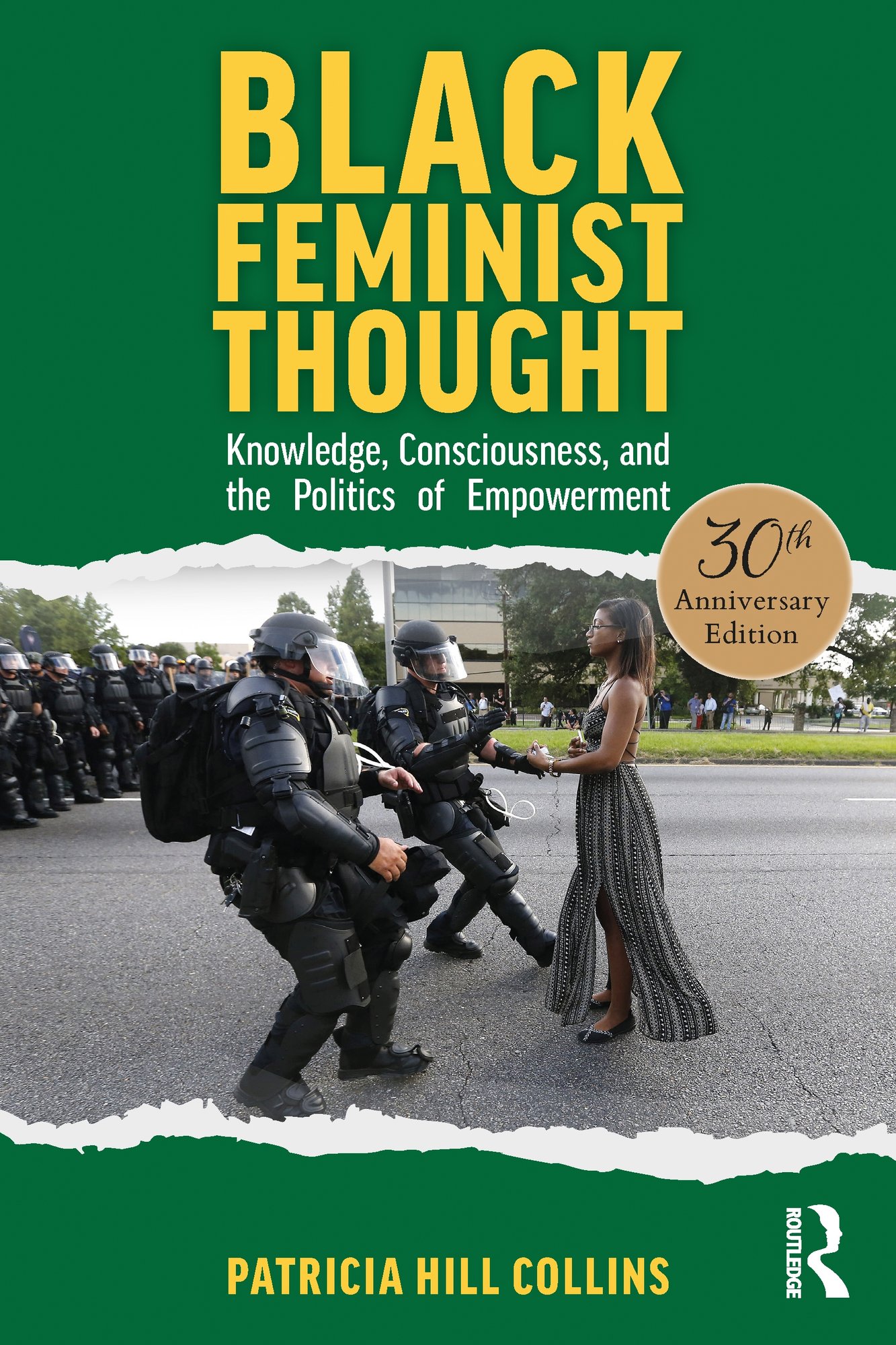
Black Feminist Thought, 30th Anniversary Edition: Knowledge, Consciousness, and the Politics of Empowerment
Knowledge, Consciousness, and the Politics of Empowerment
A Black Feminist Apocalypse/Dystopian Survival Resource Compilation
A Black Feminist Apocalypse/Dystopian Survival Resource Compilation With the awful realization that we are indeed in a fight for our very survival coming over me for the past few years, I’ve asked myself this question: what can I do right now, today? With my resources limited or tapped out, I’ve...

Social Reproduction Theory: Remapping Class, Recentering Oppression
This groundbreaking collection explores the profound power of Social Reproduction Theory to deepen our understanding of everyday life under capitalism. While many Marxists tend to focus on the productive economy, this book focuses on issues such as child care, health care, education, family life and the roles of gender, race and sexuality, all of which are central to understanding the relationship between economic exploitation and social oppression. In this book, leading writers such as Lise Vogel, Nancy Fraser, David McNally and Susan Ferguson reveal the ways in which daily and generational reproductive labour, found in households, schools, hospitals and prisons, also sustains the drive for accumulation. Presenting a more sophisticated alternative to intersectionality, these essays provide ideas which have important strategic implications for anti-capitalists, anti-racists and feminists attempting to find a path through the seemingly ever more complex world we live in.
Intersectional Antifeminism, or: What is a White Feminist, Anyway?
Regarding the most famous social theory no one has actually read.

Beyond the blank slate: Why Black women’s trust is critical for equitable AI | Brookings
Zarah Guillemet and Raj Korpan discuss preliminary research on Black women's trust in AI and implications for policymakers.

Intersectionality 101: A Reading List
What is intersectionality? Most references in intersectional scholarship point to Kimberlé Crenshaw’s 1991 Stanford Law Review article “Mapping The Margins: Intersectionality, Identity Politics, and Violence against Women of Color” as the initiation of of the concept into academia. Crenshaw combines literature on critical race theory to examine antiracist and feminist discourse on women of color as victims sexual...

If we liberate men’s sexuality, the war against women can end
As a dominatrix, men come to me to explore a sexuality that is socially forbidden. While patriarchy endures, they will never be free to express who they are, or treat women as they should be treated.

A Future for Intersectional Black Feminist Technology Studies
Neoliberal narratives of digital technologies and the internet have flourished in information and internet studies and suggest that the web is a panacea of social liberation and empowerment.

Deep Care by Angela Hume | East Bay Booksellers
The story of the radical feminist networks who worked outside the law to defend abortion. Starting in the 1970s, small groups of feminist activists met regularly to study anatomy, practice pelvic exams on each other, and learn how to safely perform a procedure known as menstrual extraction, which can end a pregnancy, using equipment easily bought and assembled at home.
What do we want from Black women on screen?
From Teyana Taylor’s Oscar-nominated turn in One Battle After Another to Industry’s ruthless Harper Stern, Black women are taking on some of the most morally complex roles on screen. But what does “good” representation really mean and must it always be aspirational? Michaela Makusha investigates.

Take Your Place: Rhetorical Healing and Black Womanhood in Tyler Perry’s Films
The unparalleled commercial sucessess that gospel-playwright-turned-screenwriter Tyler Perry has attained through converting his stage plays into films that depict black women overcoming personal crises raises questions about the intent behind his seemingly feminist-inspired representations of black womanhood. Through an analysis of the rhetoric of healing in Perry’s first two films, this essay reveals one of the suppressive pedagogical functions of Perry’s representation of black womanhood. Rhetorics of healing are a series of persuasive messages, performances, and literacy acts that writers deploy in order to convince readers that redressing or preventing crises requires them to follow the curriculum for ideological, communicative, and behavioral transformation that the writer considers essential to wellness. In Diary of a Mad Black Woman and Madea’s Family Reunion, Perry’s representation of rhetorical healing constructs black Christian women as students who must learn prescribed attitudes and behaviors to achieve, or remain in, states of wellness, and these lessons reinforce conservative gender ideologies and reify patriarchal constructions of the family and home. Given black women’s historically tenuous relationships with representations of themselves and their families in mainstream film, and given the ways in which their labor in the home is simultaneously desired and exploited, the popularity of Perry’s films does not suggest that his representations of healing foster black women’s self-empowerment. Rather, his popularity points to a moment where black women’s pain is a commodity and their instructive journeys to wellness are an exploited site where writers can carry out their own agendas.

Re-enchanting the world : feminism and the politics of the commons
xviii, 227 pages ; 23 cm; "Silvia Federici is one of the most important contemporary theorists of capitalism and feminist movements. In this collection of her work spanning over twenty years, she provides a detailed history and critique of the politics of the commons from a feminist perspective. In her clear and combative voice, Federici provides readers with an analysis of some of the key issues and debates in contemporary thinking on this subject. Drawing on rich historical research, she maps the connections between the previous forms of enclosure that occurred with the birth of capitalism and the destruction of the commons and the "new enclosures" at the heart of the present phase of global capitalist accumulation. Considering the commons from a feminist perspective, this collection centers on women and reproductive work as crucial to both our economic survival and the construction of a world free from the hierarchies and divisions capital has planted in the body of the world proletariat. Federici is clear that the commons should not be understood as happy islands in a sea of exploitative relations but rather autonomous spaces from which to challenge the existing capitalist organization of life and labor"--; Foreward by Peter Linebaugh; Includes bibliographical references (pages198-216) and index; On primitive accumulation, globalization, and reproduction -- Introduction to the new enclosures -- The debt crisis, Africa, and the new enclosures -- China: breaking the iron rice bowl -- From commoning to debt: financialization, microcredit, and the changing architecture of capital accumulation -- Beneath the United States, the Commons -- Commons against and beyond Capitalism -- The University: a knowledge common? -- Feminism and the politics of the commons in an era of primitive accumulation -- Women's struggles for land in Africa and the reconstruction of the commons -- Women's struggles for land and the common good in Latin America -- Marxism, feminism, and the commons -- From crisis to commons: reproductive work, affective labor and technology, and the transformation of everyday life -- Re-enchanting the world: technology, the body, and the construction of the commons

Sharing Knowledge Openly: Author Gender, Race/Ethnicity, and Feminist Science
Open science is an increasingly important movement in contemporary social science. Many funders have begun to mandate open practices, newer journals like Socius are open access, and preprint servers have increased readership of paywalled articles. Feminist scholars have written about the values and pitfalls of open research. In this paper, we put those ideas in conversation with each other and empirical data on open-access publishing to develop a feminist framework for thinking about feminist knowledge, data, publishing, and audience. Using a survey of 19,462 social scientists, linked with their entire Web of Science publication history from 2000 to 2023 and all papers posted to SocArXiv, we replicate past work showing that articles by women are less likely to be some types of open access. We extend these findings to scholars of color and feminist scholarship, while also demonstrating a few surprising null results for all three groups.
