


Will some people have hurt feelings if you decline their invitations and delete their messages? Probably. That's tough to accept, but the alternative is worse. Trying to manage other people's emotions while tuning out your own is exhausting. It harms your health and your relationships.
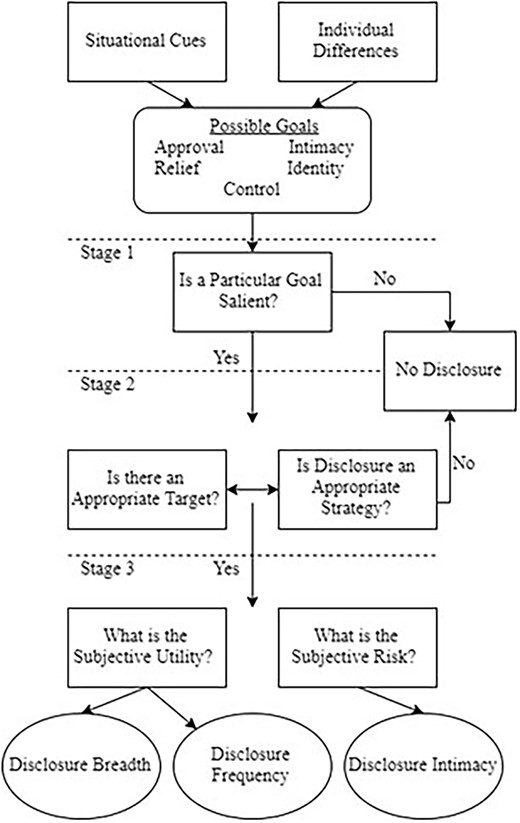
Digital Confessions: The Willingness to Disclose Intimate Information to a Chatbot and its Impact on Emotional Well-Being
Abstract Chatbots have several features that may stimulate self-disclosure, such as accessibility, anonymity, convenience and their perceived non-judgmental nature. The aim of this study is to investigate if people disclose (more) intimate information to a chatbot, compared to a human, and to what extent this enhances their emotional well-being through feelings of relief. An experiment with a 2 (human vs. chatbot) by 2 (low empathetic vs. high empathetic) design was conducted (N = 286). Results showed that there was no difference in the self-reported intimacy of self-disclosure between the human and chatbot conditions. Furthermore, people perceived less fear of judgment in the chatbot condition, but more trust in the human interactant compared to the chatbot interactant. Perceived anonymity was the only variable to directly impact self-disclosure intimacy. The finding that humans disclose equally intimate information to chatbots and humans is in line with the CASA paradigm, which states that people can react in a social manner to both computers and humans.
Are Chatbots Harming Our Relationships? | KQED
As our relationships with bots deepen, human-AI relationship coach Amelia Miller warns we could wake up one day to find our ability to connect with each other has atrophied, which may leave us feeling profoundly alone.

Undersociality: miscalibrated social cognition can inhibit social connection
A person’s well-being depends heavily on forming and maintaining positive relationships, but people can be reluctant to connect in ways that would create or strengthen relationships. Emerging research suggests that miscalibrated social cognition may create psychological barriers to connecting with others more often. Specifically, people may underestimate how positively others will respond to their own sociality across a variety of social actions, including engaging in conversation, expressing appreciation, and performing acts of kindness.

Is Using ChatGPT Now The Dating World’s Biggest Ick?
“If someone’s not able to even think for themselves, there’s no chance they’re going to be thoughtful when it comes to you.”

Self-Distancing: What It Is and How You Can Use It to Make Better Decisions – Effectiviology
It’s hard to set your emotions aside when you’re faced with a difficult decision. This is problematic, since our emotions often cause us to make the wrong decision in important areas of life, including in our relationships, our finances, and our health.
A Theory of Messaging Styles & Ghosting.
Online communication tools serve many purposes. So does silence.

The Future of Group Messaging
An analysis of modern messaging, and the evolutionary next steps.
Is AI Creating a Culture of Avoidance?
As chatbots and AI companions emerge as communication tools of choice for humans, a new and unsettling dynamic is taking shape. Tools that can smooth over difficult communication between friends and coworkers—reducing misunderstandings, hurt feelings, or social discomfort—also have a downside. Left unchecked, they may erode human intuition and sabotage empathy.

The Power of Asynchronous Communication
Asynchronous communication allows us to maintain the essential bonds of friendship and dialog with the people that matter to us.

How to Deliver Constructive Feedback in Difficult Situations
Thoughtful, empathetic language can make or break your business relationships
Don’t ask forgiveness, radiate intent
As simple encouragement to act, “ask forgiveness, not permission” is fair enough. But here are 4 reasons to signal your intentions:

GDS weighs in on the NHS's decision to retreat from Open Source
Within the UK's Civil Service you occasionally hear the expression "being invited to a meeting without biscuits". It implies a rather frosty discussion without any of the polite niceties of a normal meeting. In general though, even when people have severe disagreements, it is rare for tempers to fray. It is even rarer for those internal disagreements to spill over into public. Which is what…
How you attach to people may explain a lot about your inner life
Attachment theory suggests that early interactions with caregivers can dramatically affect your beliefs about yourself, your expectations of others, and how you cope with stress and regulate your emotions as an adult

Opinion | The Sad and Dangerous Reality Behind ‘Her’
At least a quarter of the more than 100 billion messages sent to our chatbots are attempts to initiate romantic or sexual exchanges.

Underrated "feature" of AIM / IRC: you could only send people messages if they were online! Sort of built-in backpressure. If you're busy, you won't sign on much, so you won't end up with a "big unread count". Feels so quaint now, like a little village. Say hi to your friends during passeggiata…
