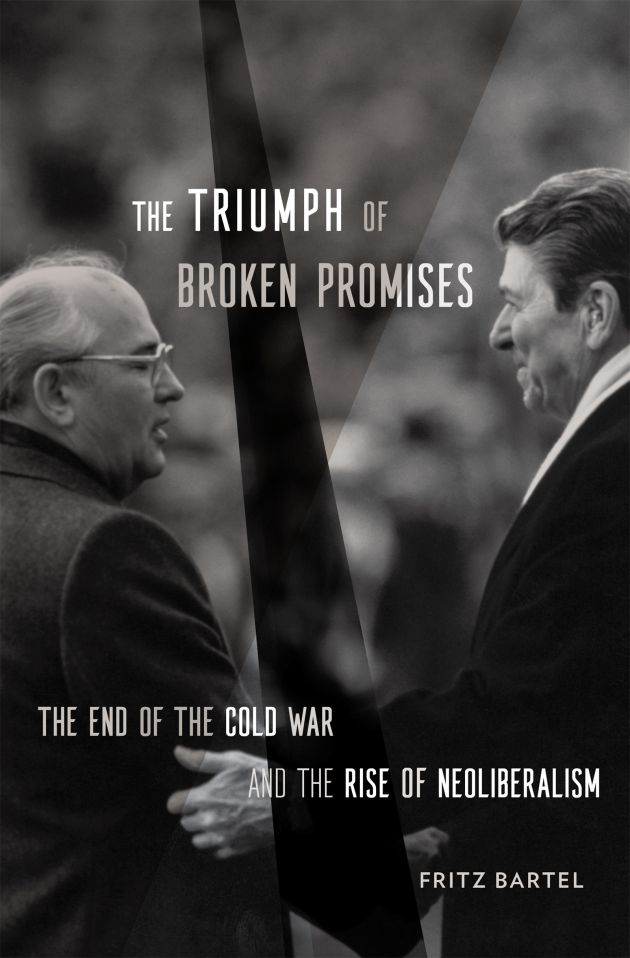
A powerful case that the economic shocks of the 1970s hastened both the end of the Cold War and the rise of neoliberalism by forcing governments to impose austerity on their own people.Why did the Cold War come to a peaceful end? And why did neoliberal economics sweep across the world in the late twentieth century? In this pathbreaking study, Fritz Bartel argues that the answer to these questions is one and the same. The Cold War began as a competition between capitalist and communist governments to expand their social contracts as they raced to deliver their people a better life. But the economic shocks of the 1970s made promises of better living untenable on both sides of the Iron Curtain. Energy and financial markets placed immense pressure on governments to discipline their social contracts. Rather than make promises, political leaders were forced to break them.In a sweeping narrative, The Triumph of Broken Promises tells the story of how the pressure to break promises spurred the end of the Cold War. In the West, neoliberalism provided Western leaders like Ronald Reagan and Margaret Thatcher with the political and ideological tools to shut down industries, impose austerity, and favor the interests of capital over labor. But in Eastern Europe, revolutionaries like Lech Walesa in Poland resisted any attempt at imposing market discipline. Mikhail Gorbachev tried in vain to reform the Soviet system, but the necessary changes ultimately presented too great a challenge.Faced with imposing economic discipline antithetical to communist ideals, Soviet-style governments found their legitimacy irreparably damaged. But in the West, politicians could promote austerity as an antidote to the excesses of ideological opponents, setting the stage for the rise of the neoliberal global economy.
Hyperpolitics: Extreme Politicization without Political Consequences
POLITICS AFTER THE END OF THE END OF HISTORYWhat happens when politics is everywhere, yet nothing seems to change? From the abandoned dance floors of Thatcher’s London to the mass mobilizations of Black Lives Matter, Anton Jäger traces how public life has become infused with protest, spectacle, and moral urgency — while the old infrastructure of parties, unions, and civic solidarity has been hollowed out.Hyperpolitics revisits the illusions of the “end of history” and dissects the strange energies that replaced them: viral outrage, endless culture wars, and the digital rush of causes that flare and vanish overnight. Jäger shows how the promises of post–Cold War liberalism gave way to a restless, unsteady public sphere where private passions overflow into politics but rarely build enduring power.Ranging from Guy Debord and Wolfgang Tillmans to Houellebecq’s disenchanted fictions, Hyperpolitics makes sense of a world in which collective action remains fragmented and the social fabric thinner than ever. For anyone trying to grasp why our age feels so charged yet so inconsequential, this book offers a vital map through the new contradictions of our hyperpolitical moment.
Capitalist Realism: Is There No Alternative?
It is easier to imagine the end of the world than the end of capitalism. After 1989, capitalism has successfully presented itself as the only realistic political-economic system - a situation that the bank crisis of 2008, far from ending, actually compounded. The book analyses the development and principal features of this capitalist realism as a lived ideological framework. Using examples from politics, film (Children Of Men, Jason Bourne, Supernanny), fiction (Le Guin and Kafka), work and education, it argues that capitalist realism colors all areas of contemporary experience, is anything but realistic and asks how capitalism and its inconsistencies can be challenged. It is a sharp analysis of the post-ideological malaise that suggests that the economics and politics of free market neo-liberalism are givens rather than constructions. New Edition includes:Forward by Zoe Fisher, Mark’s wife, talking about Mark as a personIntroduction by Alex Niven, his friend and colleague, talking about the political significance of the book thirteen years after it was writtenAfterword by Tariq Goddard, the original editor and publisher, describing the writing and editing of the book, its original reception, and Mark’s own view of it"A quick and entertaining read." Socialist Standard "A provocative and necessary read...for anyone wanting to talk seriously about the politics of education today. " Times Higher Educational Supplement
Imperialism, the Highest Stage of Capitalism
[1] Written in Zurich in January-June 1916. Lenin began to take note of new developments in capitalism long before the outbreak of the First World War. In several of his writings from 1895 to 1913—”Draft and Explanation of a Programme for the Social-Democratic Party” (1895-96); “The War in China” (1900); “The Lessons of the Crisis” (1901), “Review of Home Affairs” (1901); “Concentration of Production in Russia” (1912); “The Growth of Capitalist Wealth” (1913) “Backward Europe and Advanced Asia” (1913); “The Historical Destiny of the Doctrine of Karl Marx” (1913); “Concerning Certain Speeches by Workers’ Deputies” (1912), and others—Lenin pointed out and analysed some characteristic aspects of the imperialist epoch— the concentration of production and the growth of monopoly; the export of capital; the struggle for new markets and spheres of influence; the internationalisation of economic relations; the parasitism and decay of capitalism; the growth of contradictions between labour and capital and the sharpening of the class struggle; and the creation of the material conditions for the transition to socialism. He devoted special attention to exposing predatory colonial policy, the fight for a division and redivision of the world, and the preparation of imperialist wars of aggrandisement. In his article, “Marxism and Revisionism”, written in 1908, he came out against the attempts to revise Marxism and undermine it from inside under the pretext of amending and correcting the theory in particular, Marx’s theory of crises. Lenin wrote: ‘The forms, the sequence, the picture of particular crises changed, but crises remained an inevitable component of the capitalist system. While uniting production, the cartels and trusts at the same time and in a way that was obvious to all, aggravated the anarchy of production, the insecurity of existence of the proletariat and the oppression of capital, thereby intensifying class antagonisms to an unprecedented degree. That capitalism is heading for a breakdown—in the sense both of individual political and economic crises and of the complete collapse of the entire capitalist system— has been made particularly clear, and on a particularly large scale, precisely by the new giant trusts” (see present edition, Vol. 15, pp. 35-36). Lenin kept abreast of all the latest writings on capitalism, as will be seen from his review of Hobson’s The Evolution of Modern Capitalism. In August 1904, Lenin began a translation of Hobson’s Imperialism, the manuscript of which has not yet been found. It was on the outbreak of the First World War that Lenin undertook a comprehensive study of the monopoly stage of capitalist development This was required by the working-class revolutionary struggle in Russia and other capitalist countries. In order to provide correct leadership for the revolutionary movement and combat the ideology of imperialist reaction and the reformist policy of conciliation with imperialists, it was necessary to see one’s way in the key economic question without a study of which there was no understanding of the assessment of modern war or modern politics, namely: the economic essence of imperialism”. Lenin must have started his close study of the writings on imperialism in mid-1915, when he was in Berne, for his first indexes of literature, plans, extracts, notes and summaries date to that period. The preparatory materials for Imperialism, the Highest Stage of Capitalism (Notebooks on Imperialism) make up about 800 printed pages. They contain extracts from 148 books (including 106 in German, 23 in French, 17 in English, and 2 translations into Russian), and 232 articles (of them 206 in German, 13 in French, and 3 in English) from 49 periodicals (34 German, 7 French and 8 English). In early January 1916, Lenin accepted an order for a book on imperialism from the legal Parus Publishers, founded in Petrograd in December 1915. Lenin wrote to Maxim Gorky on December 29, 1915 (January 11, 1916): “I am getting down to the writing of a pamphlet on imperialism” (see present edition, Vol. 35). In the early part of February 1916, he left Berne for Zurich, where he continued to collect and work on materials on imperialism. He worked at the Zurich Cantonal Library and ordered books from other towns. On June 19 (July 2), 1916 Lenin wrote to M. N. Pokrovsky, who was then living in France and editing for Parus a series of pamphlets about West-European countries during the First World War: “Today, I sent you a manuscript by registered mail” (see present edition, Vol. 35). The manuscript, which was mailed with the letter, did not reach Pokrovsky, and another copy had to be sent. Besides, the publishers suggested that the finished manuscript should be shortened from eighty to fifty pages, but Lenin objected because “it is absolutely impossible to cut it down once again and squeeze it into fifty pages” (ibid.). When the book reached the publishers, Menshevik elements among the management deleted from the book parts sharply criticising Kautsky and Martov, and made corrections in the text which not only distorted Lenin’s style but also his ideas. Thus, Lenin’s terms pererastaniye (capitalism growing into imperialism) was altered to prevrashcheniye (transformation); reaktstonny kharakter (reactionary nature of the theory of ultra-imperialism) to otstaly kharakter (backward character), etc. In mid-1917, the book was published under the title Imperialism, the Latest Stage of Capitalism(A Popular Outline) with a preface by Lenin, dated April 26, 1917.
How To End Capitalism
The Weaponized World Economy
When Washington announced a “framework deal” with China in June, it marked a silent shifting of gears in the global political economy. This was not the beginning of U.S. President Donald Trump’s imagined epoch of “liberation” under unilateral American greatness or a return to the Biden administration’s dream of managed great-power rivalry. Instead, it was the true opening of the age of weaponized interdependence, in which the United States is discovering what it is like to have others do unto it as it has eagerly done unto others.

Exocapitalism: economies with absolutely no limits
There is a touch of destiny with this one. We have real…

Three views on economic power
We investigate the concept of economic power in the three main paradigms of economic thinking in the 20th century: neoclassical, marxist and institutionalist. We propose a reconstruction, based on a new taxonomy, of the various forms of power conceptualized by each of them. In particular, we claim that the neoclassical paradigm contains a consistent although often implicit theory of power. We then show that many controversies between these paradigms were debates on power and that some shifts in mainstream economics in the 1970s and 1980s are a reaction to the criticisms leveled against the neoclassical conceptualization of power.
CRISES AVERTED. How A Few Past Societies Found Adaptive Reforms in the Face of Structural-Demographic Crises
Historians and social scientists have long been preoccupied with understanding and documenting periods of crisis. Such emphasis is only growing, and becoming more pressing, as the world continues to face a number of interrelated stressors in the form of irreversible climate change, major ecological shocks and disease outbreaks, eruptions of military violence, economic disruptions and deepening inequalities, political polarization and unrest, the rise of authoritarian and nationalist regimes. Crises in these domains are not new, but have been recurrent features of past societies. Although these periods have typically led to massive loss of life, the failure of critical institutions, and even complete societal collapse, there are instances in the historical record of societies managing to turn the tide of crisis even as violence and social turmoil grow. Here, we focus on four such cases of crises mitigated with structural reforms revealed from our previous historical analyses: early Republican Rome, mid-19th century England and Russia, USA during the the late 20th to early 21st centuries. Utilizing structural demographic theory as a lens to explore these cases, we seek to expose the pressures that built up leading to crisis and the early signs of violent confrontation revealed by these societies, as well as to examine the conditions and key decisions made in the midst of this unrest that allowed these societies to turn the tide and enact significant structural adaptations. Our findings have clear relevance to understanding and navigating similar crises in contemporary societies.
Mercantilisme et capitalisme de la finitude : aux origines de l’Empire Trump | Le Grand Continent
Les seigneurs de la Silicon Valley s'installent dans l'État américain : un nouveau pouvoir disrupte le libéralisme et la démocratie. Vivons-nous un moment inédit ? Il y a quatre cents ans, une start-up de la City – la Compagnie des Indes – se lançait déjà dans une entreprise de conquête mondiale similaire. Pour expliquer Trump et Musk, Arnaud Orain renoue avec les fils de cette histoire, en forgeant un concept : le capitalisme de la finitude.
Super Imperialism: The Economic Strategy of American Empire | Michael Hudson
Super Imperialism. The Economic Strategy of Americ .... Hudson, Michael Buy Now (Wrapping 1972) “THE MOST IMPORTANT WORK ON IMPERIALISM SINCE LENIN” -TERENCE McCARTHY Michael Hudson Holt, Rinehart, Winston Backside: Super Imperialism "Never before has a bankrupt nation dared insist that its bankruptcy become the foundation of world economic policy; that, because of its bankruptcy,
Le capitalisme de la finitude : pessimisme et bellicisme
Traduction française de « Capitalism of finitude: pessimism and bellicosity. Review of Arnaud Orain’s "Le Monde Confisqué" » de Branko Milanovic

Welcome to the new age of geoeconomics
Tech, trade, finance and military policies are mingling in a manner not seen during the neoliberal era

Global Inequality — Harvard University Press
Winner of the Bruno Kreisky Prize, Karl Renner InstitutA Financial Times Best Economics Book of the Year An Economist Best Book of the Year A Livemint Best Book of the YearOne of the world’s leading economists of inequality, Branko Milanovic presents a bold new account of the dynamics that drive inequality on a global scale. Drawing on vast data sets and cutting-edge research, he explains the benign and malign forces that make inequality rise and fall within and among nations. He also reveals who has been helped the most by globalization, who has been held back, and what policies might tilt the balance toward economic justice.“The data [Milanovic] provides offer a clearer picture of great economic puzzles, and his bold theorizing chips away at tired economic orthodoxies.”—The Economist“Milanovic has written an outstanding book…Informative, wide-ranging, scholarly, imaginative and commendably brief. As you would expect from one of the world’s leading experts on this topic, Milanovic has added significantly to important recent works by Thomas Piketty, Anthony Atkinson and François Bourguignon…Ever-rising inequality looks a highly unlikely combination with any genuine democracy. It is to the credit of Milanovic’s book that it brings out these dangers so clearly, along with the important global successes of the past few decades.—Martin Wolf, Financial Times
Radical expectations: how the New Left changed economics
In the 1970s radical economists campaigned to reform their discipline and their universities. They became journalists and activists, moving beyond academia, to forge new models of public engagement and collaborative knowledge in economic life. Radical Expectations tells the story of how these economists set out to make economics more democratic. It traces their campaign to bring protest movements to the campuses, triggering the emergence of an alternative understanding of expertise directed at validating and empowering the perspectives and voices of women, Black Americans, labor activists, and the urban poor. It shows how a radical identity formed and how radicals helped reform disciplinary institutions. Furthermore, it argues that the radical economics' legacy was the development of a language and models of expert-lay collaboration that empowers direct action in economic affairs. The book is about the community of radical economists who championed the promise of change and what came of it

Preface | The World After Capital
Since publishing the previous version of The World After Capital, I have met with people across the political spectrum to discuss the ideas from the book. When I present these in person, I emphasize that the ideas are neither left nor right but forward (credit to Scott Santens who first used this phrase about Universal Basic Income). My writing, however, at times has alienated readers who identify as being more on the right. In this new edition, I am therefore making an extra effort to emphasize how both my diagnosis of where we are at and my suggestions for how to move forward do not map onto the existing political divides. Instead this is a new way of understanding our challenges and opportunities that can be the basis for movements and parties that are not trapped in Industrial Age ideology.
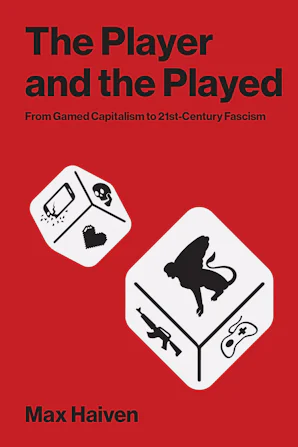
The Player and the Played
In an age when capitalism feels like an unwinnable game, extreme reactionary ideas and politics are on the rise. The Hunger Games, Game of Thrones, Squid Gam...