

The U.S. Federal Trade Commission is considering new privacy rules. The ICCL & Open Markets & TACD make a major submission showing the need for action
Digital Omnibus: What Would it Mean for Competition and Privacy in Advertising? - The Platform Law Blog
In November 2025, the European Commission (“Commission”) proposed a “Digital Omnibus” regulation to amend several EU legislations.[1] Although presented as a simplification exercise to strengthen Europe’s competitiveness, the proposal revisits key provisions of the General Data Protection Regulation (GDPR) and the e-Privacy-Directive concerning the use of personal data, including for advertising purposes. The changes could […]
How (Not) to Write a Privacy Law
After many years of failed starts, proposed information privacy legislation has begun moving forward in both houses of Congress. The docket in the recently ended 116th Congress was crowded, with a number of different proposals jostling for attention and no agreement on which deserved to be the front runner. Even so, as the 117th Congress begins, there is growing inside-the-Beltway consensus on the list of features that a successful bill will need to include. This paper critically assesses those zones of emerging consensus.

Privacy under attack: the NSA files revealed new threats to democracy
We now know the apparatus of repression has been attached to the democratic state, but our struggle for privacy is far from hopeless. By Eben Moglen

The Tor Project | Privacy & Freedom Online
Defend yourself against tracking and surveillance. Circumvent censorship.
15 Open-Source Tools for Digital Sovereignty (2026) | Comparisons & Alternatives | Vucense
Own your digital stack. The 15 best open-source tools for privacy, security, and full control over your data — reviewed and ranked for 2026.

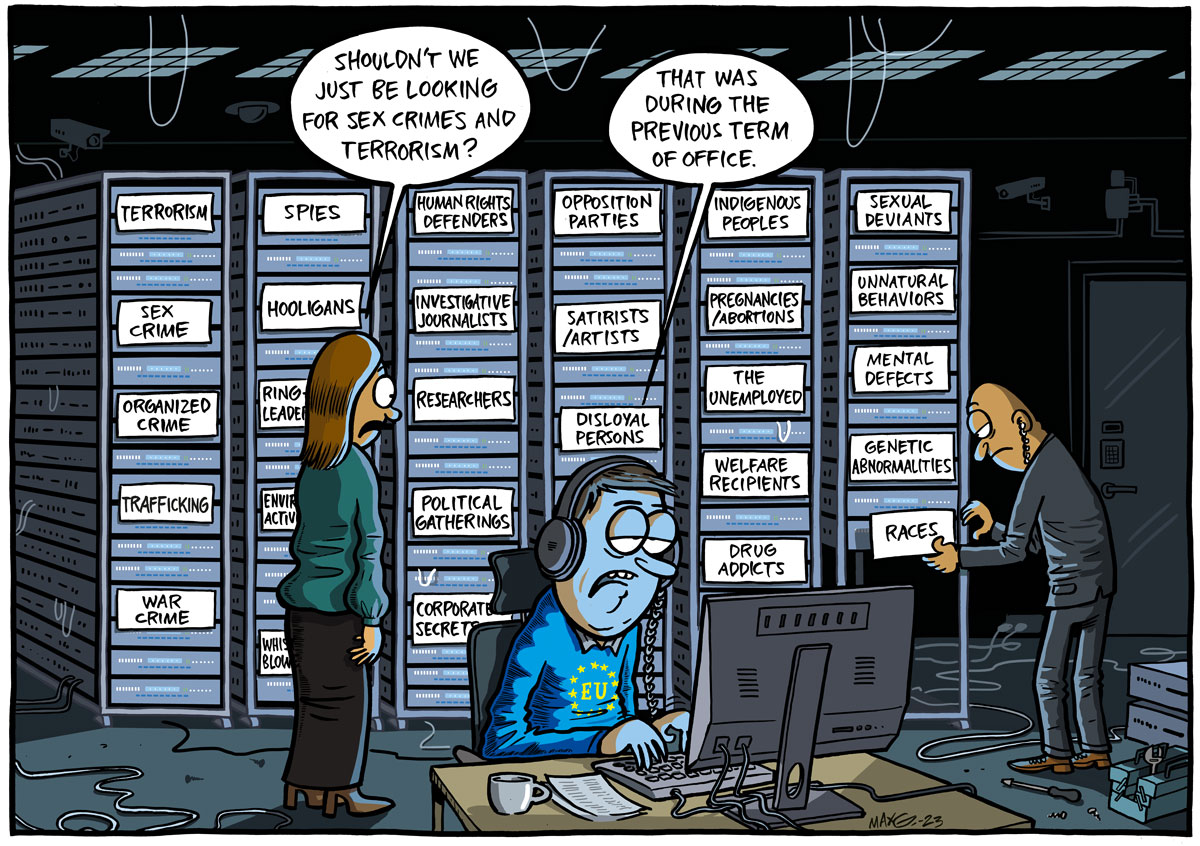
Chat Control & Going Dark: The war on encryption is on the rise. Through a shady collaboration between the US and the EU.
After Snowden’s whistleblowing in 2013, large parts of the internet became encrypted, enabling private and secure communication. Not everyone has welcomed this change. Most notably, the FBI and other U.S. government agencies have fought what is often called the “crypto wars”, the war on encryption. In recent years, they have been joined by the European Commission. Under the slogan “what about the children,” they try to introduce total mass surveillance of all EU citizens — first through the proposed Chat Control legislation, and later via the Going Dark and ProtectEU initiatives. The goal is to legally mandate spy tools on every European smartphone and computer. The forces behind these efforts have turned out to be American tech companies and intelligence agencies.
Privacy as EU Tech advantage - The LeafPlaza Blog
Online crime loves legal massive data collection, grey systems, and jurisdictional gaps. Privacy-first design can actually reduce crime exposure and build trust in digital services. It is also central to the EU's tech autonomy: build systems aligning with European rights and risk models. Do not rely on foreign platforms or copy outside practices that might go against the EU values and needs.
Kiss your online privacy goodbye with Bill C-22, Canada
Civil liberties groups, legal experts and the Canadian Chamber of Commerce have been sounding the alarm for months on the privacy and cybersecurity issues contained in the Carney government’s Lawful Access Act, or Bill C-22. In a not-so-surprising twist, American lawmakers have now also added their voice to those warning about the bill.

Customer Commons
We are planning to release more agreements as we approach the finalization of the IEEE P7012 Standard for Machine Readable Personal Privacy Terms . This initiative is currently has a demo #NoStalking, and we encourage your participation and feedback to help shape its development.

Privacy and/or Trade
International privacy and trade law developed together, but are now engaged in significant conflict. Current efforts to reconcile the two are likely to fail, an

Lawful-access bill could threaten encryption, deter investment, Chamber of Commerce warns
Bill would require telecoms, internet companies to change systems to give surveillance, monitoring capabilities to authorities

Playing with Parlances - Permissioned Data & AT Protocol - AT-WayFinding
Community privacy is one of our top priorities at @transrights.northsky.social which isn't possible out of the box with any ATproto implementation today that doesn't just hide an entire PDS. We're developing in the open and so I've published a proposal on it, feedback as always is we
Swedish data brokers claim journalists’ legal protection to evade EU law
Thanks to a loophole in national law, data brokers can exempt their business from EU privacy law. This enables the uncontrolled sale of the personal data of millions of people in Sweden

Paywall violation ‘eviscerates’ fair use defense: What OpenAI-NYT twist means for publishers
The unsealed material could set a precedent that fuels more lawsuits against AI firms and strengthens publishers hand in licensing talks.

Request to: The Federal Commissioner for Data Protection and Freedom of Information All documents, papers, communications and other information received by your Authority or Ms. Specht-Riemenschneider in her capacity as Advisory Board Member of W Social. fragdenstaat.de/a/372933

W Social Advisory Board
fragdenstaat.de