


Net Zero by 2050 - Analysis and key findings. A report by the International Energy Agency.
No new fossil fuel projects to reach net-zero: IEA
The International Energy Agency says in a new report that ending investment in new coal, oil and gas development is crucial to reaching ambitious climate targets by 2050.
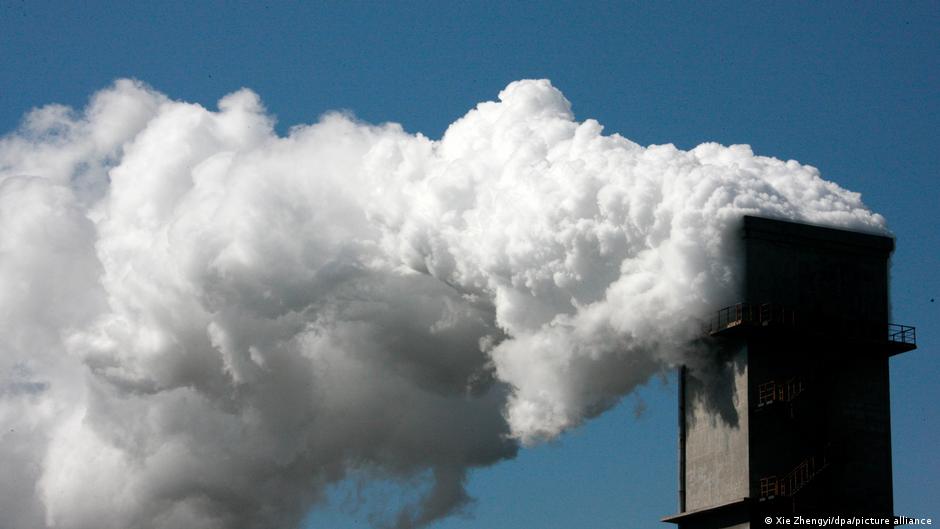
The Gargantuan Lie That is Collapsing The World’s Climate
Thinking we have time left to address climate change, or that “Net Zero by 2050” will save us, is driving us toward full social collapse in ways that become more obvious with every new broken temperature record.

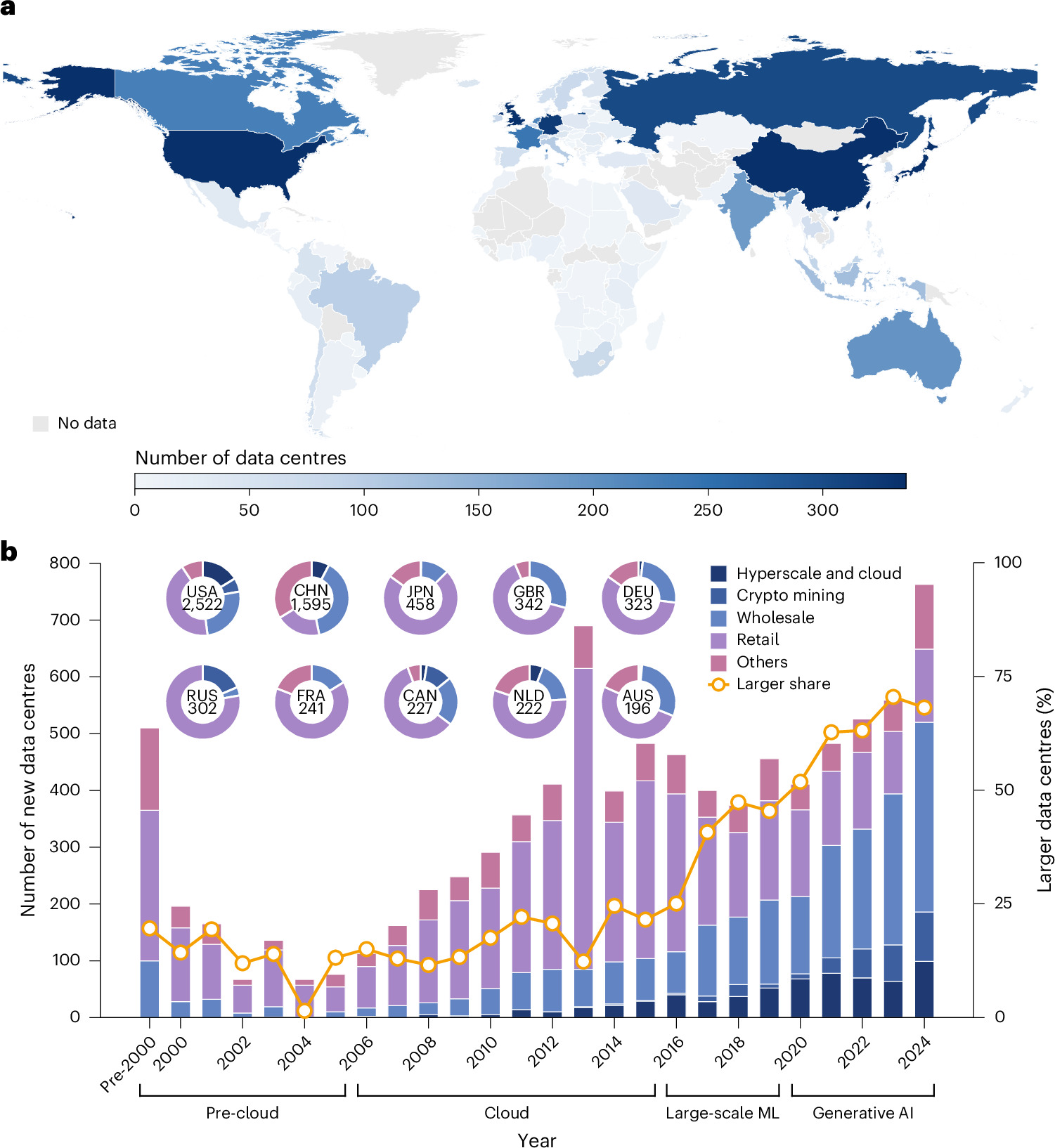
Early evidence links data centre exposure to coal power retirement timelines
The rapid expansion of artificial intelligence and data centre infrastructure has generated substantial electricity demand and raised concerns about delayed phase-out of coal power, yet this relationship has not been empirically assessed. Here, using global datasets on data centres and coal-fired power plants, our survival analysis shows that coal power plants exposed to data centres built after 2020 exhibit significantly lower retirement risk. This link is more pronounced for plants with lower CO2 emission intensity and higher thermal efficiency. Each standard deviation increase in post-2020 data centre exposure is associated with about 1.7% extension of plant lifespan. Consequently, the 937 exposed coal-fired power generation units are projected to collectively emit an additional 1.96 GtCO2 (95% confidence interval 1.01–2.92) from 2025 until their retirement. Our estimates underscore the need to integrate digital infrastructure considerations into net-zero pathways.
Oil and Gas=Peril and Poverty/ Solar and Wind=Prosperity and Protection
2026 has changed the psychological meaning of energy forever
IEA reiterates ‘no new oil and gas needed’ if global warming is limited to 1.5C - Carbon Brief
The world would not need to invest in new oil and gas projects if demand for the fuels fell in line with the 1.5C limit on global warming, says the IEA

Wind and Solar Will Power Datacenters More Cheaply Than Nuclear, Study Finds - Slashdot
An anonymous reader quotes a report from The Register: Renewable energy sources could power datacenters at a lower cost than relying on nuclear generation from small modular reactors (SMRs), claims a recently revealed study. ... [A]nalysis from the Centre for Net Zero (CNZ) says it would cost 43 per...

Global Carbon Budget Means Canada’s Fossil Fuels a Risky Investment | The Narwhal
In its latest report the Intergovernmental Panel on Climate Change (IPCC) gave global greenhouse gas emissions a worldwide limit, know as the global

In Deep
The numbers are simply mind-blowing: up to £264 billion for a climate “solution” that will increase emissions. Has the government lost its mind?

Glass Half Full: Building a Decarbonized U.S. Power Sector -
The Inflation Reduction Act of 2022 (IRA) was built, sold, and attacked as the largest climate investment in U.S. history. […]
America Will be Broke by 2050
Whether you slash spending, hike taxes, inflate or simply do nothing and wait for a crisis the result is the same: American standard of living is in terminal decline.

Carbon Removal Technologies | YC Request for Startups
Climate change presents an existential threat to humanity. We are already seeing the effects and they are showing up faster and stronger than anticipated. A report by United Nations' scientific panel on climate change released this month expects the atmosphere-on our current trajectory-to warm up by 1.5 degrees Celsius by 2040. Even the effects of a 0.5 degrees increase will have far-reaching consequences. This research indicates that we are already past the tipping point; even if we significantly reduced emissions, climate change would continue (Source IPCC summary C3 section). We believe there's still time to make a change if we look both to renewal energy and CO2 removal.

Social tipping dynamics for stabilizing Earth’s climate by 2050 | PNAS
Safely achieving the goals of the Paris Climate Agreement requires a worldwide transformation to carbon-neutral societies within the next 30 y. Acc...

AI E-Waste May be 40 to 60 Times What Has Been Estimated, New Analysis Finds — Basel Action Network
First-of-its-kind full-infrastructure analysis by Basel Action Network projects 395 to 617 million tonnes of AI-driven electronic equipment could be retired between 2025 and 2050. If packed into shipping containers and placed end to end, they would circle the Earth about six times.

The Way Humans Get Electricity Is About to Change Forever
These six shifts will transform markets over the next 25 years

Sustainable Development Goals
The 2030 Agenda for Sustainable Development was adopted by all United Nations Member States in 2015. It is built around 17 Sustainable Development Goals (SDGs) and 169 targets that represent an ambitious plan for achieving sustainable development and serves as the basis for countries to shape their national policies and priorities. At the heart of the agenda is the recognition that truely sustainable development must combine economic growth and poverty alleviation with strategies that improve health and education, reduce inequality, while addressing climate change and protecting nature. Thus, the interlinked nature of the SDGs calls for an integrated approach to policy decisions. As the international statistical standard for measuring the environment and its relationship with the economy, the SEEA is well positioned to support integrated policies based on a better understanding of the interactions and trade-offs between the environment and economy. Progress toward the 17 goals and 169 targets of the 2030 Agenda are monitored through 244 indicators, entailing the collection of substantial amounts of data. The UN Statistical Commission (UNSC) has encouraged the Inter-Agency and Expert Group on SDG Indicators (IAEG-SDGs), the body tasked with developing and implementing the global indicator framework for the 2030 Agenda, to consider existing standards and frameworks that can improve SDG monitoring, including the System of Environmental-Economic Accounting (SEEA). System of Environmental-Economic Accounting (SEEA). Recently, the Secretariat of the Convention on Biological Diversity (CBD), UN Environment and the UN Statistics Division brought a proposal on upgrading the status of Indicator 15.9.1 to the tenth meeting of the IAEG-SDGs, where the group agreed to the proposal and reclassified the indicator from Tier III to Tier II. The United Nations Committee of Experts on Environmental-Economic Accounting (UNCEEA), an intergovernmental body established by the UNSC to provide overall vision, coordination, prioritization and direction in the field of environmental economic accounting and supporting statistics, has assessed that currently 40 indicators for nine Sustainable Development Goals can be informed by the SEEA. The SEEA is particularly well-suited for deriving ratio indicators that compare environmental and economic information.

Climate Tech VCs Zero In on Powering AI Instead of Cutting Carbon Emissions
‘Decarb is dead for now,’ as one VC said, referring to decarbonization.
