

Do Not Research (DNR) is a platform for writing, art, and research into internet culture. It was founded in 2020 as a private Discord server…
Do Not Research | Substack
DNR is a publishing platform for writing, visual art, internet culture and more. Click to read Do Not Research, a Substack publication.
Posts
Do Not Research is a collaborative platform for publishing writing, visual art and beyond.

Posts
Do Not Research is a collaborative platform for publishing writing, visual art and beyond.
Feral Labs – A network of temporary dislocated hubs for research in art, technology and communities.
The Feral Labs Network is a network of temporary dislocated hubs for research in art, technology and communities. It’s members share a common interest in art-science research and contemporary do-it-yourself (DIY) & do-it-with-others (DIWO) communities.

The Digital Life Collective
The Digital Life Collective is an enabler. If you think we should be doing something we're not currently doing, we're here to help you and your project make the change you want to see in the world.
Home - DWeb for Creators - Gray Area
DWeb for Creators is an online course that empowers artists, designers, archivists, gallerists, curators, and others with the knowledge and tools necessary for exploring the decentralized web. Participants in this course engage with technologies like blockchain and mesh networks; examine case studies in curation, publishing, data sovereignty, and community building; and apply decolonial approaches to world building as they envision the future of DWeb technologies.
Deep research requires a slower pace than tech industry work
Anyone working in an industry for a while will become accustomed to that culture—its processes, its norms, its values, its tacit knowledge. Much of this is incredibly valuable, of course, but these ideas can also represent constraints. There are some important impedances here between tech industry culture and research culture. In particular, tech culture is calibrated to a much faster pace. This can lead to impatience or early abandonment when confronting problems which require a researcher’s pace.
Deep research requires a slower pace than tech industry work
Anyone working in an industry for a while will become accustomed to that culture—its processes, its norms, its values, its tacit knowledge. Much of this is incredibly valuable, of course, but these ideas can also represent constraints. There are some important impedances here between tech industry culture and research culture. In particular, tech culture is calibrated to a much faster pace. This can lead to impatience or early abandonment when confronting problems which require a researcher’s pace.
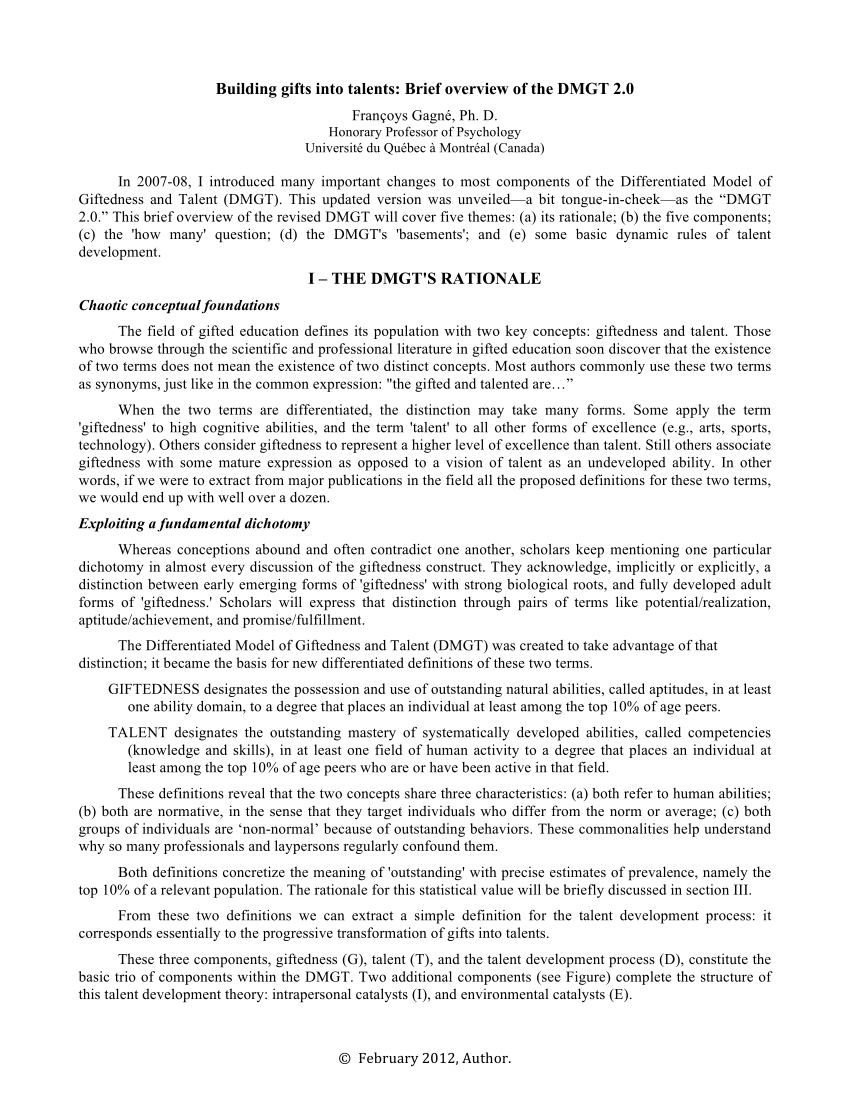
(PDF) Building gifts into talents: Detailed overview of the DMGT 2.0
PDF | On Jan 1, 2009, F. Gagné published Building gifts into talents: Detailed overview of the DMGT 2.0 | Find, read and cite all the research you need on ResearchGate
The Robyn Dawes Institute for the Improvement of Science
Making research quality visible so everyone can act on reliable evidence.

‘No & ...’ : A Forum on Technological Refusal - Home
This forum begins from the idea that refusal is, among other things, a rejection of one’s current relationship to technology (as an individual and/or as part of a collective) and a simultaneous commitment to another way of being in the world. The ‘no’ is accompanied by a ‘yes’ to another path. In this sense, refusal demands a careful articulation of what needs to change as well as a vision for a future that can (and should) be worked towards.
You can just review things: A digital ethnography of informal peer review
Across scholarly communities, manuscripts face similar evaluative rituals: editors invite experts to privately assess submissions through formal peer reviews. This closed, loosely structured, and...

‘I Have a Folder in My Email Called Hate Mail’: Academic Public Engagement, Digital Hate and the Unequally Distributed Risks of Visibility
Public engagement through �traditional� and social media is an increasingly important way for scholars to communicate research w

Join the darkshapes Discord Server!
Artists, raison d'être: Can we re-think tech that works for people, & not just corporations? Can we improve the world our children inherit? Deliberate, discuss, develop. This is DARKSHAPES. We build
Interface Realisms: The Interface as Aesthetic Form
Until now, digital arts have largely been understood to belong in traditional genres or forms of art: we are said to have electronic literature, net.art, or electronic, techno music. Sometimes interesting discussions have arisen concerning the very ontology of digital art, and questions such as whether net.art should be seen within the tradition of the visual arts or as a form of literature connecting it to the different traditions and questions regulating these arts.[1] While it is not my intent to disconnect digital art from traditional art, or to argue for the irrelevance of the traditional forms of art, I will in the following establish the interface as an aesthetic and critical framework for digital art.