





Films For Action: A Documentary Library for Changing the World
Browse and watch 6000+ documentaries and videos - 99% free. No ads. Submit films. Share with friends. Let's change the world together!


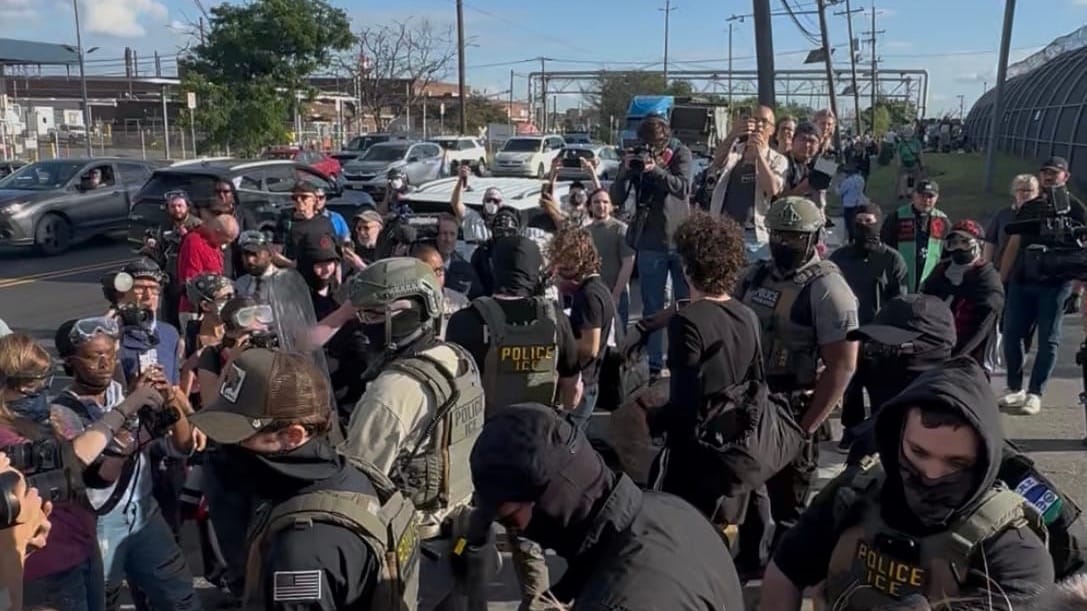
The Sex Criminals and Child Abusers of ICE and CBP
Rape. Domestic violence. Epstein friendship. It's all tolerated by our valiant homeland-security apparatus. PLUS: COINTELPRO 2026
Open social tech and geopolitical risk - ATmosphereConf 2026
NOW
The Paper Pilot's digital garden of thoughts on philosophy, politics, and sociology. Reading time: ~2 minute read | Published: Jun 15, 2024 | Updated: Aug 27, 2026

Social Dramas and Stories about Them
Victor Turner, Social Dramas and Stories about Them, Critical Inquiry, Vol. 7, No. 1, Autumn, 1980, On Narrative
ATmosphere Report #147 - Year's end reflections - Connected Places
Some themes I'm watching for 2026: censorship resistance, the politics of interoperable spaces, and who gets to shape how atproto talks about itself.
The Future Is Peace: A Shared Journey Across the Holy Land
Two lifelong peace activists and guides to Israel/Palestine, both of whom have lost family in the conflict, take readers on a revealing life-changing journey across this holy, bloodstained land and discover the mythic, political, and personal history that divides but also binds them and their peoples

Relationships
The Paper Pilot's digital garden of thoughts on philosophy, politics, and sociology. Reading time: ~5 minute read | Published: Jun 18, 2025 | Updated: Jul 9, 2026
Utopian media studies: Introduction
This introduction to the special issue ‘Utopian Media Studies’ sketches a framework for how media studies can become a site of utopian praxis, research and experimentation. It first addresses three apprehensions media scholars might have about the notion of utopian media studies and its appeal to a loaded concept like ‘utopia’. The introduction then outlines five sensibilities to explicate the nature and significance of this special issue’s contribution to the field: a utopian media studies must adopt an ecological approach to media; recognize and be invigorated by limits; work toward the technological liberation of time; connect imagination with practice; and emphasize and enable conditions for transmitting hope. Lastly, the introduction considers Ruth Levitas’s distinction between utopia’s archaeological, ontological, and architectural mode to map some of the concrete ways in which existing media studies research is doing utopian work that aligns with these sensibilities. In connecting work that operates in these modes with the various contributions to this special issue, the introduction reveals the utopian currents that already run through media studies as a discipline and opens up new conceptual and methodological approaches to studying and modeling digital utopias.
In "The Player and the Played," @maxhaiven.bsky.social theorizes the connections between the financialization of the capitalist economy, the gamification of our lives, and the rising threat of a uniquely 21st-century form of fascistic politics: mitpress.mit.edu/9780262056045/the-player-and-… #OpenAccess
