


We are leveraging diffusion technology to develop a new generation of LLMs. Our dLLMs are much faster and more efficient than traditional autoregressive LLMs.
Introducing Mercury 2.5 – Inception
Mercury 2.5 is the most capable diffusion LLM on the market. It runs at 1,107 tokens/sec and offers a 40% increase in intelligence over Mercury 2, comparable to cost-optimized frontier models.

The Ultimate Guide to Fine-Tuning LLMs from Basics to Breakthroughs: An Exhaustive Review of Technologies, Research, Best Practices, Applied Research Challenges and Opportunities (Version 1.0)
Dan Shipper 📧 on Twitter / X
this is true and is a big reason why you don’t need to be a highly technical researcher to use LLMs in surprising and novel ways https://t.co/TuxNzXzToU— Dan Shipper 📧 (@danshipper) July 27, 2025
LLaDA - Large Language Diffusion Models
LLaDA is a diffusion model with an unprecedented 8B scale, rivaling LLaMA3 8B in performance.

How LLMs Actually Work
A from-the-ground-up walkthrough of how modern LLMs work, from tokens to transformer blocks to the next-token loop
State of AI 2025: 100T Token LLM Usage Study | OpenRouter
Read OpenRouter's 2025 State of AI report — an empirical 100 trillion token study of real LLM usage, model trends, and developer insights.
Alex Cheema on Twitter / X
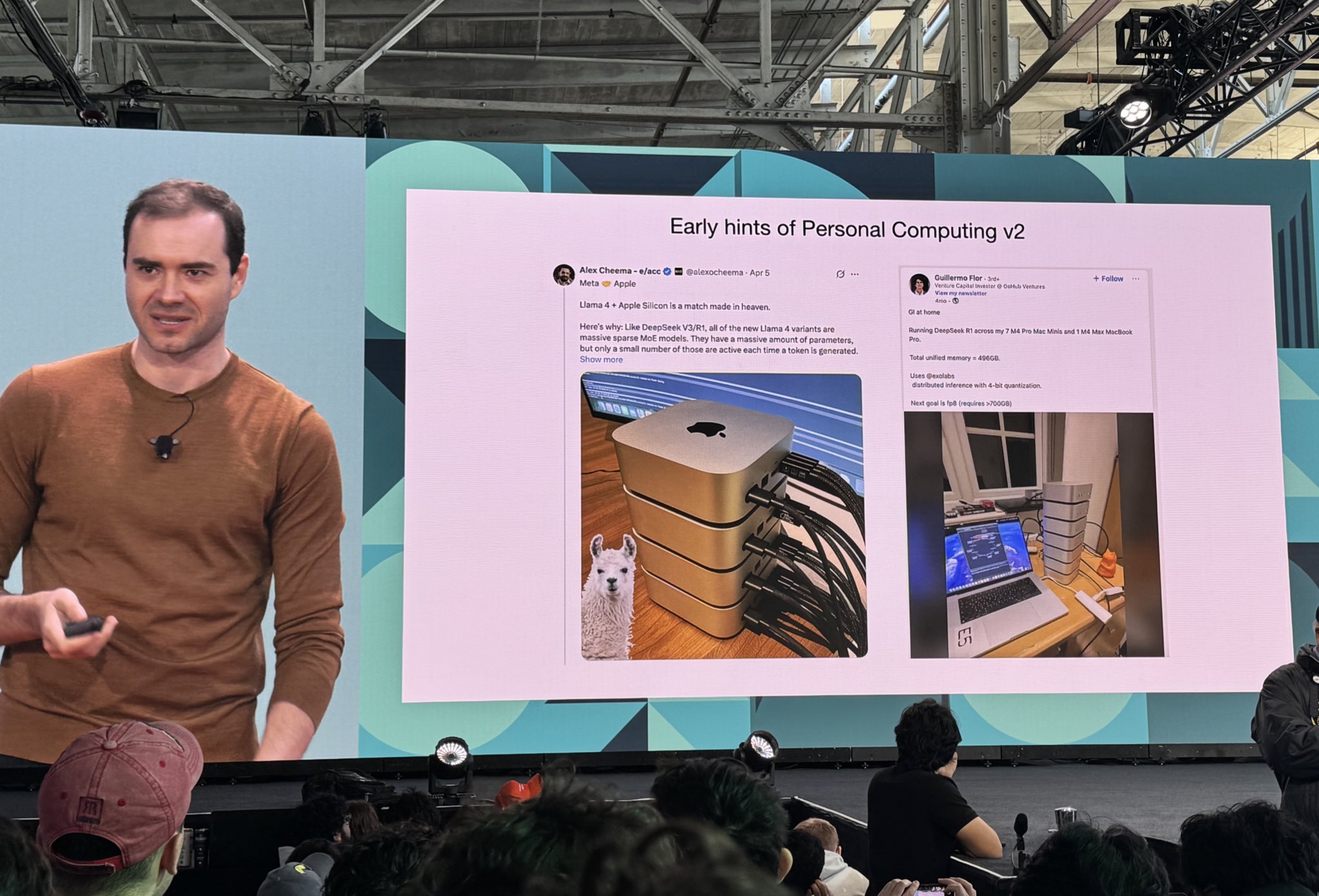
.@karpathy shouted out my work on @exolabs at @ycombinator AI SUS!“we use LLMs similarly to mainframes in the ‘70s - compute is timeshared by having a slice in the batch dimension. models will compress over time, and with this we’ll be able to run more on-device” pic.twitter.com/UKSrquQGAL— Alex Cheema (@alexocheema) June 18, 2025
Diffusion model
In machine learning, diffusion models, also known as diffusion-based generative models or score-based generative models, are a class of latent variable generative models. A diffusion model consists of two major components: the forward diffusion process, and the reverse sampling process.[1] The goal of diffusion models is to learn a diffusion process for a given dataset, such that the process can generate new elements that are distributed similarly as the original dataset. A diffusion model models data as generated by a diffusion process, whereby a new datum performs a random walk with drift through the space of all possible data.[2] A trained diffusion model can be sampled in many ways, with different efficiency and quality.
Beyond Standard LLMs
Linear Attention Hybrids, Text Diffusion, Code World Models, and Small Recursive Transformers
Brandon Stewart on Twitter / X
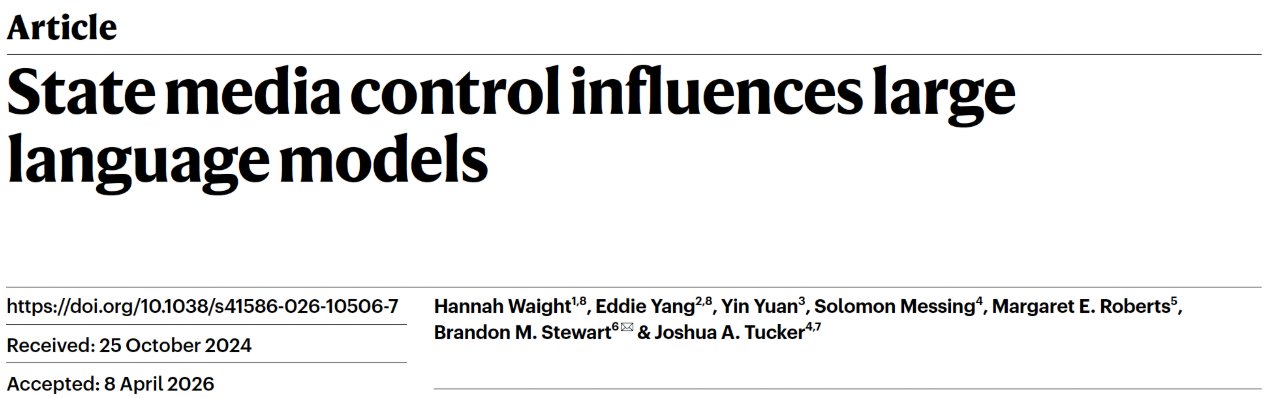
1/ New @Nature! We study how powerful institutions shape the information environment for LLMs. Commercial LLM training is opaque, so we trace a path from state-coordinated media -> training data -> model responses. pic.twitter.com/5LdFvzbFaf— Brandon Stewart (@b_m_stewart) May 13, 2026
Minions: where local and cloud LLMs meet· Ollama Blog
Avanika Narayan, Dan Biderman, and Sabri Eyuboglu from Christopher Ré's Stanford Hazy Research lab, along with Avner May, Scott Linderman, James Zou, have developed a way to shift a substantial portion of LLM workloads to consumer devices by having small on-device models (such as Llama 3.2 with Ollama) collaborate with larger models in the cloud (such as GPT-4o).

distil labs — Replace LLMs with Custom Small Language Models
Train and deploy custom small language models that are faster, cheaper, and just as accurate as LLMs.
vllm-project/vllm
A high-throughput and memory-efficient inference and serving engine for LLMs
something that has come up fairly recently with LLMs - for coding, specifically - is that it’s become a lot easier to burn stupefying amounts of tokens on stuff very fast, with agents running 24/7 or managing more agents (see: Yegge’s Gas Town) even with low inference costs that adds up in a hurry

Jesse Felder
‘While some cling to the promise of an AI “revolution,” the cost of adoption is proving a stubborn bottleneck. These developments also suggest that the economics of replacing human labor with AI may be more complicated than some early forecasts originally implied.’ fortune.com/2026/05/22/microsoft-ai-cost-…

