


Mau Mau Tech' looks at efforts to form a Black University in Oakland, California in the late 1960s and early 1970s.
Home | University of California, Riverside
UC Riverside is the nation’s leader for social mobility with a diverse & inclusive community pioneering research with impacts around the globe.
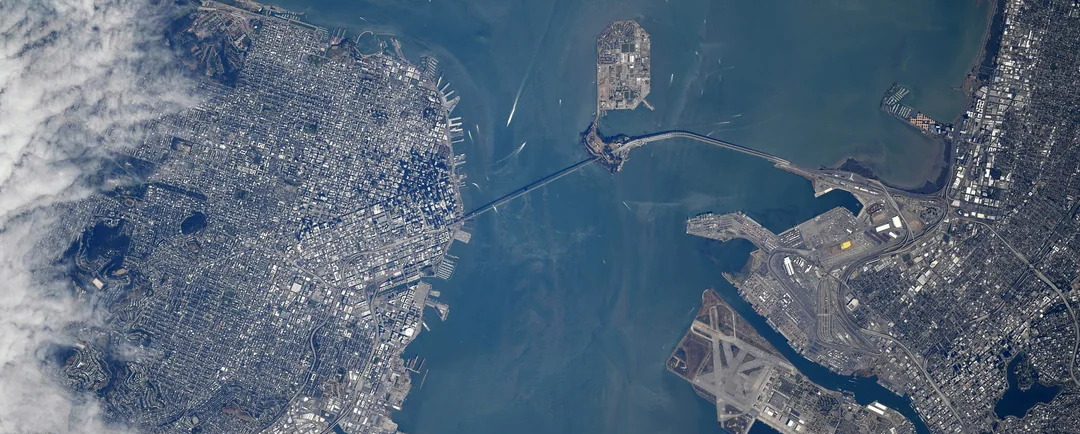
The Water’s Edge: Empire, Race, and the Global History of Oakland, California, 1848-1980
Author(s): Klein, Andrew Nelson Carver | Advisor(s): Kelley, Robin D.G. | Abstract: This dissertation explores historical intersections between capitalism, race-making, environmental change, and U.S. foreign relations from the vantage of Oakland’s waterfront. It tracks the evolution of this geostrategic coastline since it emerged as a coal-powered nexus of railroads, steamships, and military installations during American colonization. Revising the story of Oakland’s development from a global perspective, my project documents how local boosters, businessmen, and bureaucrats forged intimate ties with far-flung territories administered by U.S. troops and landowners. Combining social and environmental history with methods from Black studies, I map the transformation of Oakland’s fertile estuary into an infilled hub of postindustrial commerce, a vital node of military logistics, and a focal point for racialized labor migration. Simultaneously, this dissertation reveals how, over the long twentieth century, Black, Indigenous, Chinese, and other working-class Oaklanders found footholds on the harbor, often repurposing its imperial routes for dramatically different ends. Drawing on archives and oral histories in Cuba, Hawai‘i, and across the continental United States, I trace Oakland’s tradition of radical internationalism, most visible in the antiwar and Black Power movements of the sixties, to multi-generational struggles over the governance of coastal land. I argue that Oakland’s waterfront both bridged the continental and overseas expansion of an ascendant world power and came to serve as a proving ground for alternative forms of globalization. “The Water’s Edge” therefore offers a critical reappraisal of the generally place-bound history of North American urbanism and far-reaching lessons for building just cities in a present defined by global environmental crises.

This big university system is embracing AI. Students and faculty aren't all on board
The California State University system offers an early look at what happens when an administration commits to a technology that its own community isn't convinced will improve education.

The great vibes divergence
Why does San Francisco feel so weird during this tech boom while Oakland is more or less still Oakland?
Oakland is a Vibe: Blackness, Cultural Framings and Emancipations of The Town
Author(s): Heitz, Kaily | Advisor(s): Scott Lewis, Jovan | Abstract: In this dissertation, I examine the ways that developers and Black community organizers in Oakland, California, utilize a situated concept of Black culture to produce value in the city. This value is constituted by a politics of Blackness rooted both in racial capitalism, shifting structures of community care, and their affective articulations. The affective qualities of Black Oakland – which includes a sense of relationality, creativity, and resistance – are understood colloquially as “vibe.” While representations of vibe are mobilized by both developers and community organizations to respectively advance and resist gentrification, I argue that the vibe of the city is constituted by a Black sense of place that cannot be reproduced through capitalist representations of cultural value alone. This study of vibe presents an opportunity to take seriously the invitation of Black geographic scholarship to work at the intersection of poetics and historical materialism by exploring relationality as a site that coproduces racialized space and experience. Where developers leverage notions of vibe to generate value through private investment, Black organizers utilize such representations in order to reclaim the physical space necessary to the very production of vibe. The latter strategy is, I suggest, an enactment of what I call “emancipatory framing,” in which hegemonic framing is mobilized in order to create alternative spaces for liberatory praxes. This dissertation explores vibe and emancipatory framing at three different scales: the Black body, the independent business, and the grassroots collective. I conclude that vibe as a material and metaphorical asset of Blackness, is at the root of contestations over place, and sometimes contradictory imaginaries of freedom.
Collective Action School
Explore how you can remake tech. Tech worker organizing, unionizing, and building different technologies

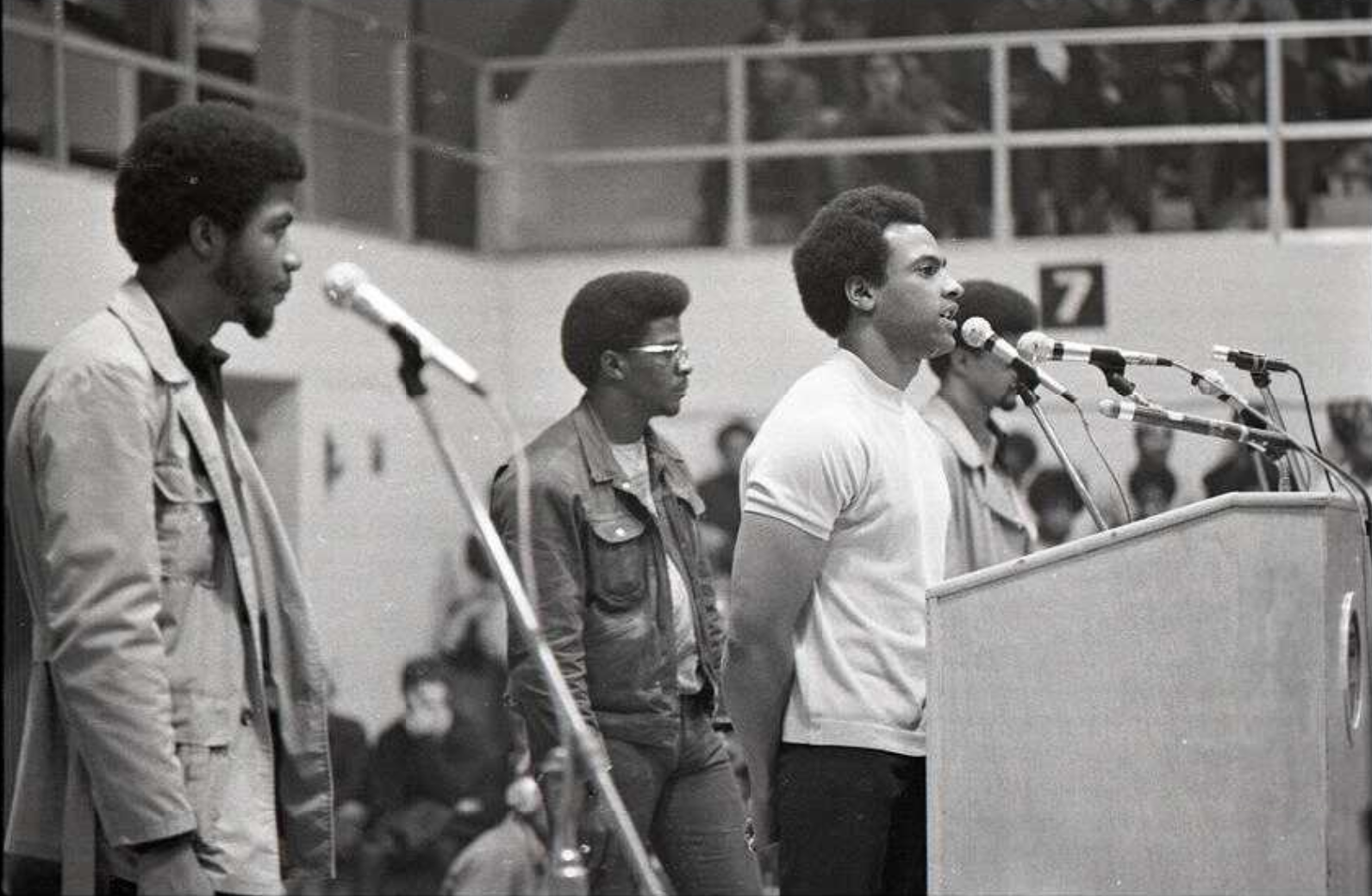
Huey Newton introduces Revolutionary Intercommunalism, Boston College, November 18 1970
In 1970 Huey Newton gave a speech at Boston college outlining a new ideological direction for the Black Panther Party, Revolutionary Intercommunalism. Newton described his rejection of the idea of black people being an internal colony in the US, that class struggle rather than national liberation was the only route to a communist society (describing the failure of liberation movements in Africa as 'neo-colonialism'), concerns around automation and the working class, and the impossibility of a socialist state in the US (against the position of the Progressive Labor Party), although he still described Vietnam and China as partially liberated.
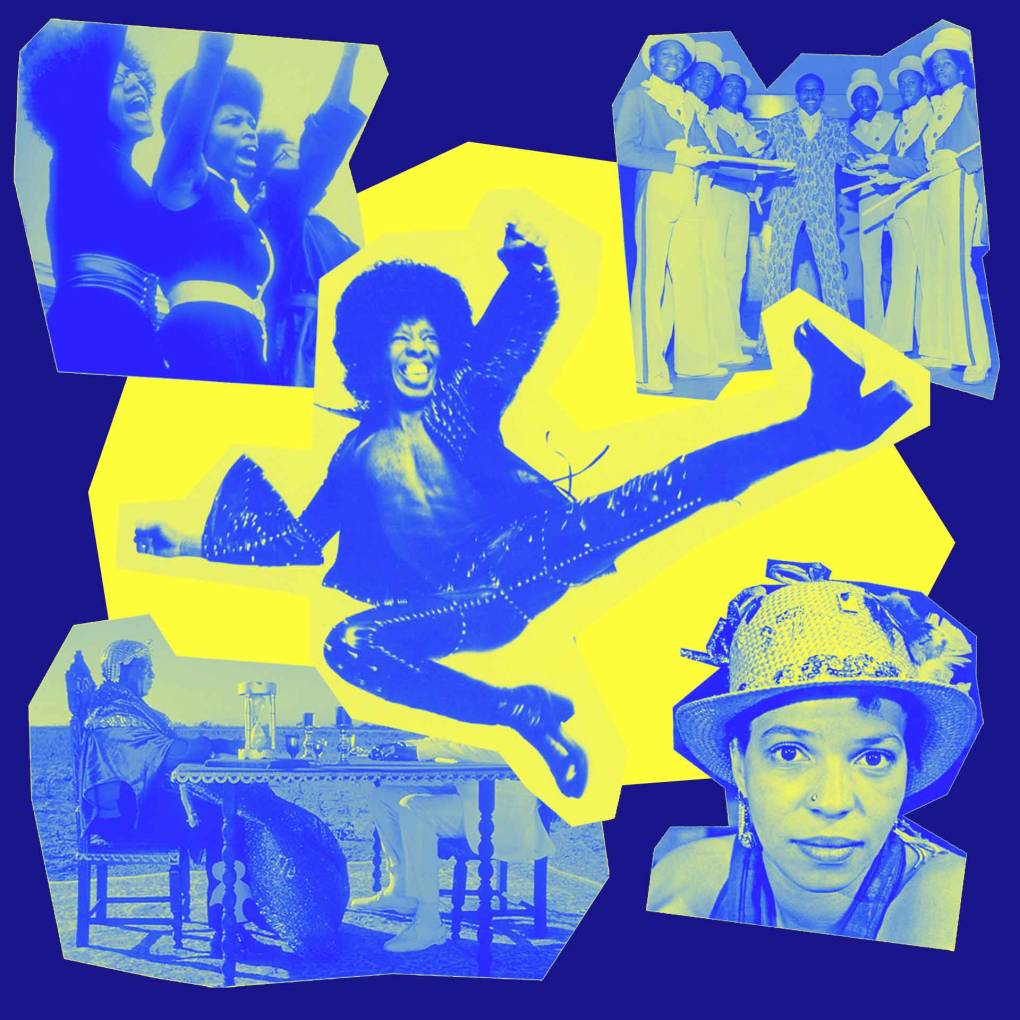
The Bay Area Was Hip-Hop Before There Was Hip-Hop | KQED
In the ’60s and ’70s, the Black Panthers, boogaloo dancers and Sly Stone anticipated the arrival of hip-hop.

Eyes on the Prize - Chicago Reader
Over more than two decades, Haki and Safisha Madhubuti have proved that African-centered education can amount to more than a black version of history. It can also be a springboard to a bright future.
American Babylon
A gripping portrait of black power politics and the struggle for civil rights in postwar Oakland

The First Map of Oakland, California: An Historical Speculation as Solution to an Enigma on JSTOR
Jack J. Studer, The First Map of Oakland, California: An Historical Speculation as Solution to an Enigma, California Historical Society Quarterly, Vol. 48, No. 1 (Mar., 1969), pp. 59-71
AI’s Imperial Agenda
“Empire of AI” author Karen Hao on how Silicon Valley’s young AI companies parallel colonial empires of old.

Sustainability
The sustainable University – structures, individuals and questions around institutional transformation
During the 1980s and 1990s, networks of evangelists and venture capitalists fused technological boosterism with reactionary social ideals. Our video of the week examines the deep roots of Silicon Valley's shift toward the right. Featuring @beccalew.bsky.social at @westernu.ca buff.ly/ydgntnc
