


How MrBeast explains why everything online is going insane
Remotely Coerced Violence: 764, The Com Network, and the Hybridization of Threats - Combating Terrorism Center at West Point
Abstract: This article examines 764 and the wider Com Network as a case study in remotely coerced violence and the hybridization of contemporary terrorist and violent extremist threats. It argues that nihilistic violent extremism is best understood as a victim-driven, youth-centered online ecosystem in which status, belonging, and identity are earned through the production, circulation, … Continued

Why the Algorithm Loves a Villain, And How to Beat It
When the internet is full of distortions, fake news, and AI-generated slop, how can facts and journalism rise to the top? Former BBC and Vice journalist Sophia Smith Galer has one possible way to…

The Case for User Agent Extremism - Anil Dash
A blog about making culture. Since 1999.

Bias, Skew, and Search Engines Are Sufficient to Explain Online Toxicity

Bias, Skew, and Search Engines Are Sufficient to Explain Online Toxicity
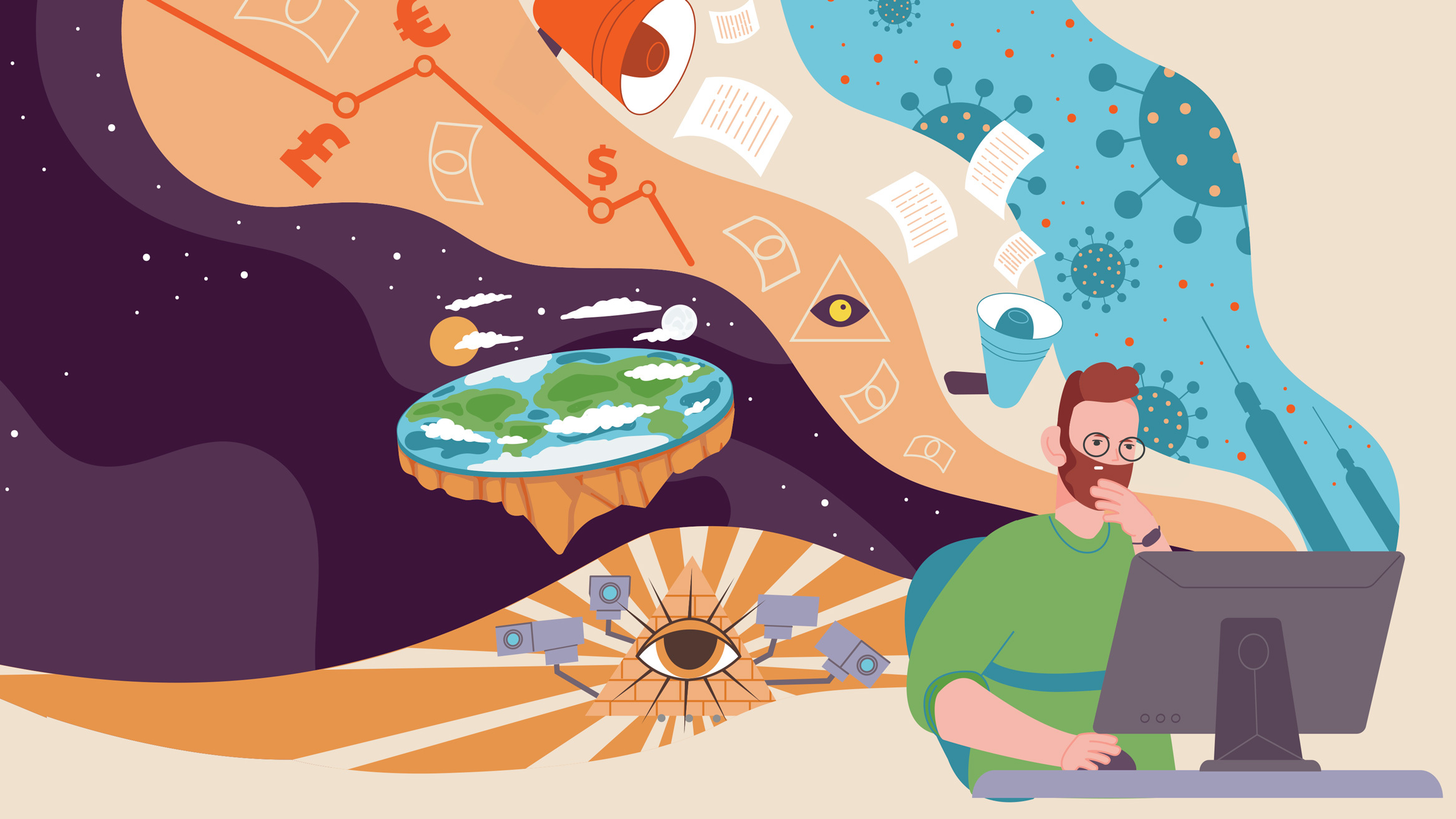
U.S. political discourse seems to have fissioned into discrete bubbles, each reflecting its own distorted image of the world. Many blame machine-learning algorithms that purportedly maximize “engagement”—serving up content that keeps YouTube or Facebook users watching videos or scrolling through their feeds—for radicalizing users or strengthening their partisanship. Sociologist Shoshana Zuboff15 even argues that “surveillance capitalism” uses optimized algorithmic feedback for “automated behavioral modification” at scale, writing the “music” that users then “dance” to.
Bias, Skew, and Search Engines Are Sufficient to Explain Online Toxicity
U.S. political discourse seems to have fissioned into discrete bubbles, each reflecting its own distorted image of the world. Many blame machine-learning algorithms that purportedly maximize “engagement”—serving up content that keeps YouTube or Facebook users watching videos or scrolling through their feeds—for radicalizing users or strengthening their partisanship. Sociologist Shoshana Zuboff15 even argues that “surveillance capitalism” uses optimized algorithmic feedback for “automated behavioral modification” at scale, writing the “music” that users then “dance” to.
Social media, extremism, and radicalization
Fears that YouTube recommendations radicalize users are overblown, but social media still host and profit from dubious and extremist content.

The thinking style that makes people vulnerable to extremism | Psyche Ideas
The people most drawn to ideological thinking and authoritarianism aren’t aware of what makes them so susceptible

Digital Social Norm Enforcement: Online Firestorms in Social Media
Actors of public interest today have to fear the adverse impact that stems from social media platforms. Any controversial behavior may promptly trigger temporal, but potentially devastating storms of emotional and aggressive outrage, so called online firestorms. Popular targets of online firestorms are companies, politicians, celebrities, media, academics and many more. This article introduces social norm theory to understand online aggression in a social-political online setting, challenging the popular assumption that online anonymity is one of the principle factors that promotes aggression. We underpin this social norm view by analyzing a major social media platform concerned with public affairs over a period of three years entailing 532,197 comments on 1,612 online petitions. Results show that in the context of online firestorms, non-anonymous individuals are more aggressive compared to anonymous individuals. This effect is reinforced if selective incentives are present and if aggressors are intrinsically motivated.
The Internet's Meaning Crisis
Parasocial media is a response to excessive irrelevance

Tim Berners Lee: Thoughts On The Internet Evolution
"I’ve always believed the web is for everyone. That's why I and others fight fiercely to protect it."

Anatomy of an internet argument
Social media isn't toxic, most people just haven't figured out the game (yet)
Kill The Internet IRL in Austin TX
A night of philosophizing in the digital age of chaos and decay. Discussions with three online public philosophers on technology, privacy, and the state of our internet enmeshed civilization.The D...

The Internet, and how we've developed with it

Not "doomscrolling has killed our lives". But how, looking back, our enjoyment of the internet has shaped our experience of life.

We can have a different web

My journey to the heart of the forgotten internet

VC&G | » My memories of what life was like before the Internet

Habbo Hotel Memories - Sneer Campaign
blogs.loc.gov

My old SoundCloud page is a time capsule