

This post is about about the existential threat that Open Source Database companies, or any open source software infrastructure, are facing from cloud vendors like Amazon Web Services, Google Cloud, and Microsoft Azure. Watch the video as Paul Dix, Fou...
Open Source Business Model is Under Siege [Video Insights]
This post is about about the existential threat that Open Source Database companies, or any open source software infrastructure, are facing from cloud vendors like Amazon Web Services, Google Cloud, and Microsoft Azure. Watch the video as Paul Dix, Fou...
AWS, MongoDB, and the Economic Realities of Open Source
Amazon’s latest offering highlights the economic challenges facing open source companies — and Amazon should pay attention.

Open Source infrastructure deserves a business model
Open Source infrastructure is essential, invisible, and chronically underfunded. A more sustainable approach may be to connect the cost of running that infrastructure to the organizations that rely on it most.

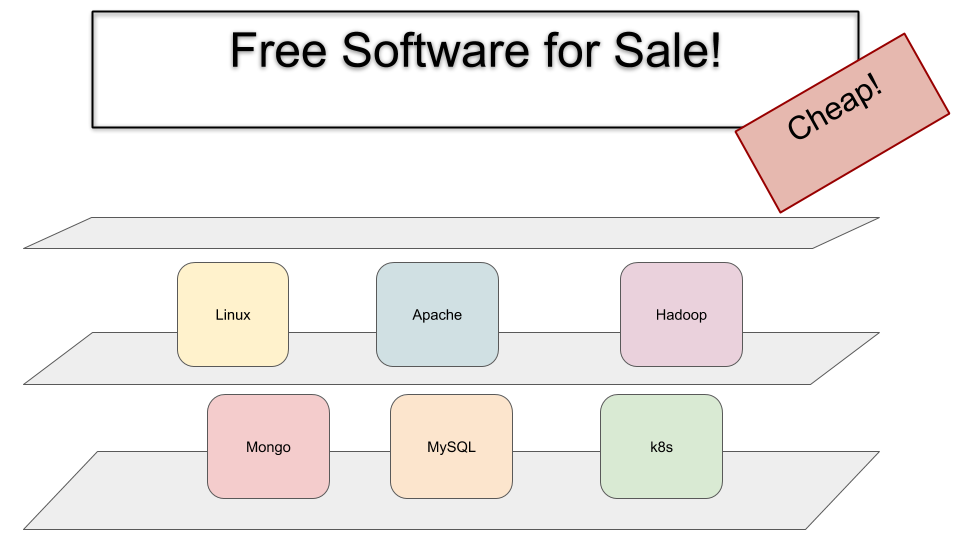
There is NO Open Source Business Model
Preface: It has been brought to my attention by friends and trusted advisors that a valid interpretation of my point below is that open…

NSF investing in secure open-source ecosystems
Open-source software is ubiquitous, supporting artificial intelligence, data science, cloud computing, telecommunications and scientific research tools. Despite these benefits, the number of open-source developers is relatively small, and many projects lack sufficient resources, slowing the pace of innovation and making maintenance difficult. In addition, weaknesses in open-source software, such as security flaws, supply chain risks or insider threats, can spread across many connected systems. In extreme cases, these weaknesses could lead to large-scale failures that affect national or global systems.

Why There Will Never Be Another Red Hat: The Economics of Open Source | Andreessen Horowitz
Open source software powers the world’s technology. In the past decade, there has been an inexorable adoption of open source in most aspects of computing. Without open source, Facebook, Google, Amazon, and nearly every other modern technology company would not exist. Thanks to an amazing community of innovative, top-notch programmers, open source has become the...

The Open Source Distributor Business Model
Dirk Riehle, dirk@riehle.org, Published in Computer vol. 54, no. 12 (December 2021), pp. 99-103. Abstract This article defines and discusses one particular commercial open source business model, ca…

The $70B Open Source Software Paradox
It’s no news that over the last 10-15 years, particularly noticeable in the last 5 years, the enterprise software industry has gradually transformed from complex, expensive, closed-source (proprietary) software stacks to extensible/configurable,...

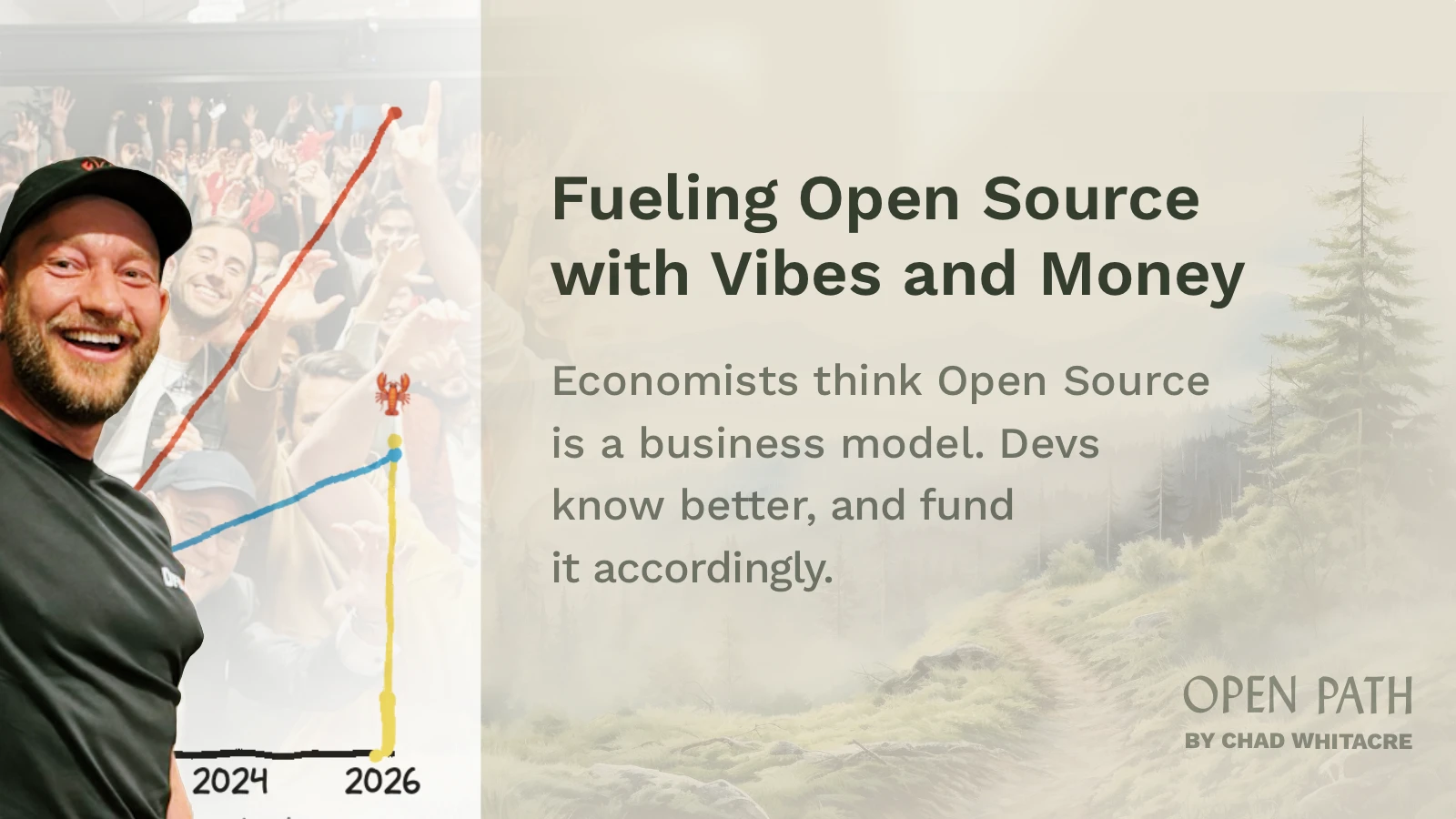
Fueling Open Source with Vibes & Money
Economists think Open Source is a business model. Devs know better, and fund it accordingly.
The Great Open Source Debate: 4 Things to Consider
Build, deploy and manage your applications on any cloud or your own servers.

Open Source Is Eating The Software World
It's been said software is eating the world. This year’s Future of Open Source survey points to the fact that open source is eating the software world.

Open Source Software and Corporate Influence — Andrew Lilley Brinker
Exploring how corporations gain power in open source projects, and how to build resilience to corporate capture.
Open source and the software supply chain
Managing something as esoteric as resources for building software with a variety of contributions made by the open source community is more amorphic.

The Arguments Against Open Source AI are Very Bad | Tom Bedor's Blog
The release of Kimi K3 has opened a fresh round of angst and confused discourse. There's a loud cohort of journalists, business leaders, and politicians arguing that open source AI is a dangerous threat. OpenAI's Dean Ball:
Open Source or Open Core: Why Should You Care?
Open source software has gained its significant foothold because the community development model works everywhere. Its momentum has moved it into the underlying infrastructure of some of the most sophisticated web scale companies, like Facebook and Google. Open source underpinnings now drive many of the most significant advances in the worlds of cloud and big data.
