

Information Philosopher is dedicated to the new Information Philosophy, with explanations for Freedom, Values, and Knowledge.
A Beginner's Guide To Information Architecture in UX [2025]
What is information architecture? Why is it so important, and how does it relate to UX design? Find out why IA is so crucial in this expert guide.

Radical Skepticism About Information Fiduciaries
Khan and Pozen are right to note the fundamental conflict between “information fiduciary” duties and shareholder interests. I only wish to add two further points in service of a radical skepticism towards the information fiduciary concept.

Redressing the Balance: A Yin-Yang Perspective on Information Technology
Information is an essential aspect of how we interact with the world around us. We acquire information and then integrate it to build knowledge, understanding, and trust, which in turn serve in preparing actions. Information technology (IT) is supposed to support all these phases of information processing. But does it? An assessment of IT through the yin-yang lens from Chinese philosophy shows that over the last decades, support for the yin processes of building knowledge, understanding, and trust has been neglected, the focus of most research and development having been on the yang processes of acting. IT shares this imbalance with other aspects of Western and globalized culture. I discuss possible directions for re-establishing a yin-yang balance in IT, as a small contribution to redressing the balance in the world at large.

The information flaneur: a fresh look at information seeking
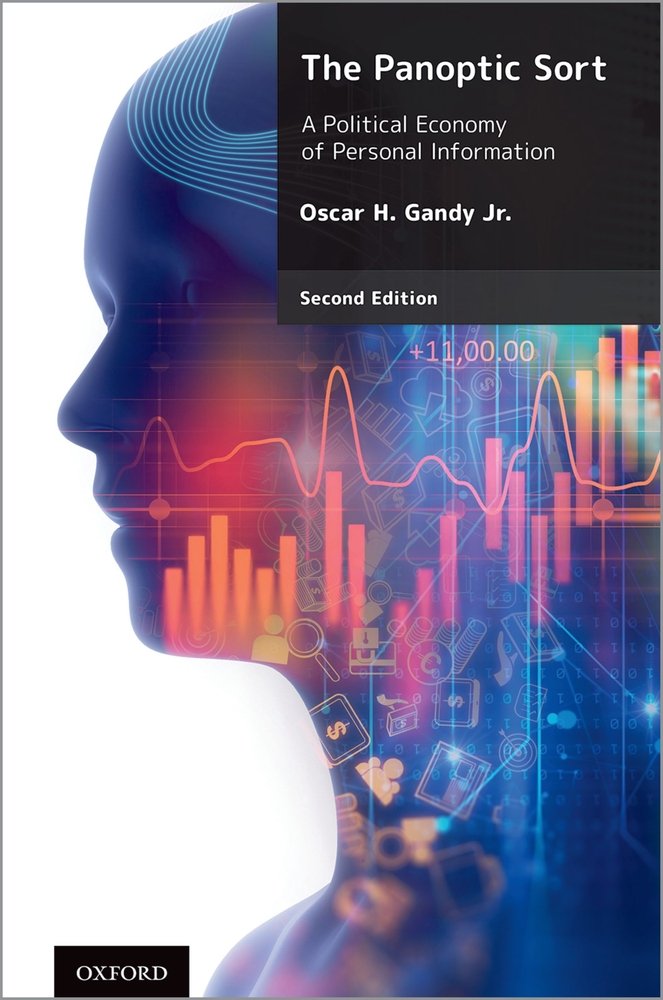
The Panoptic Sort: A Political Economy of Personal Information
A Political Economy of Personal Information
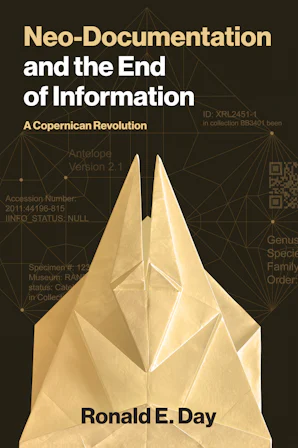
Neo-Documentation and the End of Information
Ronald Day’s Neo-Documentation and the End of Information critiques the modern conception of information as representational “content.” The...
Infoenon — Where Information Meets Phenomenon
Search publisher-controlled information, public knowledge, and the open social web.

Intelligence | The Paper Pilot
The Paper Pilot's digital garden of thoughts on philosophy, politics, and sociology
Individualism | The Paper Pilot
The Paper Pilot's digital garden of thoughts on philosophy, politics, and sociology
Information is Beautiful
Distilling the world's data, information & knowledge into beautiful infographics & visualizations

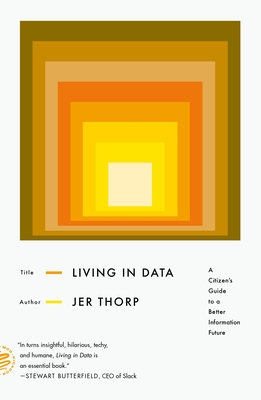
Living in Data: A Citizen's Guide to a Better Information Future (Paperback)
Jer Thorp’s analysis of the word “data” in 10,325 New York Times stories written between 1984 and 2018 shows a distinct trend: among the words most closely associated with “data,” we find not only its classic companions “information” and “digital,” but also a variety of new neighbors—from “scandal” and “misinformation” to “ethics,” “friends,” and “play.”To live in data in the twenty-first century
The uni-context | The Paper Pilot
The Paper Pilot's digital garden of thoughts on philosophy, politics, and sociology
What the Hell is Going On? - David Perell
David shares how the new age of information abundance is transforming commerce, education, and politics. Read here.

The Information Pathology
November 2018 When I write, my aim is to learn more about a subject, to start conversations, and to serve as a point of departure for further exploration (rather than a point of reference or conclu…
“‘Information’ is a relational concept that assumes meaning only when related to the cognitive structure of the observer.” -- Heinz von Foerster
Control Information Theory: The “Missing Link” In the Science Of Cybernetics | Institute for the Study of Complex Systems
complexsystems.org
