


In a new model for user interfaces, agents paint the screen with interactive UI components on demand. Let’s take a look.
Generative UI: A rich, custom, visual interactive user experience for any prompt
Yaniv Leviathan, Google Fellow, Dani Valevski, Senior Staff Software Engineer, Vishnu Natchu, Principal Engineer, and Yossi Matias, Vice President & Head of Google Research

Awesome Generative UI - AI-Powered User Interface Generation Resources
Discover the best Generative UI resources: research papers, real-world cases, video tutorials, and open-source projects about AI-driven dynamic interface generation. Explore how LLMs like Gemini, Claude, and GPT are revolutionizing UI/UX design.
Why Generative UI Is the New Frontier for Business Software
In an era where AI constructs UIs on the fly, discover how SAP is tapping generative UI to reimagine how works gets done.

A tale of two Agent Builders
What two competing solutions to the same design problem tell about the future of designing AI interfaces.

Popmelt — Design copilots for AI agents
Our Taste models encode design expertise and philosophy, giving AI agents instant access to a curated catalog of aesthetic knowledge. Unlike traditional templates and design systems, our imprints are AI-native and guided by universal principles. This means agents can apply them to any interface scenario, not just predefined layouts and elements. They're also customizable and extensible, letting you build quickly without falling into the cookie-cutter UI library trap.
We built the GUI for AI - agentic workflows now have a canvas
232 votes, 50 comments. So we built something different: A canvas-based browser interface where you can visually organize, run, and monitor…
Beautiful UI — Crafted primitives for AI-native interfaces
A small library of extremely crafted, copy-paste components for chat agents, thinking states, human-in-the-loop approvals, and everything agents need to talk to humans beautifully.
Generative AI in a Nutshell - how to survive and thrive in the age of AI
LukeW | Agent Management Interface Patterns
As an increasing number of AI applications evolve to agents doing work for people, agent management becomes a critical part of these product's design. How can p...
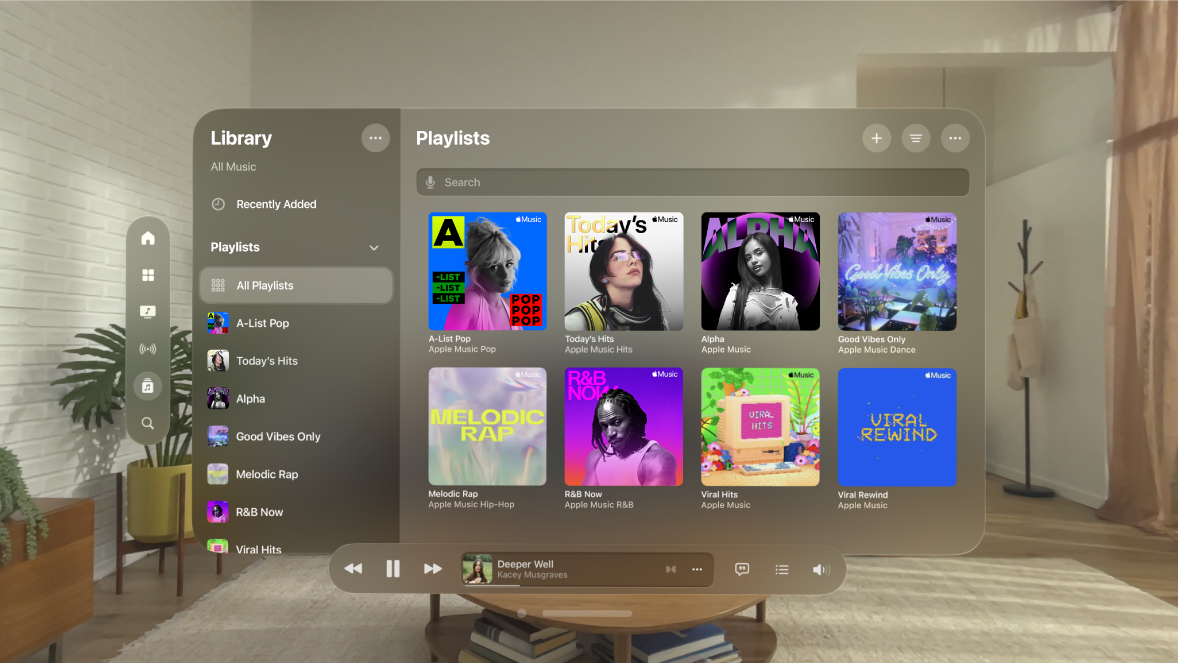
bytedance/UI-TARS-desktop
The Open-Source Multimodal AI Agent Stack: Connecting Cutting-Edge AI Models and Agent Infra
AI Agents Will Become the New UI, and Apps Take a Backseat
For decades, screens, keyboards, and structured applications have shaped our relationship with technology. People learned how to interact with computers

Agent Plugins
A portable package format for reusable components that extend AI agents.
Introducing Open Intelligent UI | The Open-Source Alternative to ChatGPT's Intelligent UI
Generative Agents: Interactive Simulacra of Human Behavior
Believable proxies of human behavior can empower interactive applications ranging from immersive environments to rehearsal spaces for interpersonal communication to prototyping tools. In this paper, we introduce generative agents--computational software agents that simulate believable human behavior. Generative agents wake up, cook breakfast, and head to work; artists paint, while authors write; they form opinions, notice each other, and initiate conversations; they remember and reflect on days past as they plan the next day. To enable generative agents, we describe an architecture that extends a large language model to store a complete record of the agent's experiences using natural language, synthesize those memories over time into higher-level reflections, and retrieve them dynamically to plan behavior. We instantiate generative agents to populate an interactive sandbox environment inspired by The Sims, where end users can interact with a small town of twenty five agents using natural language. In an evaluation, these generative agents produce believable individual and emergent social behaviors: for example, starting with only a single user-specified notion that one agent wants to throw a Valentine's Day party, the agents autonomously spread invitations to the party over the next two days, make new acquaintances, ask each other out on dates to the party, and coordinate to show up for the party together at the right time. We demonstrate through ablation that the components of our agent architecture--observation, planning, and reflection--each contribute critically to the believability of agent behavior. By fusing large language models with computational, interactive agents, this work introduces architectural and interaction patterns for enabling believable simulations of human behavior.

How AI solves UI's biggest problem