

A look under the hood of Livelymerge.
experiments/second-sky/README.md at main · oaustegard/experiments
Random vibe-experiments. Contribute to oaustegard/experiments development by creating an account on GitHub.

Functions as Objects - Part 1 | Daryl Ducharme | Offprint
This was originally posted on Jan. 15, 2007 and is being posted here for historical reasons

The physics behind spring animations - The Blog of Maxime Heckel
A deep dive into the inner workings of spring animations in Framer Motion.
Maintain the unmaintainable - a Hugging Face Space by transformers-community
This application visualizes how over 400 machine learning models in the Transformers library are connected and related to each other. Users can see which models are derived from or import features ...
Claude Opus 4.8: Capabilities and Reactions
You need a lot of data points to understand a new model, and what you have.
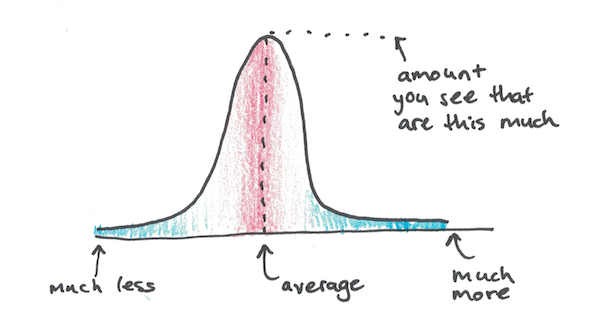
Useful Mental Model: Normal Distribution - Scott H Young
Some ideas are so powerful once you know them, you start to see them everywhere. Normal distributions are one of these ideas. Let's understand it!
Fluoddity
An interactive lava lamp? An evolvable ant farm? Explore a world very different from our own.

Fluoddity
An interactive lava lamp? An evolvable ant farm? Explore a world very different from our own.
Fluoddity
An interactive lava lamp? An evolvable ant farm? Explore a world very different from our own.
Fluoddity
An interactive lava lamp? An evolvable ant farm? Explore a world very different from our own.
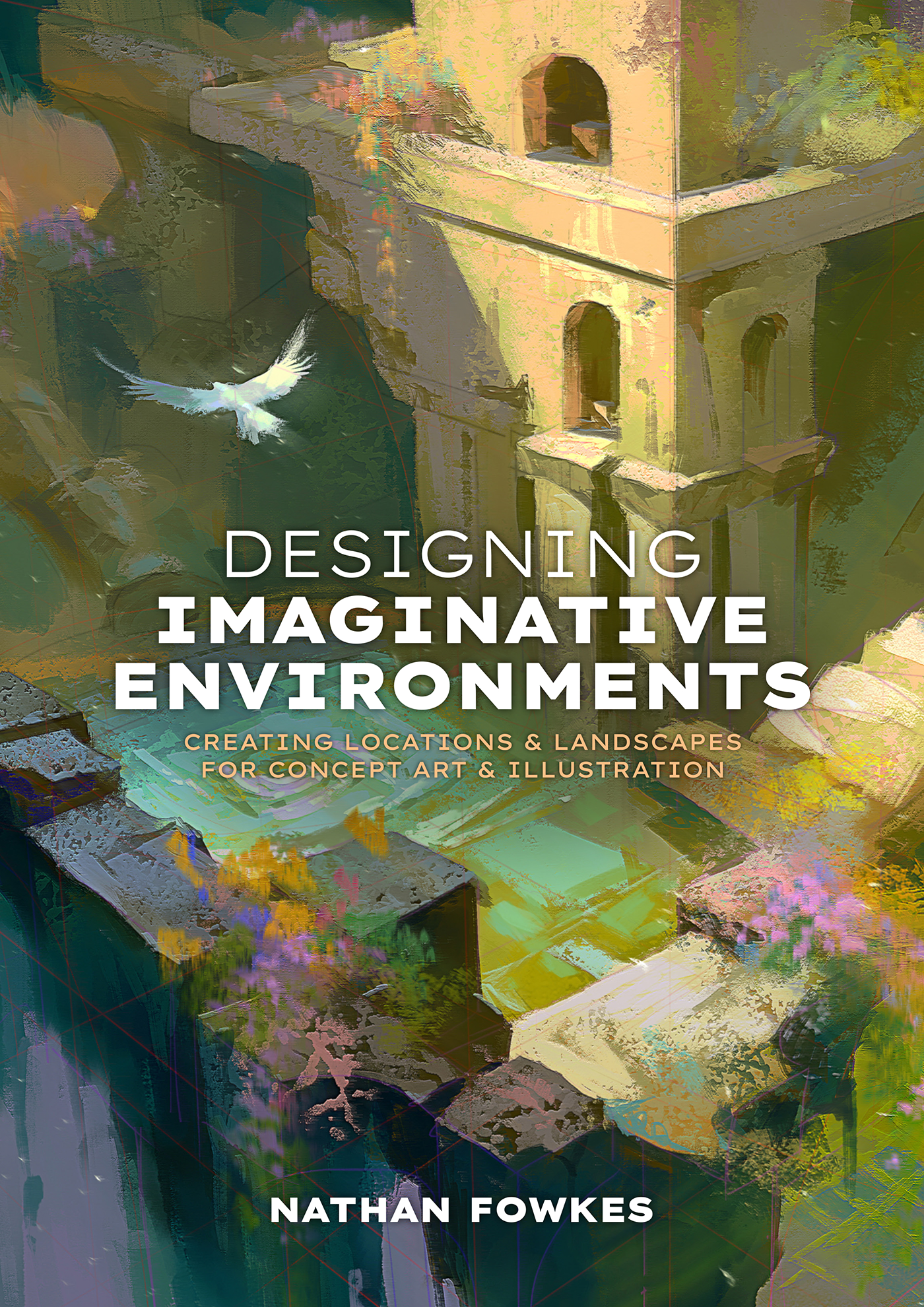
Designing Imaginative Environments by Nathan Fowkes
Join industry veteran Nathan Fowkes on a deep dive into the hows and whys of designing environments for entertainment. From creating mood with color and light, to exploring different biomes and weather, to crafting architecture and props, he will teach you how to design amazing environments that make your work stand out from the crowd.
The information percolator: ambient information display in a decorative object
As part of the Digital Library's transition to Open Access, new features for researchers are available in the Premium Edition. Click here to learn more.

Measuring Combinatorial Creativity in Large Language Models and Humans
Combinatorial creativity, the process of combining familiar ideas in unfamiliar ways, is one of the foremost engines of scientific, technological, and artistic progress. This work introduces Kombine, an LLM benchmark for combinatorial creativity tasking models to discover surprising, original, and useful associations, analogies, and blends between unrelated entities, and to use those analogies and blends to invent novel concepts by re-combining the parts of existing ones. In a large-scale study across 35 LLMs, we find that: (1) LLMs are 10-16 percentage points better at discovering associations and analogies than blends, and (2) exhibit an abstraction bottleneck on blending, in which even frontier LLMs struggle to find a shared abstraction between inputs and instantiate a coherent blended space. (3) LLMs also exhibit inventive homogeneity, in which one in five concepts invented for a given item reuses properties invented by another model. Moreover, (4) models are $14\times$ more likely to reuse other invented properties on blends than analogies, and (5) models from the same provider are $2.3\times$ more likely to reuse properties than those from different providers. Next, in a comparative study involving 75 humans on the same tasks, we find that (6) humans score below nearly every LLM on each task and (7) both humans and LLMs find blending most difficult, but association is easier than analogy for LLMs, while analogy is easier than association for humans. Lastly, (8) humans and LLMs access distinct regions of semantic space on each task, suggesting that combinatorial creativity could benefit from systematic human-AI collaboration to enhance conceptual diversity. In summary, we provide a framework to assess progress towards LLMs, AI systems, and human-AI collaborations more broadly, that can elicit combinatorial creativity in a setting relevant to scientific and technological innovation.

Wrote up some thoughts on new *atmospheric generatives* Things that can generate value even in environments where everything can be copied, like: contextualization • fluidity • aggregation • relationality Riffing on a @kevinkelly.bsky.social piece from years ago; extending for the atmosphere!

On atmospheric generatives…
scraps.schlage.town