


14K likes, 59 comments - damileearch on June 11, 2026: "What holds up a society? This art piece in Korea stopped me cold, and I haven’t stopped thinking about it since. 180,000 tiny figures. Arms raised. A glass floor you’re meant to walk on. The artist is Do Ho Suh, and the question he’s asking feels more urgent than ever right now: is it the collective that holds everything up, or the individual? Because both stories have produced extraordinary things. Korea’s GDP per capita in the 1960s was lower than Sudan’s. Sixty years later, it’s the twelfth largest economy in the world. Built on coordination, sacrifice, twelve-hour days, families who gave everything for the next generation. And then there’s the Western story. The entrepreneur. The innovator. The one who puts a car in space but somehow can’t build affordable housing or a high-speed rail. As the world order gets reshaped in real time, I keep coming back to this floor. Who’s actually holding it up? And does the person walking on it ever think to look down? Tell me what you think in the comments. #DoHoSuh #KoreaArt #ContemporaryArt #PublicArt #SeoulArt".
The Joy of Becoming Worthless…except to each other — Douglas Rushkoff
My last piece, The Intentional Collapse, seems to have agitated a few people. I know it came off a bit dark. I talked about how the Uber wealthy believe the world as we know it is ending and that there won’t be enough essential resources to go around, so they need to take control of as much money and stuff and land as possible in order to position themselves for the end of days.
The world’s first trillionaire is a killer
Elon Musk’s empire of wealth is built on suffering.

The world’s first trillionaire is a killer
Elon Musk’s empire of wealth is built on suffering.

Systems: How the Ultra-Wealthy Think About Money - Anil Dash
A blog about making culture. Since 1999.

Upside Down: A Primer for the Looking-Glass World
In a series of mock lesson plans and a "program of study" Galeano provides an eloquent, passionate, funny and shocking exposé of First World privileges and assumptions. From a master class in "The Impunity of Power" to a seminar on "The Sacred Car"—with tips along the way on "How to Resist Useless Vices" and a declaration of the "The Right to Rave"—he surveys a world unevenly divided between abundance and deprivation, carnival and torture, power and helplessness. We have accepted a "reality" we should reject, he writes, one where poverty kills, people are hungry, machines are more precious than humans, and children work from dark to dark. In the North, we are fed on a diet of artificial need and all made the same by things we own; the South is the galley slave enabling our greed.
The scent of Musk: Power, charisma and paranoia in Silicon Valley
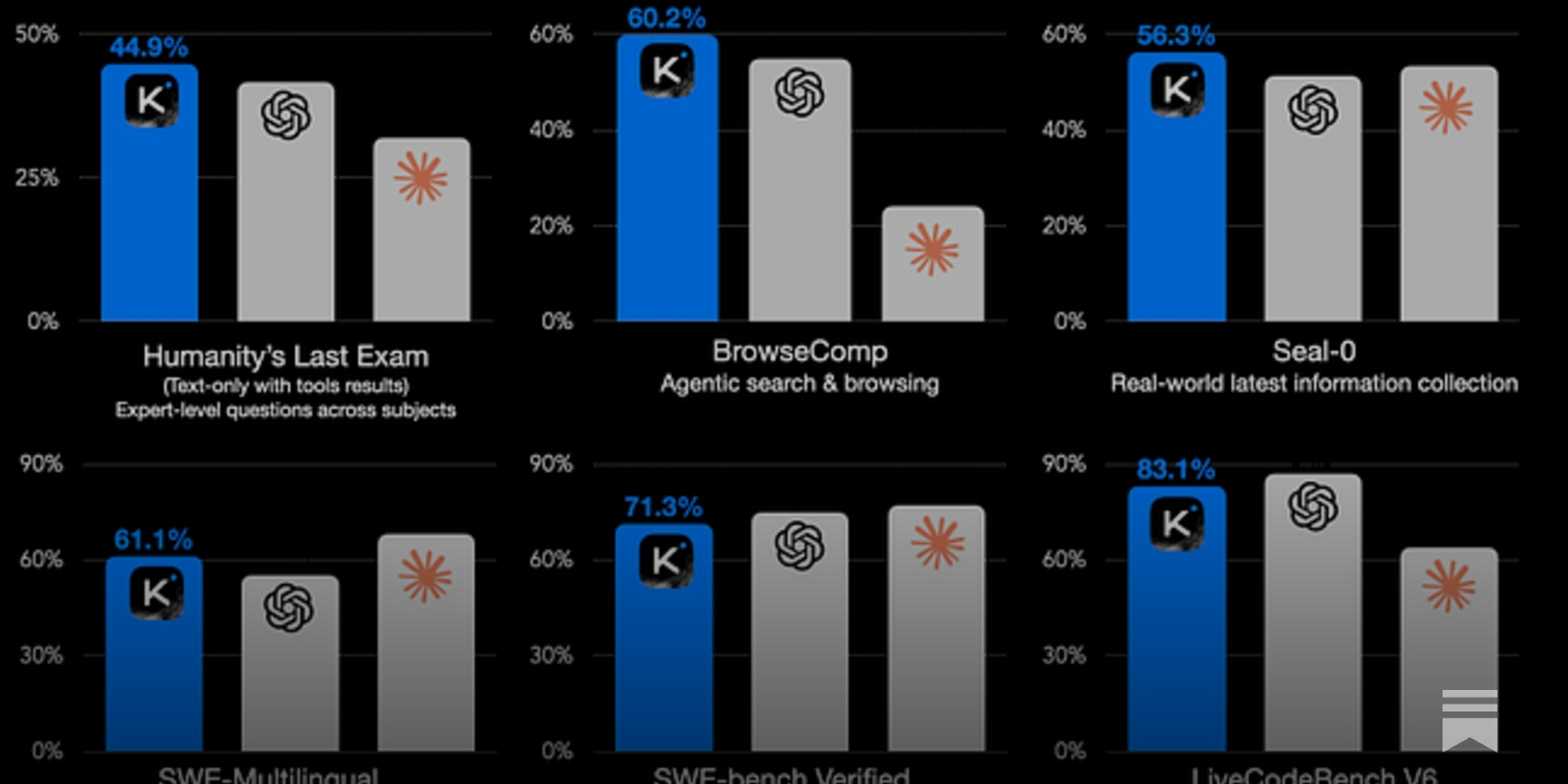
5 Thoughts on Kimi K2 Thinking
Quick thoughts on another fantastic open model from a rapidly rising Chinese lab.
Liberation Toolbox by YK Hong
Liberatory Strategy + Tech Justice for our expansive world

China’s dreamers and dropouts: ‘lying flat’ generation checks out in Dali
Cheap, remote and beautiful city attracts thousands of young people and Gen X-ers escaping economic treadmill

Berlin Biennale | All Problems Can Be Illuminated; Not All Problems Can Be Solved
We can all tell this story: The rails of human advancement stretching from the Enlightenment to a Bitcoin start-up; innovation measured by increased reach, increased uniformity, increased predictability and size and quickness. The telegraph to the landline to the mobile phone to the Bluetooth wearable; the abacus to Pascal’s mechanical calculator to the room-sized computer to the palm-sized device a million times more powerful than equipment a thousand times its size from only ten years ago; the stone tablet to the book to the internet offering everything, no excuses. We are all connected. We’re at the bright tip of a comet hurtling forward. We can place ourselves, with mild satisfaction. Thank god it’s not then. What kind of person uses a BlackBerry? (Old people!)

A Thesis on the History of the 21st Century: Technocracy, AI, and the End of the World
Reviewing a trio of books by a sextet of ruling-class ideologues, Mathias Fuelling finds an ambient anxiety hanging over a perceived crisis in American capitalism, with visions of bolstering a Silicon Valley-led technocracy fueled by AI investment reflecting American fears over the dawn of a "Chinese Century."
The Effective-Altruism Comeback
Out of the spotlight, the movement has been preparing for the soon-to-be AI rich to donate billions.

The New New Thing: A Silicon Valley Story
In the weird glow of the dying millennium, Michael Lewi…
2026 Competitive and Complementary Tools — DAVID C. KRAKAUER
Everything in public life has already ceased to be narrative and no longer follows a thread, but instead spreads out as an infinitely interwoven surface. —Robert Musil, The Man Without Qualities, Chap. 122, “Going Home”

