


Actions for Growth: developing your practice within communities for artists, makers and practitioners. An Open Call for Artists, Creative and Cultural Practitioners.
Projects – discover our non-empty spaces
Fostering spaces for growth is an important part of our trajectory. We seek to harness the combined power of practice, critical inquiry and creativity to address some of the issues of our times - health, environmental awareness, social equality and multilingual, trans-cultural collaborations.
UKAI Projects | Discover. Create. Engage.
Explore UKAI Projects' innovative cultural research and artistic programs that foster social change and collective imagination worldwide.

The Community Artists' Collective | Non Profit | Houston, TX
The Community Artists' Collective is the catalyst which provides the inspirational and educational sources for artists and citizens so that they can use their talents and creative abilities to solve economic, cultural and social challenges in the natural and built environments in which we live, work

Together Culture CAMBRIDGE
Together Culture makes space to create, and to become more creative. We are gathering a powerful community of people who want to help create a more equitable and ecological creative economy, but need facilities, resources, momentum, structure and purpose to come together and make change happen.

Developmental Spaces: Cultural incubators for a time of transformation | Conscious Communities
The whitepaper. Rosie Bell, Boaz Feldman and Rufus Pollock, September 2025.
Where is <i>Mi Gente</i> ? Codeswitching (Afro)Latinidad in the music classroom
Musical codeswitching (CS) entails mixing musical ideas and genres. The term CS originated in linguistics, based on language alternations attested in bilinguals. Switches in sociocultural behaviors also now receive scholarly attention as CS. The current multiple case study explores CS domains (music, language, and behavior) in the context of music education programs, where CS remains under-researched. This study also fills a gap by examining historically underrepresented individuals’ (HURIs) participation in music education. Here, a CS-based account provides a deeper understanding of the complex sociocultural capital, linguistic resources and lived experiences that HURIs navigate. As part of an interpretive qualitative study design, semi-structured interviews were carried out with a HURI subpopulation (bilingual, [Afro]Latina/o/x faculty, and students) in music education. Findings show participants perceive CS to be mandatory for accessing dominant U.S. music school culture. Additional findings reveal HURIs must master CS in musical, linguistic, and behavioral domains to avoid negative outcomes, yet sustained multi-CS scenarios may have psychological and even physical costs. Insights from CS are thus critical for pinpointing institutional barriers to greater HURI involvement in music education.

Future Art Ecosystems – Building protocols for 21st-century cultural infrastructure
Future Art Ecosystems is a project for building 21st century cultural infrastructure to support art and advanced technologies for the public good.
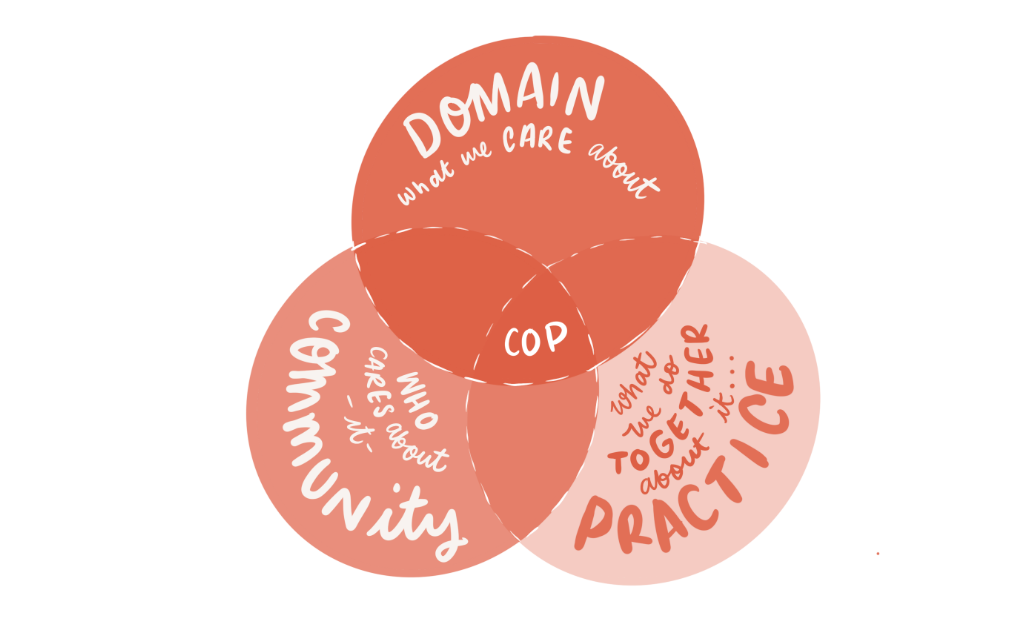
Wait… whats a Community of Practice?
“Learning is not merely the acquisition of knowledge by individuals. It is a process of social participation.” A slightly bastardised…
Community historians: scaffolding community engagement through culture and heritage
Stir Arts & Culture Vancouver (@createastir.ca)
Vancouver’s freshest hub for local arts and culture—music, dance, theatre, film, visual arts, books, and much more createastir.ca

Concentric Groups, Knowledge Bridges and Epistemic Communities
vs Elitism, Celebrity and Oligarchy This article is part of a series: ‘Stigmergy: Systems of Mass Collaboration’. Note: Concentric circles relate to sound amplification – the voic…

Artist Corporations: A groundbreaking structure for creative people
Creative people deserve the same economic advantages as everyone else. So we’re going to build it together.

Susie Ibarra: Hybrid Culture - New Music USA
Susie Ibarra's collaborative approach has informed her work with jazz, classical, indie rock, and traditional Philippine musicians.

Cataloguing and theorising open research practices in the arts, humanities and social sciences: Problematising and diversifying ‘Open Science’
Background Discourses of ‘Open Science’ have been criticised for privileging the quantitative and positivist methodologies of science, technology, engineering and mathematics (STEM) research at the expense of qualitative, interpretive, critical-theoretical, practice-based, and other forms of research more common in the arts, humanities and social sciences (AHSS). Methods In this article, which emerged from a work component of the MORPHSS (Materialising Open Research Practices in the Humanities and Social Sciences) project, we document the process, outcomes and practical implications of work to develop a catalogue of open research practices in these disciplines, which proceeded via a wide-ranging literature review followed by targeted desk research and a conceptual mapping exercise. Results Key findings include the fact that open research practices in AHSS are diverse, extending beyond the suite of practices emphasised within dominant accounts of Open Science. We identify among these practices a range of forms of openness including those focused on mobilising the involvement and expert knowledge of diverse participants and communities. Conclusions Presenting a typology of forms of openness in AHSS that is consistent with the epistemic logics of these disciplines, we conclude that openness in AHSS is highly situated and context-dependent, as well as resisting quantification and binary measurement. Drawing on these conclusions, we offer a series of recommendations for institutions, open research monitoring initiatives, funders, publishers, learned societies and researchers to enhance the inclusivity of their policy and practice around openness.

Studi0xAlasky | Creative + Innovation Strategist
Alexa Chirnoaga | Interdisciplinary Strategist ✶ Creative + Innovation ✶ Visual Storytelling

new from me: on recent discourse and drama on Mastodon. the software gives people the tools to create community via instances, with a wide plurality of cultures and communities. But what people want is a singular culture/community on the federation layer connectedplaces.online/reports/fr158-what-is-mastodo…
FR#158 – What is Mastodon for?
connectedplaces.online