

War is bad. Excuses should not be made for it. All sides should work to end this and every war as quickly as possible and shift to modes of bargaining and competition that are not profoundly destructive.
Positive Sum Worlds: Remaking Public Goods
An era of global protocols requires a visionary redefinition of public goods, in service of others.
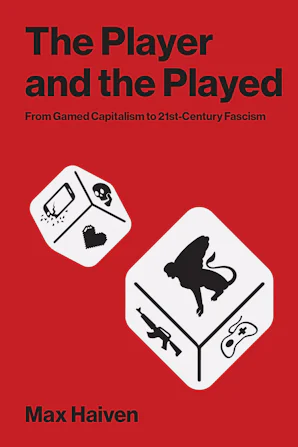
The Player and the Played
In an age when capitalism feels like an unwinnable game, extreme reactionary ideas and politics are on the rise. The Hunger Games, Game of Thrones, Squid Gam...
Too much of a good thing
Profits are too high. America needs a giant dose of competition

Humanity’s Endgame
A new history of societal collapse by an expert in existential risk argues that our globalized society is edging toward the precipice.

Exocapitalism: economies with absolutely no limits
There is a touch of destiny with this one. We have real…

Integrative experiments identify how punishment affects welfare in public goods games
Despite decades of research, the conditions under which punishment promotes cooperation remain unclear. Through an integrative experiment varying 14 design parameters of public goods games across 360 experimental conditions (147,618 decisions from 7100 participants), we reveal substantial heterogeneity in punishment effectiveness: Its impact on welfare ranges from 43% improvement to 44% reduction depending on the game parameters. To characterize these patterns, we developed models that outperformed human forecasters in predicting punishment effectiveness in new experiments. Communication emerges as the most important factor, followed by contribution framing (opt out versus opt in), contribution type (variable versus all-or-nothing), game length, and outcome visibility, though these factors often interact. The results reframe the debate from whether punishment works to when it does, demonstrating how integrative experiments enable discovery of generalizable patterns in social phenomena. , Editor’s summary People face conflicts between maximizing personal gain versus supporting collective interests. If we cooperatively recycle or donate to charities, it benefits society, but it also costs us time and resources that could be selfishly preserved for ourselves. We impose penalties to deter those undesirable or selfish behaviors, but under what conditions do punishments or penalties effectively modify behavior to benefit group welfare? Alsobay et al . systematically and simultaneously varied 14 factors together instead of in isolation. Punishment was unequivocally most effective when paired with consistent communication, particularly over time. Another effective factor was “opting out” or withdrawing some, but not all, endowments already in the public fund. These methodological advances revealed when, rather than whether, punishment works. —Ekeoma Uzogara , INTRODUCTION Human societies face many situations where individual and collective interests conflict, often referred to as social dilemmas. Costly peer punishment has been studied for more than 25 years in public goods games (stylized behavioral experiments in which individuals decide how much to contribute to a shared pool that benefits everyone) as a mechanism to promote cooperation. Prior research has identified many contextual factors that moderate punishment’s effectiveness, including game length, communication, group size, punishment cost, and so on. However, the specific conditions under which punishment improves group welfare remain unclear. RATIONALE We argue that this lack of clarity derives from the dominant experimental paradigm, in which any given study manipulates only one or a few theoretically informed factors. Because such studies differ in many ways (different experimental procedures, populations), their results are often difficult to compare or integrate. Consequently, one can list many factors that have some effect, but cannot say how much each matters relative to the others, or how they work together, and as a result, cannot predict when punishment will help or harm welfare in new settings. To address this fundamental knowledge gap, we use an integrative experimental design and systematically vary 14 parameters across 360 conditions (147,618 decisions from 7100 participants) to elucidate when punishment improves versus undermines welfare in public goods games, which factors matter most, and how they interact. RESULTS The effect of punishment on welfare ranged from 43% improvement to 44% reduction depending on the specific combination of game parameters. To characterize this heterogeneity, we trained a model that outperformed all 553 human forecasters (laypeople and experts) in predicting whether punishment would help or harm welfare in new experiments. Communication emerged as roughly three times more important than any other factor, followed by contribution framing (opt in versus opt out), contribution type (variable versus all-or-nothing), game length, and peer outcome visibility (whether participants can see others’ earnings). These factors often interact. For example, longer games enhance punishment’s effectiveness only when communication is available, and contribution framing effects depend on both contribution type and outcome visibility. CONCLUSION Many phenomena in social science are shaped by many factors whose interactions are consequential, yet the dominant experimental paradigm often limits its inquiry to “does a given effect exist?” and examines hypothesized factors in isolation. As a result, research programs can accumulate many partial explanations without a clear picture of how they combine to determine outcomes across settings. Knowing that factors matter individually is fundamentally different from knowing how much each matters and how they interact. The integrative approach implemented here offers one way forward. It varies many factors simultaneously within a shared design space, evaluates models by their predictive accuracy on new experiments, and probes those models to constrain and develop theory. Our hope is that integrative experiment designs, combined with models that integrate prediction and explanation, represent a path toward more cumulative social science. Integrative experiment reveals when punishment helps versus harms. We systematically varied 14 design parameters across 360 experimental conditions. The effect of punishment on cooperation efficiency ranged from −44% to +43% depending on the specific game parameters. Communication emerged as three times more important than any other factor, followed by contribution framing, contribution type, and game length.

Exploitative Game Design: Beyond the F2P Debate
The past few months have seen a torrent of articles about Free-to-Play business models, often discussed alongside issues of ethics in games (for example: 1, 2, 3, 4, 5). These pieces have addressed the effect on addiction-prone players or children, the possibility of corrupting artistic intent, the sheer amount of money being spent, and other advantages and dangers of F2P. While all of this is relevant, I fear that we’re focusing too much on F2P and glossing over the wider ethical issues in game design.
Public Monopolies Are a Good Thing
Private monopolies are rightly criticized for being inefficient and unaccountable. But public monopolies are a different story — we should loudly and proudly say that democratically controlled public monopolies are a positive good.

A Potential Termination Event
Cascading failure across the global food system is a real and horrific possibility, which most governments are doing nothing to avert.

Dissent
If something has a lot of very bad externalities, and just the ones we know about are visibly, obviously causing major damage to important physical, social and informational ecosystems around us, then “lots of people want it” just isn’t a compelling argument.
Global labor arbitrage
Global labor arbitrage is an economic phenomenon where, as a result of the removal of or disintegration of barriers to international trade, jobs move to nations where labor and the cost of doing business are inexpensive and/or impoverished labor moves to nations with higher paying jobs.

The Game of Oligarchy | Brewster Kahle's Blog
I just invented and played a game today with my family, and it worked great– it was fun and we learned an important lesson. Similar to the game “Monopoly” which shows that one person ends up monopolizing even though you think the rules are “fair,” the game of Oligarchy shows that the “free market” leads inexorably to one person getting all the money and everyone else going broke. And fast.
The New Gulf War: Epic Fubar Goes Global
Why there is much more at stake here than rising prices

The Weaponized World Economy
When Washington announced a “framework deal” with China in June, it marked a silent shifting of gears in the global political economy. This was not the beginning of U.S. President Donald Trump’s imagined epoch of “liberation” under unilateral American greatness or a return to the Biden administration’s dream of managed great-power rivalry. Instead, it was the true opening of the age of weaponized interdependence, in which the United States is discovering what it is like to have others do unto it as it has eagerly done unto others.

Strategic interdependence is rewiring the global economy
It is no longer sufficient for the US-China trade relationship to be driven solely by cost and efficiency
