


Interni Magazine - In his book ‘Le non cose’ (The non-things), the philosopher Byong-chul Han reflects on the hyper-connected society where the constant attention to data and information fades the (concrete) power of things. Destabilizing us
Library of Things | The Paper Pilot
The Paper Pilot's digital garden of thoughts on philosophy, politics, and sociology
Everything is miscellaneous : the power of the new digital disorder
Includes bibliographical references (p. [235]-257) and index; Prologue : information in space -- The new order of order -- Alphabetization and its discontents -- The geography of knowledge -- Lumps and splits -- The laws of the jungle -- Smart leaves -- Social knowing -- What nothing says -- Messiness as a virtue -- The work of knowledge -- Coda : misc; Philosopher Weinberger shows how the digital revolution is radically changing the way we make sense of our lives. Human beings constantly collect, label, and organize data--but today, the shift from the physical to the digital is mixing, burning, and ripping our lives apart. In the past, everything had its one place--the physical world demanded it--but now everything has its places: multiple categories, multiple shelves. Everything is suddenly miscellaneous. Weinberger charts the new principles of digital order that are remaking business, education, politics, science, and culture. He examines how Rand McNally decides what information not to include in a physical map (and why Google Earth is winning that battle), how Staples stores emulate online shopping to increase sales, why your children's teachers will stop having them memorize facts, and how the shift to digital music stands as the model for the future.--From publisher description; From A to Z, Everything Is Miscellaneous will completely reshape the way you think - and what you know - about the world. Includes information on alphabetical order, Amaxon.com, animals, Aristotle, authority, Bettmann Archive, blogs (weblogs), books, broadcasting, British Broadcasting Corporation (BBC), business, card catalog, categories and categorization, clusters, companies, Colon Classification, conversation, Melvil Dewey, Dewey Decimal Classification system, Encyclopaedia Britannica, encyclopedia, essentialism, experts, faceted classification system, first order of order, Flickr.com, Google, Great Books of the Western World, ancient Greeks, health and medical information, identifiers, index, inventory tracking, knowledge, labels, leaf and leaves, libraries, Library of Congress, links, Carolus Linnaeus, lumping and splitting, maps and mapping, marketing, meaning, metadata, multiple listing services (MLS), names of people, neutrality or neutral point of view, New York Public Library, Online Computer Library Center (OCLC), order and organization, people, physical space, everything having place, Plato, race, S.R. Ranganathan, Eleanor Rosch, Joshua Schacter, science, second order of order, simplicity, social constructivism, social knowledge, social networks, sorting, species, standardization, tags, taxonomies, third order of roder, topical categorization, tree, Uniform Product Code (UPC), users, Jimmy Wales, web, Wikipedia, etc

Non-place
Non-place or nonplace is a neologism coined by the French anthropologist Marc Augé to refer to anthropological spaces of transience where human beings remain anonymous, and that do not hold enough significance to be regarded as "places" in their anthropological definition. Examples of non-places would be motorways, hotel rooms, airports and shopping malls. The term was introduced by Marc Augé in his work Non-places: introduction to an anthropology of supermodernity, although it bears a strong resemblance to earlier concepts introduced by Edward Relph in Place and Placelessness and Melvin Webber in his writing on the 'nonplace urban realm'.

Digital Minimalism | The Paper Pilot
The Paper Pilot's digital garden of thoughts on philosophy, politics, and sociology
Objectivity | The Paper Pilot
The Paper Pilot's digital garden of thoughts on philosophy, politics, and sociology
How Infrastructure Works: Transforming our shared systems for a changing world
'Pulsing with wisdom and humanity... a masterpiece' ED YONG'A hopeful, lyrical - even beautiful - hymn to the systems of mutual aid we embed in our material world' CORY DOCTOROW'An extraordinary book' MARK MIODOWNIK'You won't see the world the same after reading this book!' AUSTIN KLEONEvery day, we are granted the power to travel at high speeds, fly, see in the dark, summon water from distant mountains and electricity from the sun. The systems that run our world are invisible to us until they fail.Infrastructure enables lives of astounding ease and freedom that would have been unimaginable just a century ago. These technological systems - the most complex and vast ever created by humans - have allowed us to work collectively for the public good. But these systems are now beginning to fail us.Engineering professor Deb Chachra takes readers on a fascinating tour of these essential utilities, revealing how they work, what it takes to keep them running, and just how much they shape our lives - but also the price they extract, who pays it and in what ways, as well as the threats to our infrastructure in a changing world.From Snowdonia's Electric Mountain to a solar plant in southern India, Chachra shows how we can rebuild our shared infrastructure to be not just functional but also equitable, resilient, and sustainable. We need to learn how to see these systems and to transform them, together, because the cost of not being able to rely on them is unthinkably high.
Mindless Machines, Mindless Myths | Los Angeles Review of Books
Erik J. Larson thinks about “Mindless: The Human Condition in the Age of Artificial Intelligence,” which traces Robert Skidelsky’s philosophical reckoning with AI, automation, and the illusion of progress.
:quality(75)/https%3A%2F%2Fassets.lareviewofbooks.org%2Fuploads%2FMindless.jpg)
Mindless Machines, Mindless Myths | Los Angeles Review of Books
Erik J. Larson thinks about “Mindless: The Human Condition in the Age of Artificial Intelligence,” which traces Robert Skidelsky’s philosophical reckoning with AI, automation, and the illusion of progress.
:quality(75)/https%3A%2F%2Fassets.lareviewofbooks.org%2Fuploads%2FMindless.jpg)
Dec 2020 -- Jelle Bruineberg -- Embodied cognition and the attention crisis
What is Low-tech Magazine?
Low-tech Magazine underscores the potential of past and often forgotten technologies and how they can inform sustainable energy practices.
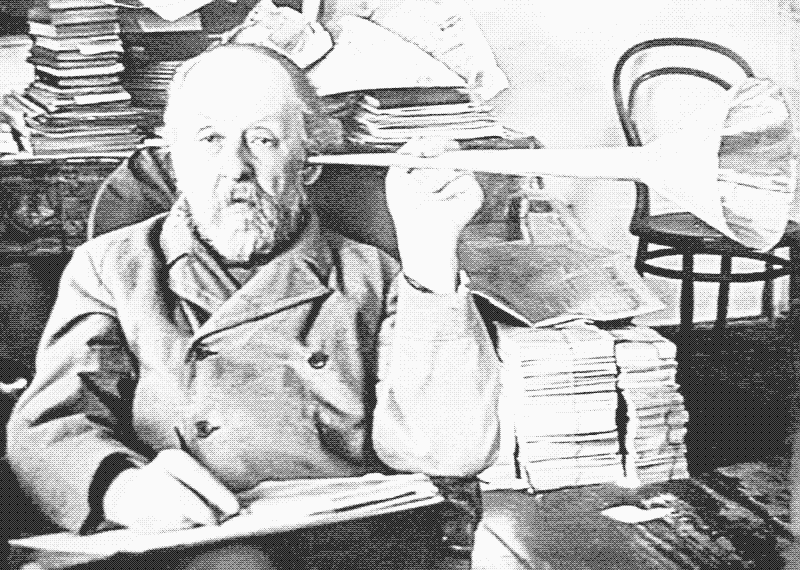
The uni-context | The Paper Pilot
The Paper Pilot's digital garden of thoughts on philosophy, politics, and sociology
Noumenon
In philosophy, a noumenon (/ˈnuːmənɒn/, /ˈnaʊ-/; from Ancient Greek: νοούμενoν; pl.: noumena) is knowledge[1] posited as an object that exists independently of human sense.[2] The term noumenon is generally used in contrast with, or in relation to, the term phenomenon, which refers to any object of the senses. Immanuel Kant first developed the notion of the noumenon as part of his transcendental idealism, suggesting that while we know the noumenal world to exist because human sensibility is merely receptive, it is not itself sensible and must therefore remain otherwise unknowable to us.[3] In Kantian philosophy, the noumenon is often associated with the unknowable "thing-in-itself" (German: Ding an sich). However, the nature of the relationship between the two is not made explicit in Kant's work, and remains a subject of debate among Kant scholars as a result.
I call this the dark matter theory of science. Blogs, social media, etc - a majority of what actually influences science is invisible to the system (esp in AI) Real systems change in science will only be possible when we recognize these sources of influence and intentionally design for them

Eugene Vinitsky 🍒
Kinda feel weird that a few blog posts I’ve written in a few hours will probably have more educational impact than any amount of teaching I’ll ever do
youtube.com/watch?v=NOYa3YzVtyk This video proposes a library economy: an alternative to capitalism where things are shared, not owned, following usufruct, guaranteed necessities, and complementarity, inspired by Bookchin and library science, to build a cooperative, sustainable society. #solarpunk

We Need A Library Economy
www.youtube.com
