
Jure Sanguinis translates to "by law of the bloodline" and is an Italian law that allows someone to obtain Italian citizenship by descent.
Banca Etica chieda conto a Bruxelles | il manifesto
Come può una decisione amministrativa straniera produrre conseguenze finanziarie immediate in Italia, se A/I non è stata dichiarata organizzazione terroristica né in Italia né nell’Unione europea?

Sanzioni di Trump alla Cpi e al collettivo Autistici/Inventati: «Dimostrano che l’Europa ha bisogno di autonomia digitale»
Il professore ordinario di diritto penale internazionale alla Liverpool John Moores University, e parte del team legale che rappresenta le vittime di Gaza davanti alla Corte penale internazionale: «L’accusa di terrorismo al collettivo italiano è il segnale che l’amministrazione Trump è pronta a colpire la società civile che si oppone alla legge del più forte o alla normalizzazione del genocidio. Diventa un bersaglio in quanto ultimo ostacolo al progetto di distruzione di quelle regole di cui si è dotata la comunità internazionale per evitare la barbarie»

Italy's Radical Solution to Extreme Inequality
Mussolini: Son of the Century | MUBI
Spanning the political chaos of 1920s Italy, Benito Mussolini transforms from socialist journalist to Italy’s brutal dictator, starting with his Blackshirts militia to the establishment of an authoritarian rule that would go on to set Europe aflame.

Chiediamo alla politica di mobilitarsi per rimuovere le sanzioni USA a Francesca Albanese
Serve un'azione istituzionale e politica affinché le ingiuste sanzioni inflitte dagli USA ad Albanese siano quanto prima rimosse.
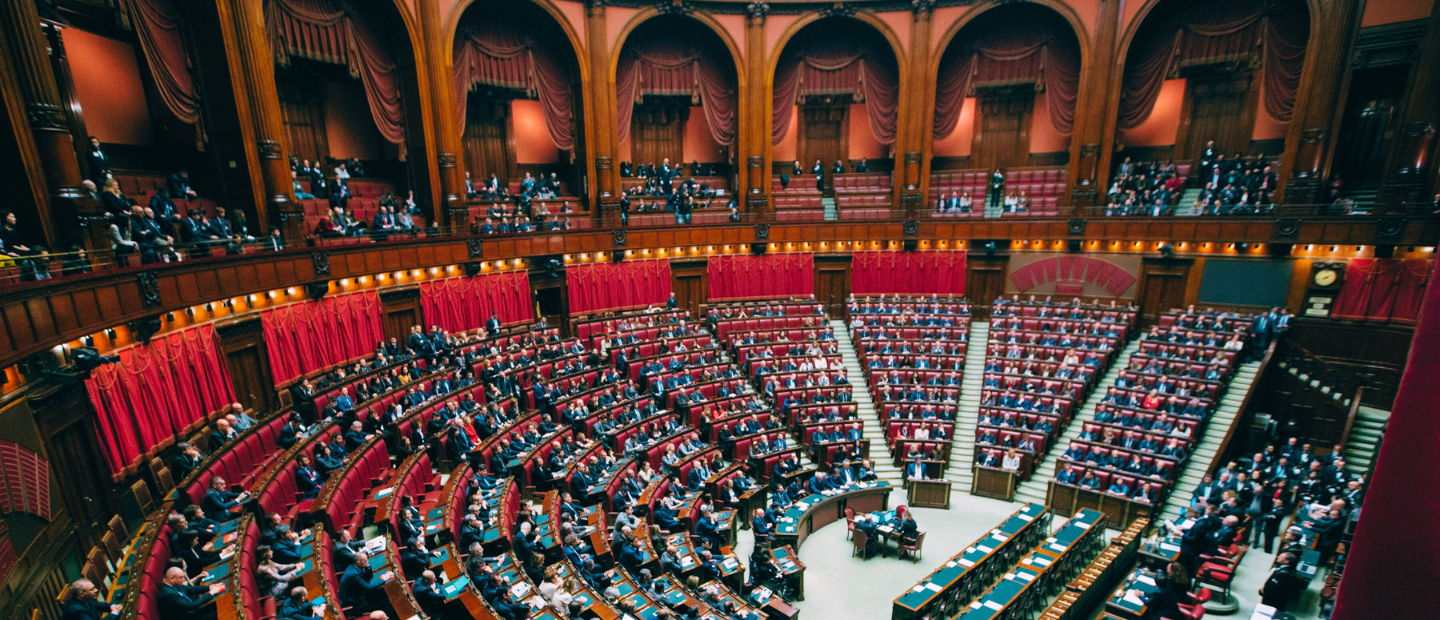
Autistici/Inventati, la libertà si può spegnere anche senza una sentenza
Il caso del collettivo italiano mostra come una decisione presa negli Stati Uniti possa produrre effetti immediati in Europa attraverso banche, domini e serviz…

Citizenship as a Service
Micro-states like Saint Kitts and Nevis now earn more from selling passports than all other exports combined. While tech utopians dream of digital republics, the growing marketplace for citizenship is already virtualizing sovereignty from within.

«Sono terroristi digitali»: un collettivo italiano nella blacklist di Rubio
Il Dipartimento di Stato: «Fanno parte di una campagna per destabilizzare gli Usa». Il gruppo A/I: «Noi uno spazio di libertà che fornisce infrastruttura di comunicazione»
Latinxs in <i>La Migra</i> : Why They Join and Why It Matters
Once an exclusively white enterprise, the last forty-five years have witnessed the emergence of a disproportionately Latinx immigration law enforcement workforce. This article addresses the question of why Latinxs elect to work for agencies that have systematically targeted the ethnic communities to which they belong. Where existing scholarship has often implied Latinxs may self-select into immigration law enforcement due to a lack of identification with the immigrant-experience, a dissociation with ethnic identity, and generally restrictionist immigration attitudes, this article finds little empirical evidence to support such an assumption. Analysis of interviews with sixty-one Latinx Immigration and Customs Enforcement (ICE) agents across Arizona, California, and Texas reveals, instead, Latinxs elect to work in immigration law enforcement in service of economic self-interest and survival, with “money,” “a good job,” and “benefits” cited as the primary motivation(s) behind applying for and accepting a job in immigration. This pattern holds irrespective of individual agents’ levels of identification with the immigrant-experience and particular attitudes toward immigration, and suggests a diversity in the demographics of immigration law enforcement agencies that extends beyond mere race and ethnicity, to include a diversity of perspective and potential for empathy.

Latinxs in <i>La Migra</i> : Why They Join and Why It Matters
Once an exclusively white enterprise, the last forty-five years have witnessed the emergence of a disproportionately Latinx immigration law enforcement workforce. This article addresses the question of why Latinxs elect to work for agencies that have systematically targeted the ethnic communities to which they belong. Where existing scholarship has often implied Latinxs may self-select into immigration law enforcement due to a lack of identification with the immigrant-experience, a dissociation with ethnic identity, and generally restrictionist immigration attitudes, this article finds little empirical evidence to support such an assumption. Analysis of interviews with sixty-one Latinx Immigration and Customs Enforcement (ICE) agents across Arizona, California, and Texas reveals, instead, Latinxs elect to work in immigration law enforcement in service of economic self-interest and survival, with “money,” “a good job,” and “benefits” cited as the primary motivation(s) behind applying for and accepting a job in immigration. This pattern holds irrespective of individual agents’ levels of identification with the immigrant-experience and particular attitudes toward immigration, and suggests a diversity in the demographics of immigration law enforcement agencies that extends beyond mere race and ethnicity, to include a diversity of perspective and potential for empathy.
Haitian Immigrant’s Tragic Death Shines a Light on the Human Cost of Ending Temporary Protected Status – The Root
Vincenzo Catena
Vincenzo Catena, conosciuto anche come Vincenzo di Biagio, è stato un pittore italiano di scuola veneziana del Rinascimento.

Citizenship (Amendment) Act, 2019
The Citizenship (Amendment) Act, 2019 (CAA) was passed by the Parliament of India on 11 December 2019. It amended the Citizenship Act, 1955 by providing an accelerated pathway to Indian citizenship for persecuted refugees of religious minorities from Afghanistan, Bangladesh and Pakistan who arrived in India by 2014. The eligible minorities were stated as Hindus, Sikhs, Buddhists, Jains, Parsis or Christians.[3][4] The law does not grant such eligibility to Muslims from these countries.[5][6][7] Additionally, the act excludes 58,000 Sri Lankan Tamil refugees, who have lived in India since the 1980s. The act was the first time that religion had been overtly used as a criterion for citizenship under Indian law, and it attracted global criticism.[7][a][b][c]
Mussolini: Son of the Century
Mussolini: Son of the Century is a biographical historical drama television series directed by Joe Wright, based on the 2018 novel M: Son of the Century by Antonio Scurati. Starring Luca Marinelli as Benito Mussolini, the series centers on the early political career of Mussolini in the 1920s. It premiered at the 81st Venice International Film Festival on 5 September 2024 and began airing on Sky Atlantic on 10 January 2025.

A quote by Anatole France
The law, in its majestic equality, forbids rich and poor alike to sleep under bridges, to beg in the streets, and to steal their bread.

Citizens Above the Law
The growing sovereign citizen movement reflects an America that has lost faith in its democratic institutions.