


As a Black software engineer and leftist in the United States, I contend with the notion that generative artifical intelligence can be used in a materialistic way that moves the needle forward for progress without intrenching the power of capitalists and business folks who are adamant on exacerbating existing calamities within the technology sector.
The Socialist Charcuterie Board - The Ideas Letter
Taking issue with Benanav’s institutional vision of a democratic political economy of technology, Morozov argues that generative AI exposes a deeper problem that socialism has yet to solve: how to…
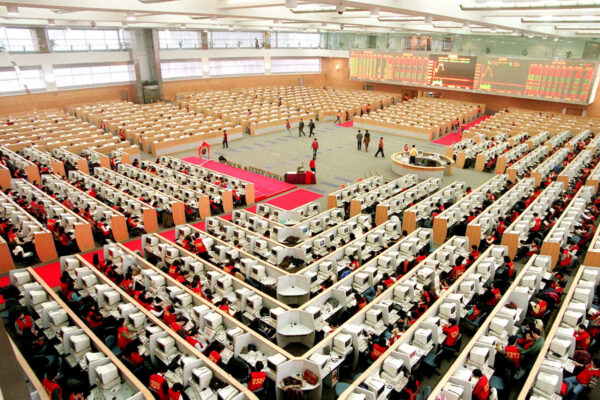
In spite of hype, many companies are moving cautiously when it comes to generative AI | TechCrunch
Companies are extremely interested in generative AI as vendors push potential benefits, but turning that desire from a proof of concept into a working product is proving much more challenging.

A Real Political Economy of Technology - The Ideas Letter
Two technological futures are competing for political and material priority: generative AI and the green transition. Benanav argues that while AI is marketed as a world-reordering breakthrough, its productivity gains…

The ease of protest against generative AI is a problem - Jacky Alciné
When the target of protest is virtual, the reward for saying no feels virtually larger as well.

AI is turning research into a scientific monoculture
Generative AI deserves scientific attention. But the rush to study it is producing a feedback loop of topical and methodological convergence, flattening scientific imagination and crowding out the pluralism needed to keep research adaptive, resilient, and intellectually generative.

Automate the C-Suite - The Ideas Letter
Weatherby argues that Benanav’s and Morozov’s essays on AI and the left miss a deeper reality: Today’s AI is not a neutral tool operating within capitalism but the materialization of…

The Myth of the Instant Cake Mix
How to think about creative tooling in the new world of generative AI

AI: The New Aesthetics of Fascism
It's embarrassing, destructive, and looks like shit: AI-generated art is the perfect aesthetic form for the far right.
Where does the rigor go? Research software and the future of trustworthy science.
Generative AI now makes it dramatically easier to produce something that looks like research: analysis code, figures, literature reviews, even whole pap…
Ars Technica's policy on generative AI
How Ars Technica uses, and doesn't use, generative AI.

Does Doctorow's Enshittification Thesis Hold Up? Dwayne Monroe Responds
Bernie Sanders has AI policy all wrong
His criticisms are responding to industry hype, not the real harms of generative AI

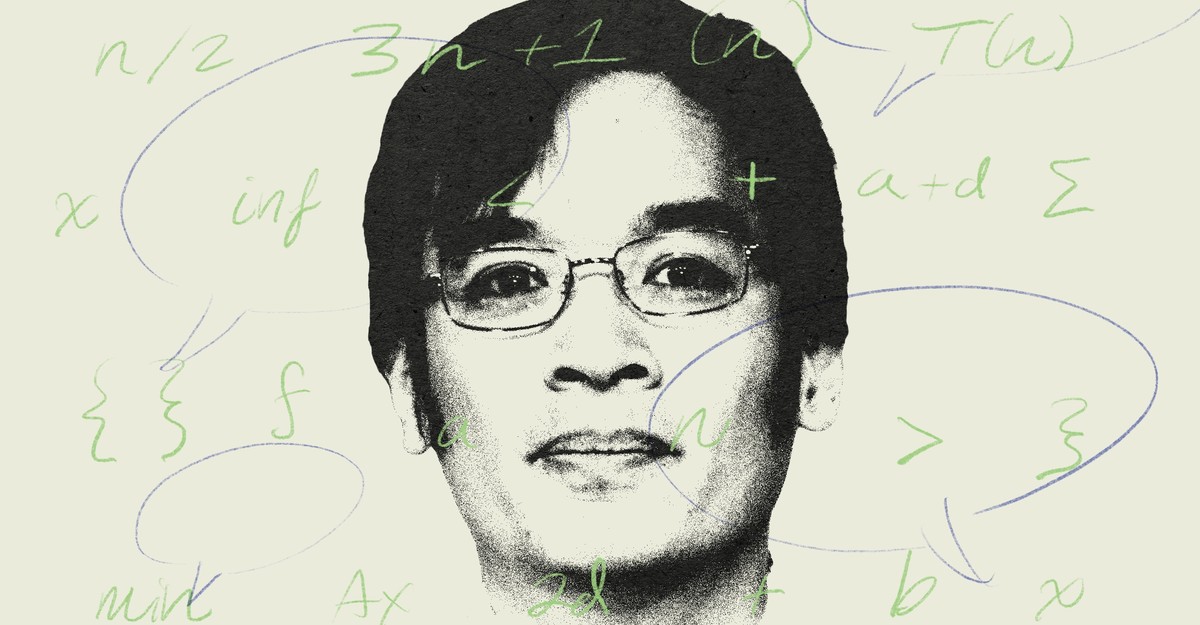
The Edge of Mathematics
Terence Tao, the legendary mathematician, explains the promise of generative AI.
The abstraction you didn't ask for
When I say 'generative AI isn't going away,' people hear 'and you have to like it.' You don't, and you might be right not to. But the is-ought divide here is real and we should all be preparing for both outcomes.
"generative AI to me feels like a corporate DDoS on society in a way that is really disorienting" "we're running on the fumes of knowledge produced in the past and underfunding and undermining knowledge production and serious science right now" Perfectly stated, @alixdunn.com

Computer Says Kill: The AI Safety Circus w/ Heidy Khlaaf
www.themaybe.org“The task that generative A.I. has been most successful at is lowering our expectations, both of the things we read and of ourselves when we write anything for others to read.” — Ted Chiang

Why A.I. Isn’t Going to Make Art
www.newyorker.com
