
With not many transportation alternatives, especially in rural areas, Americans may be forced to continue down the indebted path of literally no returns.
Car ownership costs an average of $5,851 a year on top of auto loan payments, analysis finds
The cost of insurance, gas, and maintenance or repairs can add thousands of dollars a year to the price of owning a car.

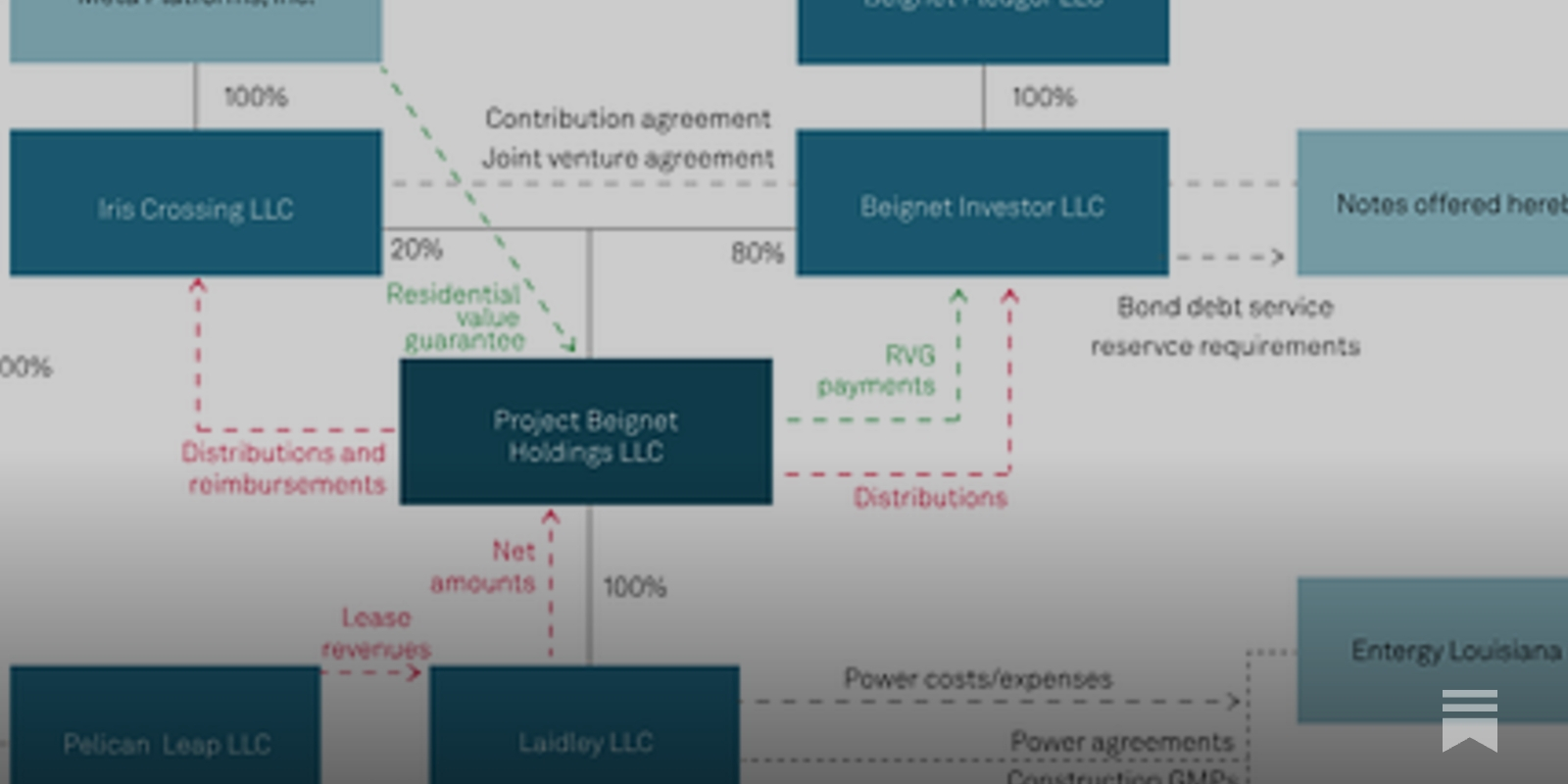
Unpacking the Mechanics of Conduit Debt Financing
Understanding the pass-through financing model behind the AI infrastructure boom
Consumption Response to Credit Expansions: Evidence from Experimental Assignment of 45,307 Credit Lines
In a field experiment that constructs a randomized credit limit shock, participants borrow to spend 11 cents on the dollar in the first quarter and 28 cents by the third year. Effects extend to those far from the limit, those who had the new limits as available credit, and those with a liquid asset buffer. In the short-run, flexible and installment contracts are used in tandem, with unconstrained using installments more. Long-run borrowing is predominantly using installments. Near limits, participants borrow when credit expands but save out of constraints when limits are tight. Findings support a buffer-stock interpretation emphasizing precautionary saving.
Opinion | We’re Measuring the Economy All Wrong (Published 2018)
The official statistics say that the financial crisis is behind us. It's not.

Debt literacy, financial experiences, and overindebtedness
We analyze a national sample of Americans with respect to their debt literacy, financial experiences, and their judgments about the extent of their indebtedness. Debt literacy is a component of broader financial understanding that measures knowledge about debt and self-assessed financial knowledge. Financial experiences are the participants’ reported experiences with traditional borrowing, alternative borrowing, and investing. Overindebtedness is a self-reported measure. Debt literacy is low, with only about one-third of the population grasping the basics of interest compounding. Even after controlling for demographics, we find a relationship between debt literacy and both financial experiences and debt loads. Individuals with lower levels of debt literacy tend to transact in high-cost manners, incurring higher fees and using high-cost borrowing. We provide a rough estimate of the national implications of debt ignorance on credit card costs by consumers. Less knowledgeable individuals also report that their debt loads are excessive or that they are unable to judge their debt position.
Consumption, Debt, and Portfolio Choice: Testing the Effects of Bankruptcy Law
In the United States, consumer bankruptcy (Chapter 7 and Chapter 13) is designed to provide debtors a fresh start. Broadly speaking, after a household successfully files a bankruptcy petition, its unsecured debts are erased, but it must forfeit any assets above an exemption level determined by law. Laws regulating bankruptcy are a complex mix of state and federal rules. While the specific legal details are beyond the scope of this essay, in general, state laws set the exemption levels above which households forfeit assets; these range from exemptions as low as $75 to more than $100,000 (or, indeed, potentially unlimited levels).1

Lower-income country debt payments hit highest level in 30 years - Debt Justice
Lower-income country debt payments have trebled in the last decade, according to figures calculated by Debt Justice based on IMF and World Bank data

The Hedonics of Debt
Psychologists and economists often discuss the “pain” of paying for our purchases. Four experiments examine how people evaluate prospective debt payments, analyzing how different features of a loan (down payment, final payment, duration, monthly payments) affect willingness to accept the loan. Akin to previous findings on physical pain, participants exhibited duration neglect and over-weighted final moments. However, participants also focused heavily on the monthly or average payment (unlike in retrospective studies of physical pain where only peak-end moments seem to count). In Experiment 2, participants’ willingness to accept the loan was not significantly diminished by making it more expensive through keeping the same monthly payment but extending the length of the loan by 40 percent (evincing duration neglect). Further, in Experiments 3 and 4, we show that participants increased their willingness to buy if loans were made longer and more expensive by adding smaller, less “painful” payments to the end.

Do Local Capital Market Conditions Affect Consumers’ Borrowing Decisions?
This paper uses detailed data from an online peer-to-peer lending intermediary to test whether local access to finance affects consumers’ willingness to pay for loans. After controlling for local economic conditions and borrower credit quality, we find that borrowers who reside in areas with good access to bank finance request loans with lower interest rates. This effect is stronger for borrowers with poor credit and those seeking small loans, suggesting that local access to finance is more important for marginal borrowers. Overall, our findings shed light on how consumers substitute between alternative sources of finance. This paper was accepted by Wei Jiang, finance.

The Top 1% of Americans Have Taken $50 Trillion From the Bottom 90%—And That's Made the U.S. Less Secure
A report shows that a $50 trillion redistribution of income to benefit the richest has made America less healthy, resilient, and secure

Les inégalités aux Etats-Unis (5/5) : une financiarisation prédatrice
traduction française du billet de blog "Predatory financialization. Understanding Inequality: Part V" de Paul Krugman

Liquidity versus Wealth in Household Debt Obligations: Evidence from Housing Policy in the Great Recession
We exploit variation in mortgage modifications to disentangle the impact of reducing long-term obligations with no change in short-term payments ("wealth"), and reducing short-term payments with no change in long-term obligations ("liquidity"). Using regression discontinuity and difference-in-differences research designs with administrative data measuring default and consumption, we find that principal reductions that increase wealth without affecting liquidity have no effect, while maturity extensions that increase only liquidity have large effects. This suggests that liquidity drives default and consumption decisions for borrowers in our sample and that distressed debt restructurings can be redesigned with substantial gains to borrowers, lenders, and taxpayers.
Credit Crises, Precautionary Savings, and the Liquidity Trap*
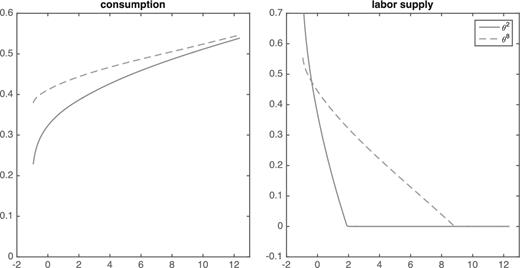
Abstract We study the effects of a credit crunch on consumer spending in a heterogeneous-agent incomplete-market model. After an unexpected permanent tightening in consumers’ borrowing capacity, constrained consumers are forced to repay their debt, and unconstrained consumers increase their precautionary savings. This depresses interest rates, especially in the short run, and generates an output drop, even with flexible prices. The output drop is larger with sticky prices, if the zero lower bound prevents the interest rate from adjusting downward. Adding durable goods to the model, households take larger debt positions and the output response can be larger.
One Nation’s ‘incredibly sloppy’ financial reports reveal more than $1m in missing or worthless assets
Financial returns, obtained by the Guardian, are ‘very poor and unprofessional’ and call into question party’s fitness to govern, expert says

Household Debt: Facts, Puzzles, Theories, and Policies
Borrowing decisions affect most households, with large stakes and implications for research subfields as varied as macroeconomics and industrial organization. I review theoretical and empirical work on household debt: its prevalence, level, growth, and composition, as well as various measures of consumer choice and market (in)efficiency, elasticities, and prices, including new evidence on how borrowing heterogeneity affects the distribution of the opportunity cost of consumption. I also discuss opportunities and challenges in policy evaluation. A key takeaway is that puzzles abound, and I highlight numerous avenues for further research.

Who supplies and demands safe assets – and why it matters
Safe assets are the building blocks of modern financial markets. This column examines the sectoral dynamics of safe assets across advanced economies since the 1980s. It shows that foreign demand for these assets has steadily increased, with the financial sector playing a key role in meeting it. However, because financial institutions often back the safe assets they create with risky loans, this rising foreign demand can fuel domestic credit booms and contribute to macroeconomic instability. The results highlight the importance of carefully managing the creation of safe assets within the global financial system.