
I still love developing but the shifts that AI have brought are tectonic and are forcing me to re-evaluate my own relationship to building things
Reflections on a decade of coding
I've been programming professionally for about 12 years. Here are some of the things I worked on in the last 2 years.
I’m learning to code at 56. Here’s an epic beat-down of my critical inner self.
By VM Vaughn I’m 56 years old and learning to code. Why? Because I love it. And I’ve got a knack for it. That doesn’t mean it’s easy. It’s hard. And that’s OK. I love losing myself in an algorithm challenge. I love squeezing in a few extra minutes te...

Programming as Theory Building: Why Senior Developers Are More Valuable Than Ever
Peter Naur's 1985 theory of programming explains why experience matters more in the age of AI-generated code
How I’d start my engineering career today
If you could start your engineering career over today, here’s what actually matters now that AI has made most coding skills nearly worthless.

Older Adults Learning Computer Programming: Motivations, Frustrations, and Design Opportunities
Online videos are a promising medium for older adults to learn. Yet, few studies have investigated what, how, and why they learn through online videos. In this study, we investigated older adults’ motivation, watching patterns, and difficulties in using ...

Motivating Adult Learners by Introducing Programming Concepts with Scratch
Novice programmers usually fail to combine abstract concepts and knowledge into program design, even though they know the syntax and semantics of individual statement. Adult novice programmers with little computer background knowledge might face more ...

How building software is changing at Anthropic
A deepdive on what’s changed in how the leading AI lab makes software. Ever more code review and testing is done by AI, two-pizza teams very much alive, and more. Details from inside of Anthropic
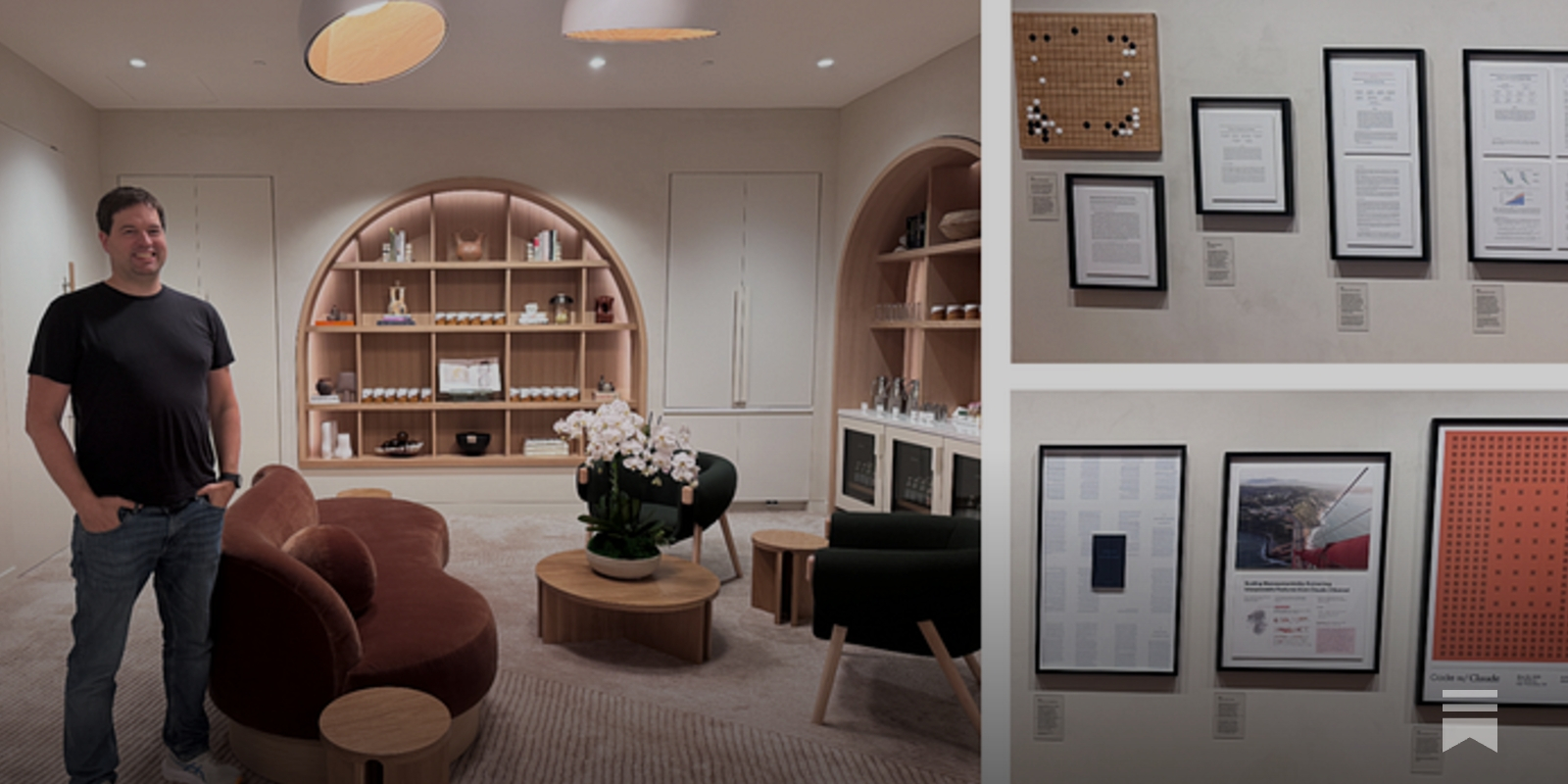
Reflections of an "Old" Programmer - Ben Northrop
Framing our programming careers in terms of knowledge accumulation and decay can yield some interesting insights.
A quote from Andrew Quinn
One could say in the first quarter-century of my life, that while I was always fascinated by programming, I could never overcome the guilt of not really knowing whether the …
Programming Still Sucks. — Writing
Sorry Peter. — I'm at a birthday party, and while most people here also work in tech, there's always a Guy with a Real Job. You know, a physical job, building some or other thing people need. And this Guy always asks some variant of the same question: aren't you worried AI is taking your job? I glance around and see a few faces turning around toward us, rolling their eyes ever so slightly before returning to their previous conversation. Yes, this question again.
What I've Learnt After Making My First Hobby Game
A lot of people (myself included) get into software development because of computer games — as a kid, I was amazed at computer games and always curious about how it was made. However, after finally getting into the industry, most people (myself included) end up not doing game development.
Is AI causing a repeat of Frontend’s Lost Decade? | Mastro Blog
AI is doing to programming what framework-brain did to the frontend before. Deskilling, or just working at a higher level of abstraction?
On the Value of Doing a PhD in the Age of AI
Many students who are just now embarking on a PhD in AI are understandably anxious. It feels like our field is zooming forward ever faster. Our clever methods are often surpassed before they are published. Our deep insights seem less critical to frontier lab progress. AI is automating aspects of the research process that used to require years of specialized training.
Stuck in the middle: Being an engineer & artist in the AI era | Annie Sexton | Offprint
I'm an AI skeptic, through and through. But I also voluntarily use AI nearly every day. So naturally, you might be asking: what the heck?

I'm done using AI
Why I'm stopping using AI for coding (and anything else) after using it earnestly for a year and coming to understand the harms it causes on personal, societal, and environmental levels.