Rather than conceiving of humans and machines through their opposition, we must track their conceptual relationship to a third term: the hand....
Culture on the Ground - Tim Ingold, 2004
Classical accounts of human evolution posit a progressive differentiation between the hands as instruments of rational intelligence and feet as ...

About — Every Object an Archive
We interview people about their experiences with technological objects that were once everywhere, but are now being replaced or redesigned. We are interested in the physical experience of living with these objects, their handfeel and relationships to our bodies. We are also interested in how they shaped our habits, relationships, and ways of being. Technologies are more than physical objects: whole worlds of infrastructure, process, policy and culture are built around them.

The more we rely on tech, the more we deskill our bodies | Aeon Essays
We are, moment by moment, doing less sensing, navigating, remembering, walking, choosing, and attending


Anthropomorphism Is Breaking Our Ability to Judge AI
Tech Policy Press fellow James Ball asks, how should we interact with a technology designed to ‘speak’ with us on what appear to be human terms?
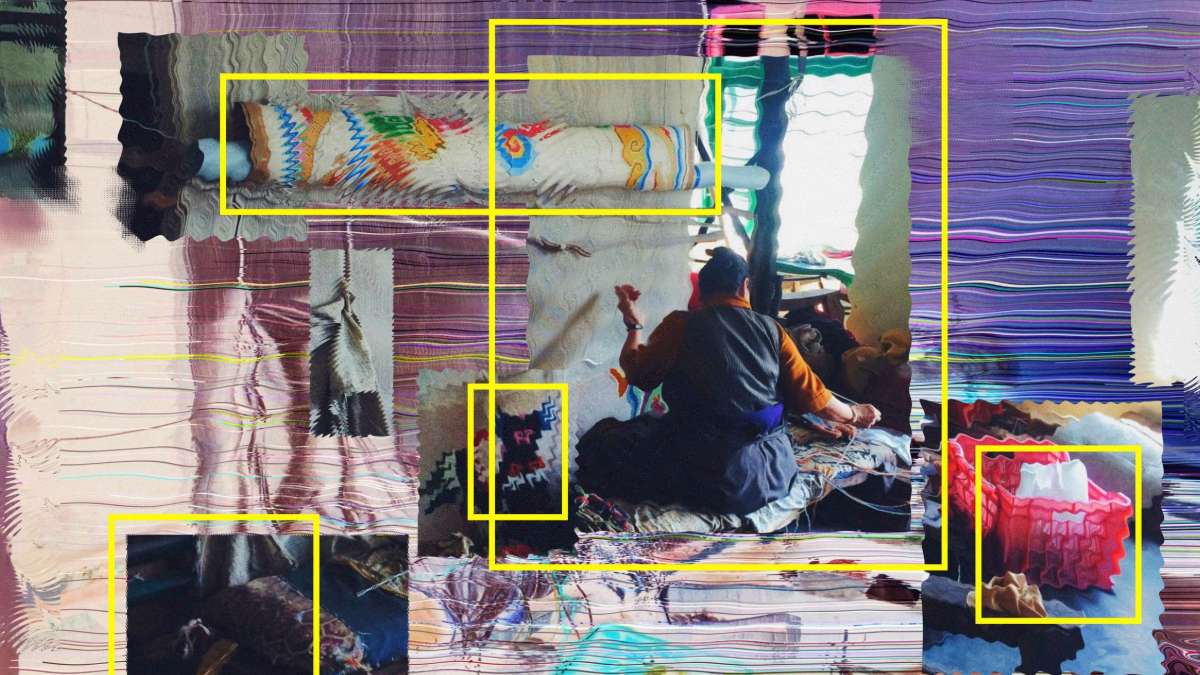
Why Do We Interface?
In this micro book we look at the past, present, and future of interfaces and how they allow us to utilize information in ways that change what it means to be human.
Symbolic Manipulation: an Anthropological Perspective
The aim of this article is to elucidate the anthropological conditions of possibility for computing. I will first show how symbolic manipulation is constitutive of hominization. Secondly, I will ex…

Don't treat surface-level metaphors about AI as if they describe fundamental reality
Debates about whether AI is a “tool” or whether it’s wrong to “anthropomorphize” it often seem confused about what reality is made of

Technology is Not Values Neutral: Ending the Reign of Nihilistic Design
We fail to take tech seriously when we do not grasp its full impact on humans
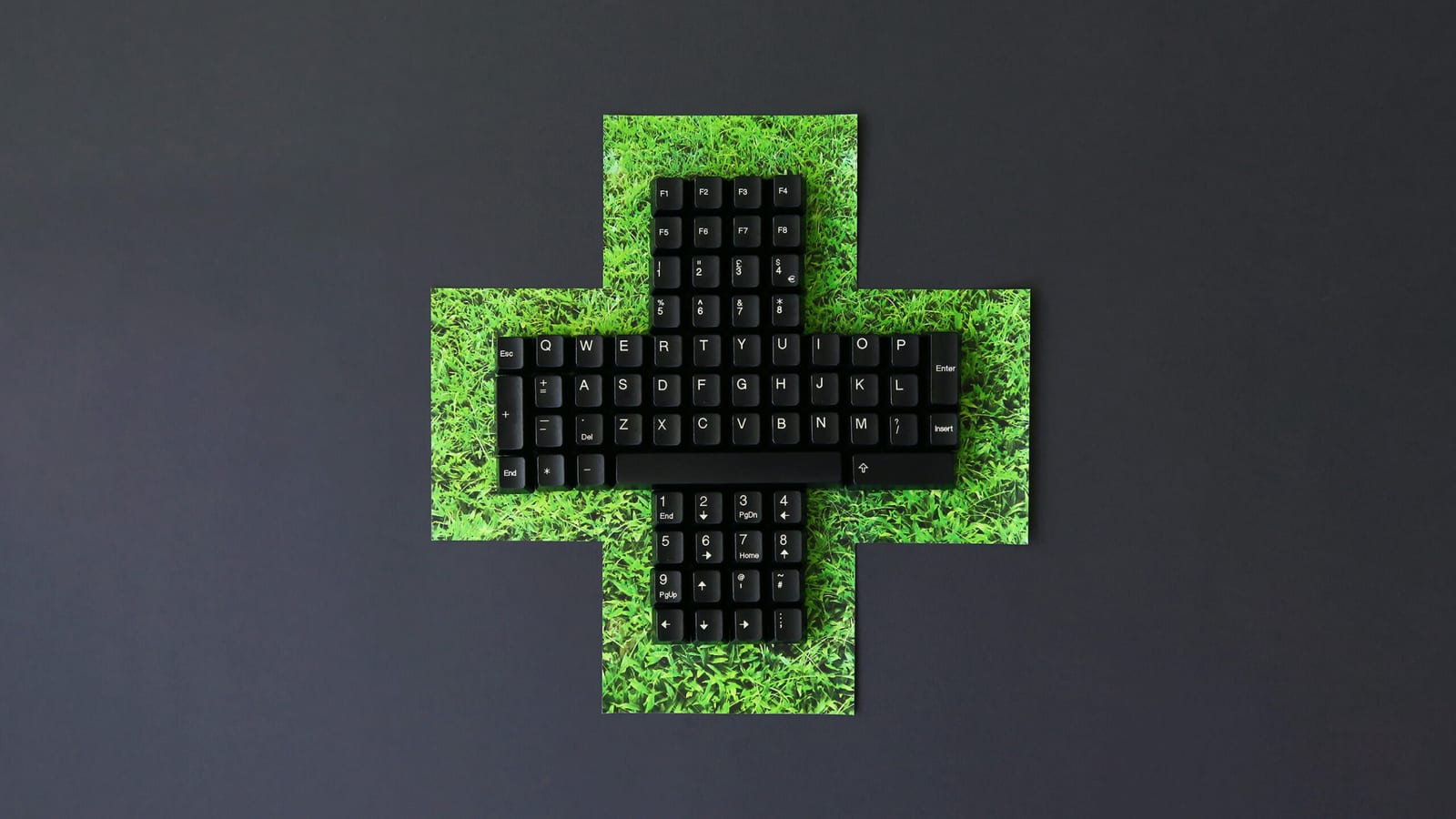
On working machines
In part one, on thinking machines, I explored two facets of the philosophy of artificial intelligence: “intelligence”, and consciousness. That left an important topic to consider for this post: the...
Tools for Thought as Cultural Practices, not Computational Objects
On seeing tools for thought through a historical and anthropological lens
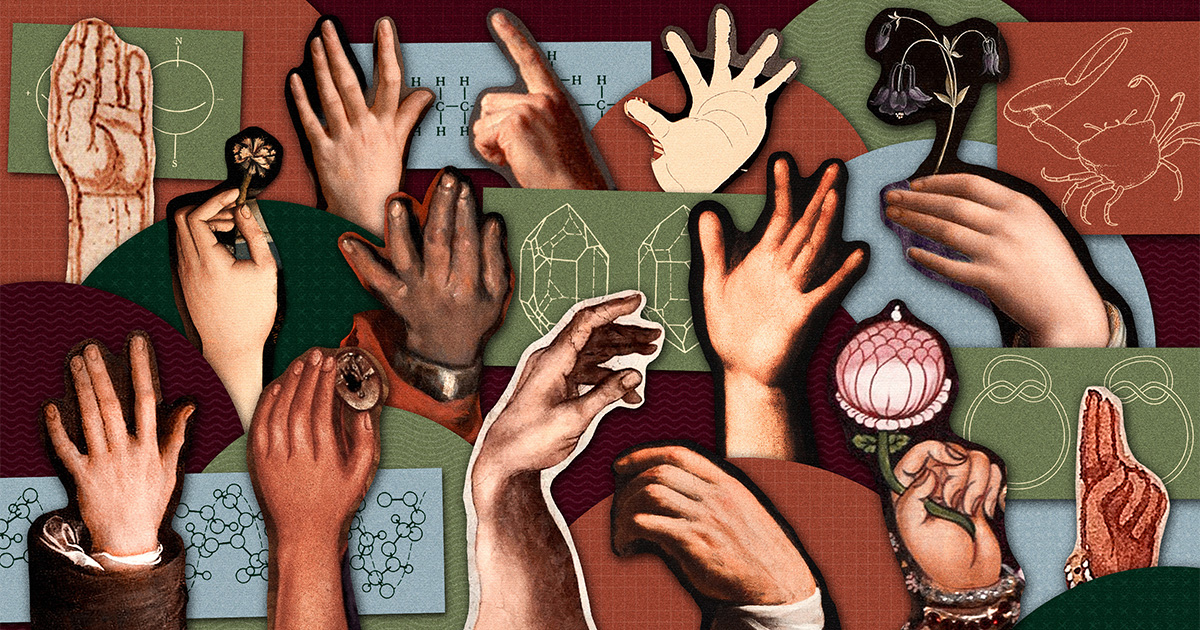
Why Am I Left-Handed? | Quanta Magazine
An invisible difference in 10% of humans poses deep mysteries in several fields at once.
Co-Creation: Systems Thinking Beyond the Machine
Complexity thinking is all the rage — in the arts and sciences. Yet, there are two different strands of thinking about complexity, which are often confounded. The first comes from cybernetics, focussing on control in complex situations. The second is ecological, aiming at sustainable participation in a reality beyond control. Their difference rests on a fundamental distinction: is complexity rooted in feedback regulation or collective co-creation? While feedback remains mechanistic, co-creation generates new spaces of possibilities. We need it to understand life and its evolution. And it empowers us to rewrite our future, to escape our mechanistic cage without abandoning scientific rigor. In this paper, we illustrate how we implement these powerful yet abstract principles through our artistic and philosophical practice.
Sense-making reconsidered: large language models and the blind spot of embodied cognition
Large Language Models (LLMs) demonstrate a kind of linguistic competence that theories of embodied and enactive cognition have long deemed impossible for systems lacking the meaningful perspective of a living being, i.e., the capacity for sense-making. Facing up to this unexpected technological development requires confronting what I propose to call the “AI dilemma”: either frontier LLMs are capable of sense-making despite lacking biological embodiment, or the kind of linguistic competence they exhibit does not necessarily require sense-making. In their chapter on cognition, Frank, Thompson, and Gleiser (2024) maintain that no AI system comes close to realizing relevance, a position that derives much of its motivation from past practical failures. However, frontier LLMs have effectively overcome Dreyfus’ commonsense knowledge problem, such that their dismissal as categorically mindless risks undermining Frank et al.’s central claim that human cognition is deeply intertwined with lived experience. I therefore argue in favor of the alternative side of the AI dilemma: human-level linguistic competence of LLMs should be recognized as a novel non‑biological form of sense‑making, based on a technologically‑mediated embodiment whose enabling properties are in need of further theoretical analysis. This reorientation invites enactive theory to clarify which aspects of sense-making may be universal and which aspects are specifically contingent on organic life, thereby advancing its conceptual framework in dialogue with contemporary AI.
The Triadic Mind: How Language Reveals the Limits of Human Cognition
Languages are the most complex symbolic systems humans have ever created. Yet children acquire them effortlessly, without formal…