


Background: This project investigates the ways in which patients respond to the shared use of what is often considered private information: personal health data. There is a growing demand for patient access to personal health records. The predominant model for this record is a repository of all clinically relevant health information kept securely and viewed privately by patients and their health care providers. While this type of record does seem to have beneficial effects for the patient–physician relationship, the complexity and novelty of these data coupled with the lack of research in this area means the utility of personal health information for the primary stakeholders—the patients—is not well documented or understood. Objective: PatientsLikeMe is an online community built to support information exchange between patients. The site provides customized disease-specific outcome and visualization tools to help patients understand and share information about their condition. We begin this paper by describing the components and design of the online community. We then identify and analyze how users of this platform reference personal health information within patient-to-patient dialogues. Methods: Patients diagnosed with amyotrophic lateral sclerosis (ALS) post data on their current treatments, symptoms, and outcomes. These data are displayed graphically within personal health profiles and are reflected in composite community-level symptom and treatment reports. Users review and discuss these data within the Forum, private messaging, and comments posted on each other’s profiles. We analyzed member communications that referenced individual-level personal health data to determine how patient peers use personal health information within patient-to-patient exchanges. Results: Qualitative analysis of a sample of 123 comments (about 2% of the total) posted within the community revealed a variety of commenting and questioning behaviors by patient members. Members referenced data to locate others with particular experiences to answer specific health-related questions, to proffer personally acquired disease-management knowledge to those most likely to benefit from it, and to foster and solidify relationships based on shared concerns. Conclusions: Few studies examine the use of personal health information by patients themselves. This project suggests how patients who choose to explicitly share health data within a community may benefit from the process, helping them engage in dialogues that may inform disease self-management. We recommend that future designs make each patient’s health information as clear as possible, automate matching of people with similar conditions and using similar treatments, and integrate data into online platforms for health conversations.
Two Research Papers Published on PatientsLikeMe - SPM Blog
Two research papers were published this month on the Health 2.0 website, PatientsLikeMe. PatientsLikeMe is arguably the only “real” health social network online today, because it lets patients share actual […]
Public use of a generalist LLM chatbot for health queries
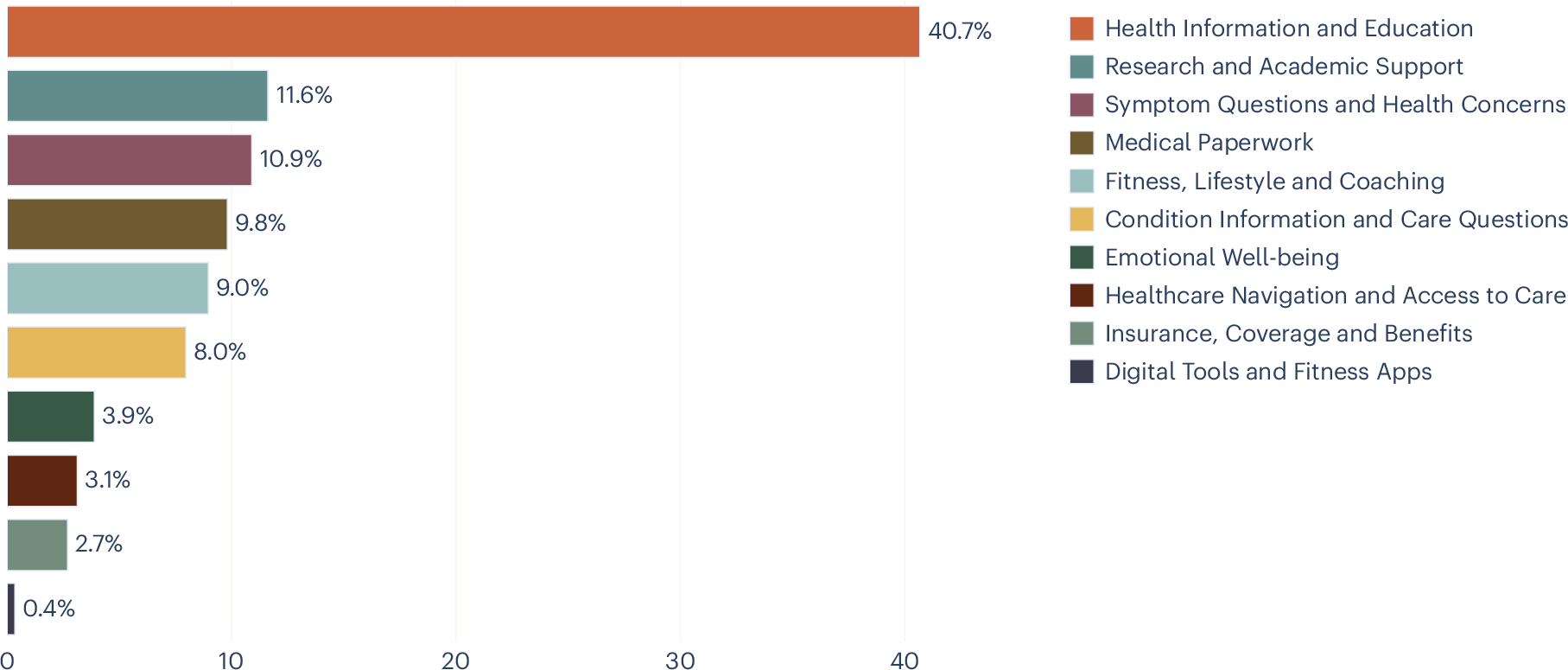
Here we analyse over 500,000 de-identified health-related conversations with Microsoft Copilot from January 2026 to characterize what people ask conversational artificial intelligence (AI) about health. We apply a hierarchical intent taxonomy of 12 primary categories using privacy-preserving large language model-based classification validated against expert human annotation and use topic clustering for prevalent themes within each intent. We then characterize the intents and topics behind health queries, identify who they are about, and analyse how usage varies by device and time of day. Nearly one in five conversations involves personal symptom assessment or condition discussion, and the dominant general information category is also concentrated on specific treatments and conditions, suggesting that this is a lower bound on personal health intent. One in seven of these personal health queries concerns someone other than the user, suggesting that conversational AI can also be a caregiving tool. Personal queries increase markedly in the evening and nighttime hours, when traditional healthcare is most limited. Usage diverges sharply by device: mobile concentrates on personal health concerns, while desktop is dominated by professional and academic work. A substantial share of queries focuses on navigating healthcare systems. These patterns have direct implications for platform-specific design, safety considerations and the responsible development of health AI.
Public use of a generalist LLM chatbot for health queries
Here we analyse over 500,000 de-identified health-related conversations with Microsoft Copilot from January 2026 to characterize what people ask conversational artificial intelligence (AI) about health. We apply a hierarchical intent taxonomy of 12 primary categories using privacy-preserving large language model-based classification validated against expert human annotation and use topic clustering for prevalent themes within each intent. We then characterize the intents and topics behind health queries, identify who they are about, and analyse how usage varies by device and time of day. Nearly one in five conversations involves personal symptom assessment or condition discussion, and the dominant general information category is also concentrated on specific treatments and conditions, suggesting that this is a lower bound on personal health intent. One in seven of these personal health queries concerns someone other than the user, suggesting that conversational AI can also be a caregiving tool. Personal queries increase markedly in the evening and nighttime hours, when traditional healthcare is most limited. Usage diverges sharply by device: mobile concentrates on personal health concerns, while desktop is dominated by professional and academic work. A substantial share of queries focuses on navigating healthcare systems. These patterns have direct implications for platform-specific design, safety considerations and the responsible development of health AI.
Co-creation process of an app for people with rare diseases - a citizen science approach
Background Rare diseases affect a small percentage of the population, leading to challenges such as delayed diagnoses and limited treatment options. Mobile health technologies offer solutions to improve patient outcomes, yet their application in rare diseases remains underexplored. The German citizen science project SelEe created a customizable app for the self-management of rare diseases through a co-creation process that involved patients with such conditions. Methods The project consisted of three phases. In Phase 1, 9 to 68 patients or relatives of patients participated in workshops to define research topics and app requirements. Phase 2 involved a core research team of nine patients and researchers who iteratively developed the app, released in March 2023. Phase 3 focused on evaluating the app’s usage and usability through an in-app survey conducted from March 2023 to February 2024. We utilized descriptive statistics to evaluate app usage and employed the mHealth App Usability Questionnaire to assess usability. Results The SelEe app offers the possibility to create and store data in a personalized health diary. Patients can create their own templates or use templates which were defined by the core research team. Users can record findings (e.g. blood test results) and export data using different graphs and formats. Furthermore, the app supports blind users. The app was downloaded 3040 times and 1456 users registered, with 1967 unique diseases entered. 50.7% of the diseases were rare, 30.5% non-rare, and 18.8% were classified as suspected, undefined, or symptoms. A total of 1223 valid user profiles were analyzed for app usage and demographics. Furthermore, 432 users qualified for the in-app survey by making at least one health diary entry, and 117 participated. The app was rated with an overall usability score of 5.19 out of 7. While the app’s health diary function was frequently used, other functionalities like findings and data export were less utilized. Feedback highlighted the need for improved usability and additional features. Conclusions The study highlights active patient engagement in developing a mobile health app for individuals with rare diseases. Although improvements are necessary for broader acceptance, the app is promising for the management of rare diseases. Supplementary information The online version contains supplementary material available at 10.1186/s13023-025-04140-1.

Crowdsourced Health Research Studies: An Important Emerging Complement to Clinical Trials in the Public Health Research Ecosystem
Background: Crowdsourced health research studies are the nexus of three contemporary trends: 1) citizen science (non-professionally trained individuals conducting science-related activities); 2) crowdsourcing (use of web-based technologies to recruit project participants); and 3) medicine 2.0 / health 2.0 (active participation of individuals in their health care particularly using web 2.0 technologies). Crowdsourced health research studies have arisen as a natural extension of the activities of health social networks (online health interest communities), and can be researcher-organized or participant-organized. In the last few years, professional researchers have been crowdsourcing cohorts from health social networks for the conduct of traditional studies. Participants have also begun to organize their own research studies through health social networks and health collaboration communities created especially for the purpose of self-experimentation and the investigation of health-related concerns. Objective: The objective of this analysis is to undertake a comprehensive narrative review of crowdsourced health research studies. This review will assess the status, impact, and prospects of crowdsourced health research studies. Methods: Crowdsourced health research studies were identified through a search of literature published from 2000 to 2011 and informal interviews conducted 2008-2011. Keyword terms related to crowdsourcing were sought in Medline/PubMed. Papers that presented results from human health studies that included crowdsourced populations were selected for inclusion. Crowdsourced health research studies not published in the scientific literature were identified by attending industry conferences and events, interviewing attendees, and reviewing related websites. Results: Participatory health is a growing area with individuals using health social networks, crowdsourced studies, smartphone health applications, and personal health records to achieve positive outcomes for a variety of health conditions. PatientsLikeMe and 23andMe are the leading operators of researcher-organized, crowdsourced health research studies. These operators have published findings in the areas of disease research, drug response, user experience in crowdsourced studies, and genetic association. Quantified Self, Genomera, and DIYgenomics are communities of participant-organized health research studies where individuals conduct self-experimentation and group studies. Crowdsourced health research studies have a diversity of intended outcomes and levels of scientific rigor. Conclusions: Participatory health initiatives are becoming part of the public health ecosystem and their rapid growth is facilitated by Internet and social networking influences. Large-scale parameter-stratified cohorts have potential to facilitate a next-generation understanding of disease and drug response. Not only is the large size of crowdsourced cohorts an asset to medical discovery, too is the near-immediate speed at which medical findings might be tested and applied. Participatory health initiatives are expanding the scope of medicine from a traditional focus on disease cure to a personalized preventive approach. Crowdsourced health research studies are a promising complement and extension to traditional clinical trials as a model for the conduct of health research.
KFF Tracking Poll on Health Information and Trust: Use of Social Media and AI For Health Information and Advice | KFF
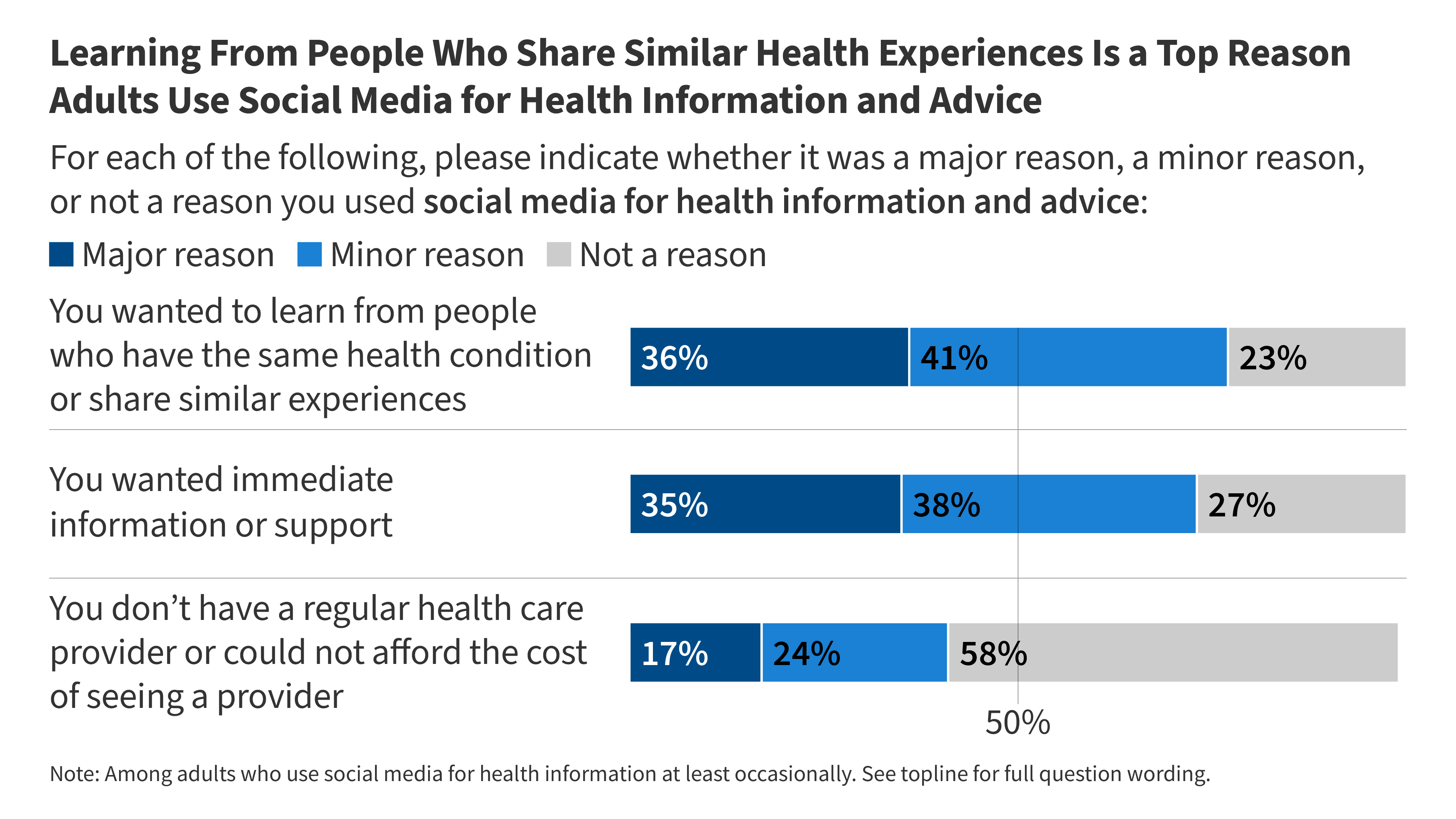
This poll finds that about 3 in 10 adults turn to social media for health information and advice at least monthly. Community connection and the need for immediate answers are the top reasons why people are turning to these tools. Slim majorities of those who use social media for health are confident they can tell what is true, and relatively few take steps to check the information they receive.
Meta’s New AI Asked for My Raw Health Data—and Gave Me Terrible Advice
Meta’s Muse Spark model offers to analyze users’ health data, including lab results. Beyond the obvious privacy risks, it’s not a capable stand-in for a real doctor.

KFF Tracking Poll on Health Information and Trust: Use of AI For Health Information and Advice | KFF
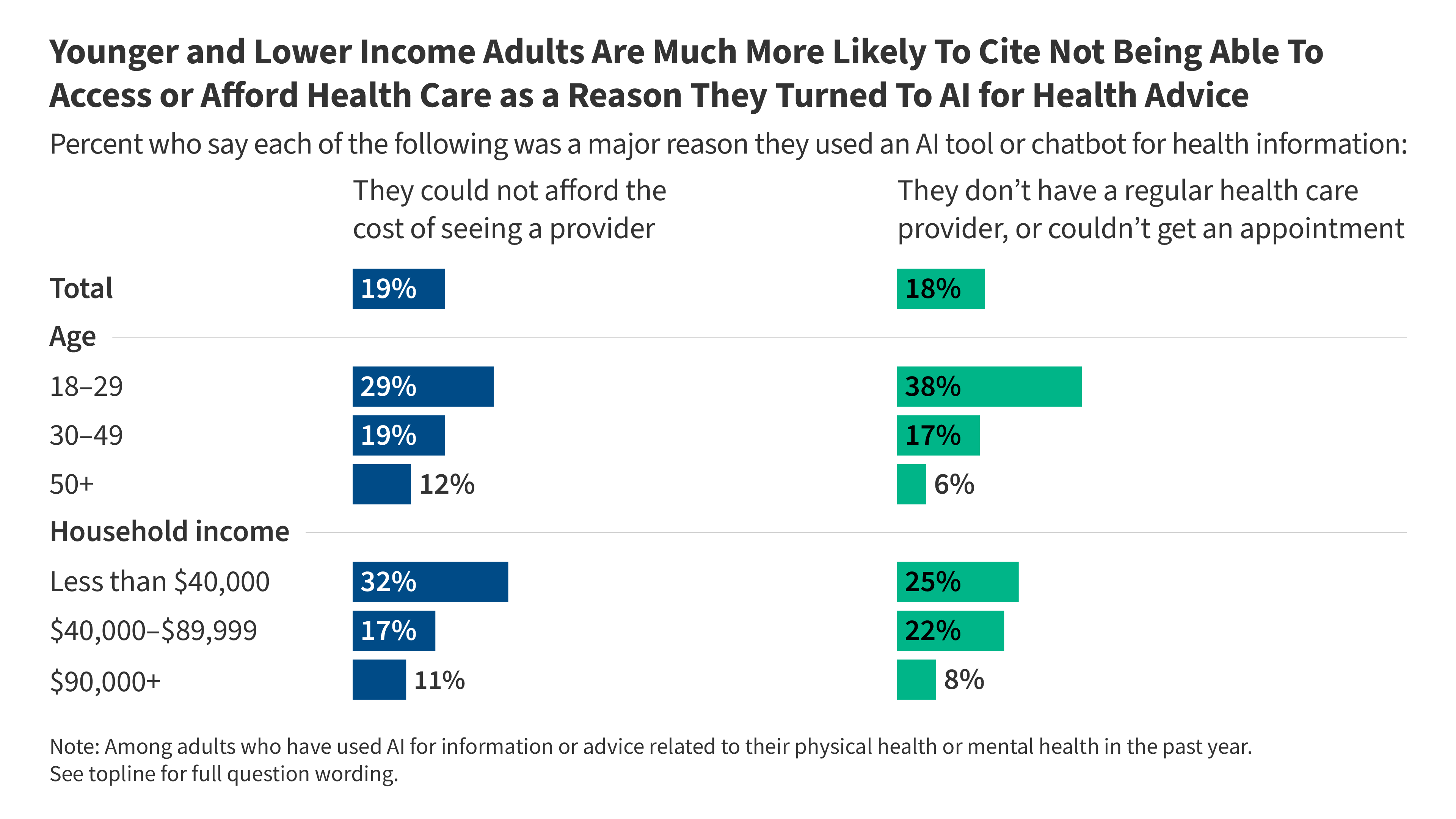
This poll finds that about as many adults are turning to AI for health information as social media, with health care costs and access driving many users, particularly younger users.
Personal information firehose · Adam Wiggins
My new research project asks whether a personal algorithm, inspired by social media, can help us filter our email, group chats, and other personal correspondence.

Personal information firehose · Adam Wiggins
My new research project asks whether a personal algorithm, inspired by social media, can help us filter our email, group chats, and other personal correspondence.
The Medium is the Message: How Non-Clinical Information Shapes Clinical Decisions in LLMs | Proceedings of the 2025 ACM Conference on Fairness, Accountability, and Transparency
There has been a growing interest in the HCI community to study Health, with particular focus in understanding healthcare practices and designing technologies to support and to enhance these practices. A majority of current health studies in HCI have ...

Your medical provider might be recording your mental health care visits – The Markup
Mental health providers are increasingly using AI technology to record conversations, raising privacy concerns among patients and practitioners.

User Privacy and Large Language Models: An Analysis of Frontier Developers' Privacy Policies
Hundreds of millions of people now regularly interact with large language models via chatbots. Model developers are eager to acquire new sources of high-quality training data as they race to improve model capabilities and win market share. This paper analyzes the privacy policies of six U.S. frontier AI developers to understand how they use their users' chats to train models. Drawing primarily on the California Consumer Privacy Act, we develop a novel qualitative coding schema that we apply to each developer's relevant privacy policies to compare data collection and use practices across the six companies. We find that all six developers appear to employ their users' chat data to train and improve their models by default, and that some retain this data indefinitely. Developers may collect and train on personal information disclosed in chats, including sensitive information such as biometric and health data, as well as files uploaded by users. Four of the six companies we examined appear to include children's chat data for model training, as well as customer data from other products. On the whole, developers' privacy policies often lack essential information about their practices, highlighting the need for greater transparency and accountability. We address the implications of users' lack of consent for the use of their chat data for model training, data security issues arising from indefinite chat data retention, and training on children's chat data. We conclude by providing recommendations to policymakers and developers to address the data privacy challenges posed by LLM-powered chatbots.

User Privacy and Large Language Models: An Analysis of Frontier Developers' Privacy Policies
Hundreds of millions of people now regularly interact with large language models via chatbots. Model developers are eager to acquire new sources of high-quality training data as they race to improve model capabilities and win market share. This paper analyzes the privacy policies of six U.S. frontier AI developers to understand how they use their users' chats to train models. Drawing primarily on the California Consumer Privacy Act, we develop a novel qualitative coding schema that we apply to each developer's relevant privacy policies to compare data collection and use practices across the six companies. We find that all six developers appear to employ their users' chat data to train and improve their models by default, and that some retain this data indefinitely. Developers may collect and train on personal information disclosed in chats, including sensitive information such as biometric and health data, as well as files uploaded by users. Four of the six companies we examined appear to include children's chat data for model training, as well as customer data from other products. On the whole, developers' privacy policies often lack essential information about their practices, highlighting the need for greater transparency and accountability. We address the implications of users' lack of consent for the use of their chat data for model training, data security issues arising from indefinite chat data retention, and training on children's chat data. We conclude by providing recommendations to policymakers and developers to address the data privacy challenges posed by LLM-powered chatbots.
A data minimization model for embedding privacy into software systems
Modern software systems (social networking, banking and shopping applications) are becoming increasingly dependent on our data. These systems need data to provide various economic and social benefits to users as well as businesses. However, the extensive use of personal data in systems poses a threat to user privacy. Therefore, privacy laws expect software systems to practice Data Minimization (DM), to minimize data in software systems. This has put software developers in a dilemma to minimize user data to provide user privacy and maximize user data for enhanced system functionality. Following the design science research approach, in this research we propose and evaluate a methodology that enables developers to make their decisions to minimize user data in software systems through understanding data. The methodology encourage developers to think of the ways they would use data in a system design focusing on the storage and sharing of data. Developers in the three experiments conducted to evaluate the methodology agreed that it enables them to think of the ways they use data in system designs and it helps them to make decisions to minimize using data in a system design. Developers also showed positive intention to use the proposed methodology within system development activities.
I know I’ve said this before and recently, but I’m over the skeuomorphic UX of Bluesky that makes it look and feel like a 20 year old social media app. I’m ready for new experiences for this kind of media/data. This information architecture is played out. Let’s try some new ideas with other clients.
