


PTI-125 is a novel compound demonstrating a promising new approach to treating Alzheimer's disease (AD), characterized by neurodegeneration and amyloid plaque and neurofibrillary pathologies. We show that the toxic signaling of amyloid-β42 (Aβ42) by the α7-nicotinic acetylcholine receptor (α7nAChR), which results in tau phosphorylation and formation of neurofibrillary tangles, requires the recruitment of the scaffolding protein filamin A (FLNA). By binding FLNA with high affinity, PTI-125 prevents Aβ42's toxic cascade, decreasing phospho-tau and Aβ aggregates and reducing the dysfunction of α7nAChRs, NMDARs, and insulin receptors. PTI-125 prevents Aβ42 signaling by drastically reducing its affinity for α7nAChRs and can even dissociate existing Aβ42–α7nAChR complexes. Additionally, PTI-125 prevents Aβ-induced inflammatory cytokine release by blocking FLNA recruitment to toll-like receptor 4, illustrating an anti-inflammatory effect. PTI-125's broad spectrum of beneficial effects is demonstrated here in an intracerebroventricular Aβ42 infusion mouse model of AD and in human postmortem AD brain tissue.
PTI-125 Reduces Biomarkers of Alzheimer’s Disease in Patients
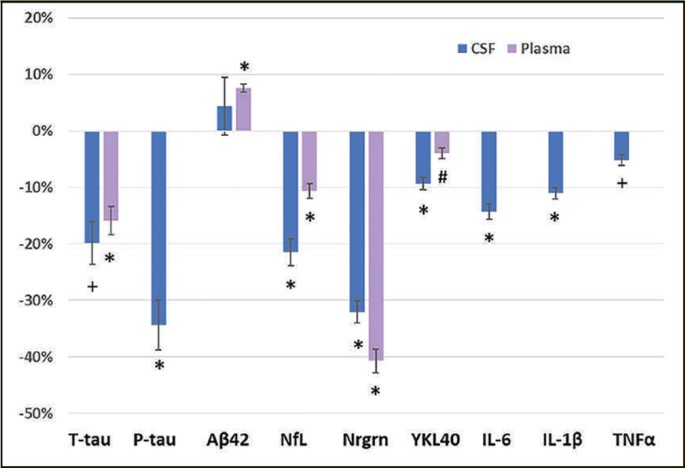
The most common dementia worldwide, Alzheimer’s disease is often diagnosed via biomarkers in cerebrospinal fluid, including reduced levels of Aβ1-42, and increases in total tau and phosphorylated tau-181. Here we describe results of a Phase 2a study of a promising new drug candidate that significantly reversed all measured biomarkers of Alzheimer’s disease, neurodegeneration and neuroinflammation. PTI-125 is an oral small molecule drug candidate that binds and reverses an altered conformation of the scaffolding protein filamin A found in Alzheimer’s disease brain. Altered filamin A links to the α7-nicotinic acetylcholine receptor to allow Aβ42’s toxic signaling through this receptor to hyperphosphorylate tau. Altered filamin A also links to toll-like receptor 4 to enable Aβ-induced persistent activation of this receptor and inflammatory cytokine release. Restoring the native shape of filamin A prevents or reverses filamin A’s linkages to the α7-nicotinic acetylcholine receptor and tolllike receptor 4, thereby blocking Aβ42’s activation of these receptors. The result is reduced tau hyperphosphorylation and neuroinflammation, with multiple functional improvements demonstrated in transgenic mice and postmortem Alzheimer’s disease brain.
Single-cell multiregion dissection of Alzheimer’s disease
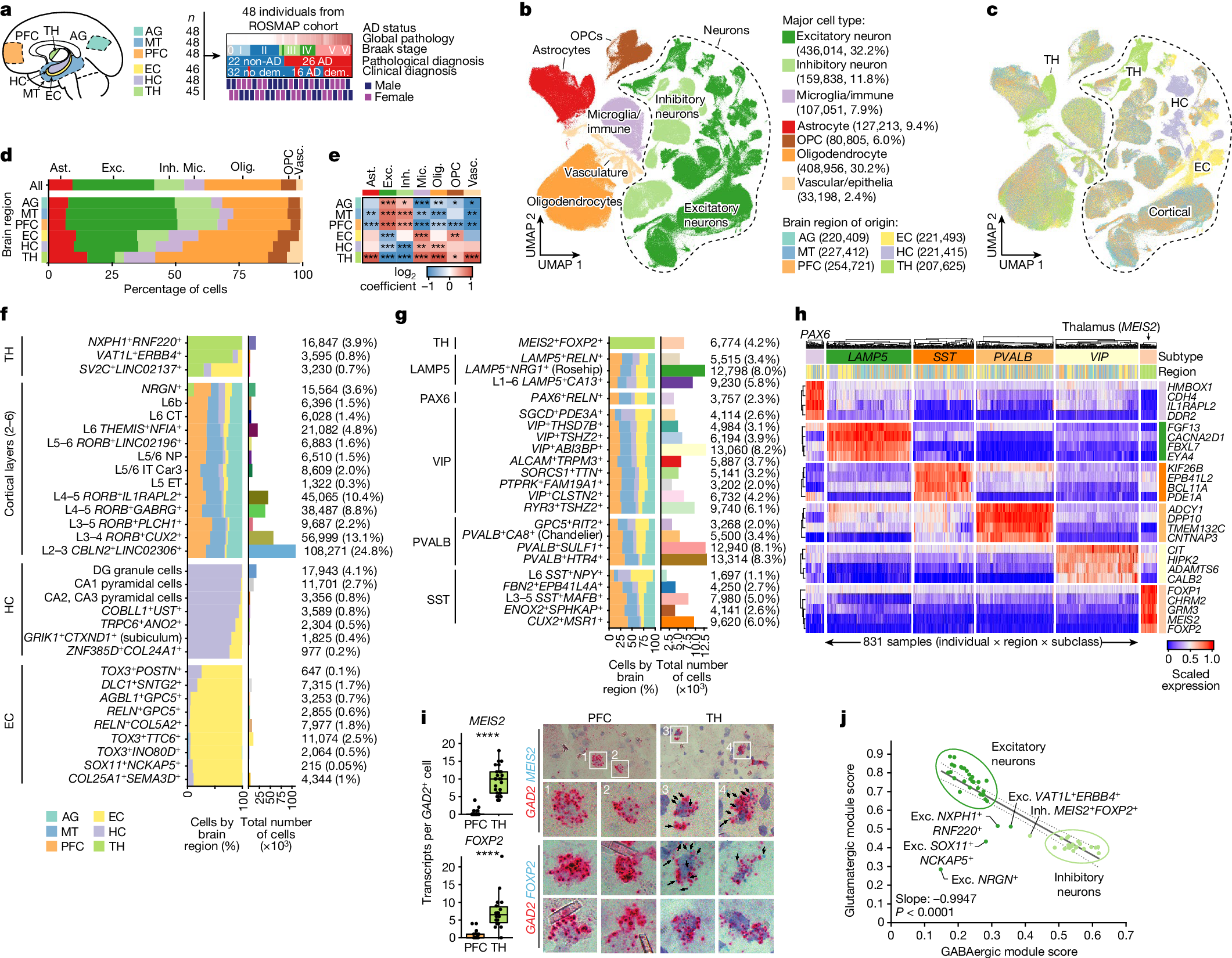
Alzheimer’s disease is the leading cause of dementia worldwide, but the cellular pathways that underlie its pathological progression across brain regions remain poorly understood1–3. Here we report a single-cell transcriptomic atlas of six different brain regions in the aged human brain, covering 1.3 million cells from 283 post-mortem human brain samples across 48 individuals with and without Alzheimer’s disease. We identify 76 cell types, including region-specific subtypes of astrocytes and excitatory neurons and an inhibitory interneuron population unique to the thalamus and distinct from canonical inhibitory subclasses. We identify vulnerable populations of excitatory and inhibitory neurons that are depleted in specific brain regions in Alzheimer’s disease, and provide evidence that the Reelin signalling pathway is involved in modulating the vulnerability of these neurons. We develop a scalable method for discovering gene modules, which we use to identify cell-type-specific and region-specific modules that are altered in Alzheimer’s disease and to annotate transcriptomic differences associated with diverse pathological variables. We identify an astrocyte program that is associated with cognitive resilience to Alzheimer’s disease pathology, tying choline metabolism and polyamine biosynthesis in astrocytes to preserved cognitive function late in life. Together, our study develops a regional atlas of the ageing human brain and provides insights into cellular vulnerability, response and resilience to Alzheimer’s disease pathology.
We Are Entering the Age of Alzheimer's
We will all be touched by the disease. How are we going to get through this?

Differences in Krox20-Dependent Regulation of Hoxa2 and Hoxb2 during Hindbrain Development
During hindbrain development, segmental regulation of the paralogous Hoxa2 and Hoxb2 genes in rhombomeres (r) 3 and 5 involves Krox20-dependent enhancers that have been conserved during the duplication of the vertebrate Hox clusters from a common ancestor. Examining these evolutionarily related control regions could provide important insight into the degree to which the basic Krox20-dependent mechanisms, cis-regulatory components, and their organization have been conserved. Toward this goal we have performed a detailed functional analysis of a mouse Hoxa2 enhancer capable of directing reporter expression in r3 and r5. The combined activities of five separate cis-regions, in addition to the conserved Krox20 binding sites, are involved in mediating enhancer function. A CTTT (BoxA) motif adjacent to the Krox20 binding sites is important for r3/r5 activity. The BoxA motif is similar to one (Box1) found in the Hoxb2 enhancer and indicates that the close proximity of these Box motifs to Krox20 sites is a common feature of Krox20 targets in vivo. Two other rhombomeric elements (RE1 and RE3) are essential for r3/r5 activity and share common TCT motifs, indicating that they interact with a similar cofactor(s). TCT motifs are also found in the Hoxb2 enhancer, suggesting that they may be another common feature of Krox20-dependent control regions. The two remaining Hoxa2 cis-elements, RE2 and RE4, are not conserved in the Hoxb2 enhancer and define differences in some of components that can contribute to the Krox20-dependent activities of these enhancers. Furthermore, analysis of regulatory activities of these enhancers in a Krox20 mutant background has uncovered differences in their degree of dependence upon Krox20 for segmental expression. Together, this work has revealed a surprising degree of complexity in the number of cis-elements and regulatory components that contribute to segmental expression mediated by Krox20 and sheds light on the diversity and evolution of Krox20 target sites and Hox regulatory elements in vertebrates.
Segmental expression of Hoxb-1 is controlled by a highly conserved autoregulatory loop dependent upon exd/pbx
Comparison of Hoxb-1 regulatory regions from different vertebrates identified three related sequence motifs critical for rhombomere 4 (r4) expression in the hindbrain. Functional analysis in transgenic mice and Drosophila embryos demonstrated that the conserved elements are involved in a positive autoregulatory loop dependent on labial (lab) family members. Binding of Hoxb-1 to these elements in vitro requires cofactors, and the motifs closely resemble the consensus binding site for pbxi, a homolog of the Drosophila extradenticle (exd) homeodomain protein.

Learning What Substance Is Suspected of Causing Alzheimer’s May Throw You Into an Existential Crisis
A surprisingly common substance was found to have a causal relationship with the kind of brain damage associated with Alzheimer's disease.

Structure and evolution-guided design of minimal RNA-guided nucleases
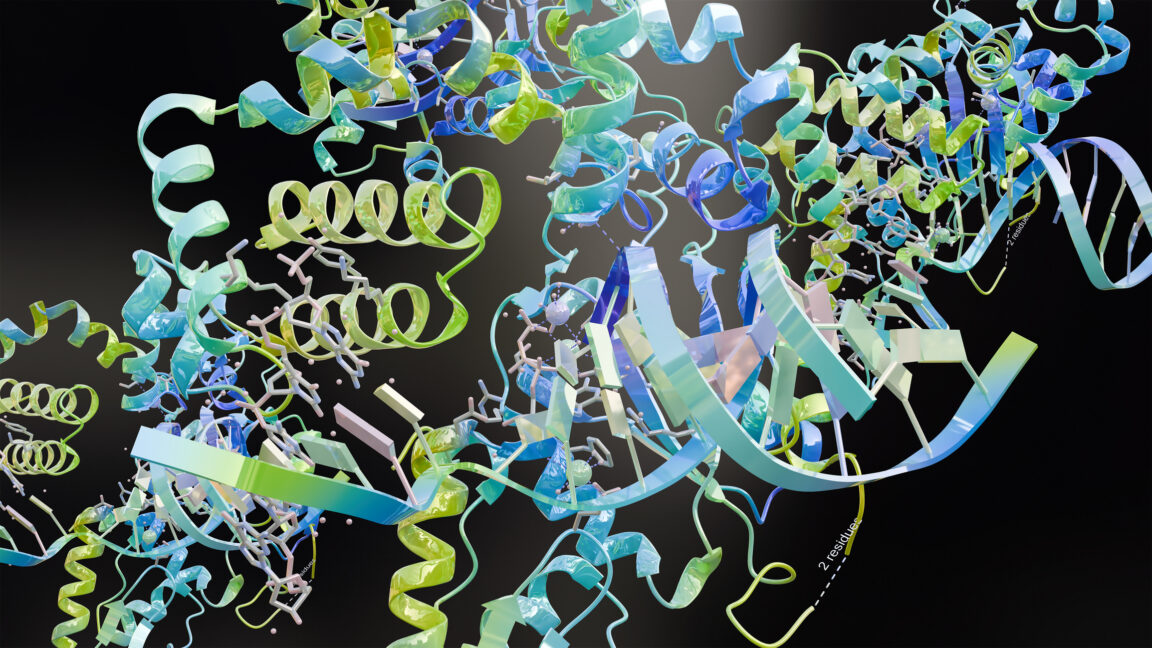
The design of RNA-guided nucleases with properties not limited by evolution can expand programmable genome-editing capabilities. However, generating diverse multidomain proteins with robust enzymatic properties remains challenging. Here, we use a protein design strategy that couples a structure-guided inverse-folding model with evolution-informed residue constraints to generate active, divergent variants of TnpB, a minimal CRISPR-Cas12–like nuclease, termed SynTnpBs. High-throughput screening of artificial intelligence–generated variants yielded editors that retained or exceeded wild-type activity in bacterial, plant, and human cells. Cryo–electron microscopy–based structure determination of the most divergent variant revealed stabilizing contacts in the RNA–DNA interfaces across conformations, demonstrating the design potential of this approach. Together, these results establish a strategy for creating non-natural RNA-guided nucleases and conformationally active nucleic acid binders, enlarging the designable protein space. , Editor’s summary Enzyme design and engineering are challenging in part because there are few ways to improve catalytic activity but many ways to impair it. Evolution-aware approaches can leverage information from our collection of known natural sequences to guide the generation of diverse engineered enzymes that are more likely to retain function. Skopintsev et al . demonstrated engineering of an RNA-guided nuclease using inverse protein-folding models. Screening of candidates nominated by their approach revealed improvement of genome-editing activity. An experimental structure revealed how conformational dynamics are changed in the engineered enzymes, stabilizing the key RNA-DNA interface. —Michael A. Funk

Structure and evolution-guided design of minimal RNA-guided nucleases
The design of RNA-guided nucleases with properties not limited by evolution can expand programmable genome-editing capabilities. However, generating diverse multidomain proteins with robust enzymatic properties remains challenging. Here, we use a protein design strategy that couples a structure-guided inverse-folding model with evolution-informed residue constraints to generate active, divergent variants of TnpB, a minimal CRISPR-Cas12–like nuclease, termed SynTnpBs. High-throughput screening of artificial intelligence–generated variants yielded editors that retained or exceeded wild-type activity in bacterial, plant, and human cells. Cryo–electron microscopy–based structure determination of the most divergent variant revealed stabilizing contacts in the RNA–DNA interfaces across conformations, demonstrating the design potential of this approach. Together, these results establish a strategy for creating non-natural RNA-guided nucleases and conformationally active nucleic acid binders, enlarging the designable protein space. , Editor’s summary Enzyme design and engineering are challenging in part because there are few ways to improve catalytic activity but many ways to impair it. Evolution-aware approaches can leverage information from our collection of known natural sequences to guide the generation of diverse engineered enzymes that are more likely to retain function. Skopintsev et al . demonstrated engineering of an RNA-guided nuclease using inverse protein-folding models. Screening of candidates nominated by their approach revealed improvement of genome-editing activity. An experimental structure revealed how conformational dynamics are changed in the engineered enzymes, stabilizing the key RNA-DNA interface. —Michael A. Funk
Google figures out how to watermark AI-designed proteins
Intended to help with biosecurity, it works with a popular AI protein design tool.
UCLA discovers first stroke rehabilitation drug to repair brain damage
A new study by UCLA Health has discovered what researchers say is the first drug to fully reproduce the effects of physical stroke rehabilitation in model mice.

Cardiovascular Outcomes of Romosozumab and Protective Role of Alendronate: A Conundrum or Clarification
Osteoporosis and cardiovascular diseases are major public health issues. Bone and cardiovascular remodeling share multiple biological markers and pathways. Medical intervention, such as using romosozumab, an antisclerostin antibody, improves the clinical outcome of osteoporosis. However, blocking sclerostin leads to Wnt (wingless/integrated) activation and participation in the cardiovascular remodeling process, which could potentially lead to adverse events. Based on the opposing roles of bisphosphonates and the Wnt pathway on endothelial dysfunction, lipid accumulation and calcification of the vessel walls, the combination of romosozumab and bisphosphonates could be a new therapeutic approach to reducing the risks of adverse cardiovascular events in romosozumab receivers. Visual Overview— An online visual overview is available for this article.

TRANCE Is a Novel Ligand of the Tumor Necrosis Factor Receptor Family That Activates c-Jun N-terminal Kinase in T Cells *
A novel member of the tumor necrosis factor (TNF) cytokine family, designated TRANCE, was cloned during a search for apoptosis-regulatory genes using a somatic cell genetic approach in T cell hybridomas. The TRANCEgene encodes a type II membrane protein of 316 amino acids with a predicted molecular mass of 35 kDa. Its extracellular domain is most closely related to TRAIL, FasL, and TNF. TRANCE is an immediate early gene up-regulated by TCR stimulation and is controlled by calcineurin-regulated transcription factors.

Mitochondrial Signaling and Stress Responses, Key Regulators of Aging and Longevity
ABSTRACT Mitochondria are vital not only for energy production but also for regulating signaling pathways that influence aging. While mitochondrial dysfunction contributes to age‐related decline, emerging evidence shows that mild, regulated mitochondrial stress can paradoxically promote longevity. This review highlights recent advances in mitochondrial biology and aging across species. We explore the dual role of reactive oxygen species (ROS) as both damaging agents and signaling molecules that activate adaptive stress responses. Key pathways such as the mitochondrial unfolded protein response (UPR MT ) and integrated stress response (ISR) are discussed, including their tissue‐specific as well as non‐cell‐autonomous effects on aging. Additionally, we examine the impact of mitochondrial protein import/export, dynamics (fission, fusion, mitophagy, biogenesis), and quality control in aging. Finally, we address challenges in understanding context‐dependent mitochondrial responses and mitonuclear communication. Together, these insights position mitochondria as central regulators of aging and highlight their potential as therapeutic targets to enhance health span and longevity.

Prime editing-installed suppressor tRNAs for disease-agnostic genome editing
Precise genome-editing technologies such as base editing1,2 and prime editing3 can correct most pathogenic gene variants, but their widespread clinical application is impeded by the need to develop new therapeutic agents for each mutation. For diseases that are caused by premature stop codons, suppressor tRNAs (sup-tRNAs) offer a more general strategy. Existing approaches to use sup-tRNAs therapeutically, however, require lifelong administration4,5 or show modest potency, necessitating potentially toxic overexpression. Here we present prime editing-mediated readthrough of premature termination codons (PERT), a strategy to rescue nonsense mutations in a disease-agnostic manner by using prime editing to permanently convert a dispensable endogenous tRNA into an optimized sup-tRNA. Iterative screening of thousands of variants of all 418 human tRNAs identified tRNAs with the strongest sup-tRNA potential. We optimized prime editing agents to install an engineered sup-tRNA at a single genomic locus without overexpression and observed efficient readthrough of premature termination codons and protein rescue in human cell models of Batten disease, Tay-Sachs disease and cystic fibrosis. In vivo delivery of a single prime editor that converts an endogenous mouse tRNA into a sup-tRNA extensively rescued disease pathology in a model of Hurler syndrome. PERT did not induce detected readthrough of natural stop codons or cause significant transcriptomic or proteomic changes. Our findings suggest the potential of disease-agnostic therapeutic genome-editing approaches that require only a single composition of matter to treat diverse genetic diseases.
Precision Medicine in Neuroscience: Tools, Translation, and Implementation: A Workshop
Precision medicine approaches are rapidly transforming neuroscience, driven by advances in genetics, neuroimaging, biomarkers, and data science. These tools enable more refined disease classification, improved diagnosis, and treatments tailored to individual patients across neurological and psychiatric disorders. However, challenges remain in translating these advances into routine research and clinical practice. On March 4–5, the National Academies’ Forum on Neuroscience and Nervous System Disorders, in collaboration with the Forum on Drug Discovery, Development, and Translation and the Roundtable on Genomics and Precision Health, will host a workshop exploring opportunities, challenges, and strategies for integrating precision medicine into neuroscience research and care.

Machine learning-enhanced identification of fluorophilic interactions for improved SERS detection of PFOA
Per- and polyfluoroalkyl substances (PFASs), such as the legacy C8 compound perfluorooctanoic acid (PFOA), pose significant environmental and health risks due to their persistence and widespread use. , Per- and polyfluoroalkyl substances (PFASs), such as the legacy C8 compound perfluorooctanoic acid (PFOA), pose significant environmental and health risks due to their persistence and widespread use. While surface-enhanced Raman spectroscopy (SERS) has shown promise for PFAS detection, challenges remain in achieving high sensitivity and understanding the underlying molecular interactions. This study combines fluorinated thiol-modified SERS substrates with machine learning techniques to enhance PFOA detection and elucidate fluorophilic interactions. Three different fluorinated thiols were used to modify SERS substrates, and their performance in PFOA detection was compared to bare substrates. Surface modification improved SERS signal enhancement and lowered detection limits compared to unmodified surfaces. Machine learning algorithms, including partial least squares-discriminant analysis (PLS-DA), partial least squares regression (PLSR), and support vector machine (SVM) regression, were employed to classify and quantify PFOA based on Raman spectral features. The PLS-DA model successfully distinguished ligand-specific interaction patterns, demonstrating strong robustness and predictive performance, while SVM regression achieved a limit of detection of 3.61 ppb. We further validated the proposed machine learning-guided SERS approach for PFOA detection directly in water, demonstrating ligand-specific Raman responses arising from fluorophilic ligand–PFOA interactions. A linear and sensitive response was observed at environmentally relevant concentrations, confirming the practical applicability of the approach for aqueous PFAS monitoring. This approach offers a novel SERS-based strategy for detecting PFOA, with results anticipated to inform future developments in applying this strategy to a broader range of PFAS compounds and more complex environmental matrices.